ALL ACCOR

ALL ACCOR
Book, stay, enjoy. That's ALL.com
Showing posts with label tips. Show all posts

Tuesday, 5 May 2026

More than a guide book: Tokyo Story is also a love story


Tokyo is one of the most fascinating cities on the planet.

Huge, sprawling, intriguing and decidedly different.

Tokyo Story is both a guide book and a homage; full of local wisdom and insider tips.

I wish I had read a copy before a recent visit - here you'll find suggestions on the best hangouts, shops, bars and eateries.

If you want to know about hidden laneways with historic secrets, or tranquil temples to visit, you'll find all the details here. 

Similarly if you want to lowdown on anime and manga collectibles, or want to know the different noodle dishes on offer and where to find the best.  

But you'll also find useful facts on public holidays - there are 16 of them annually - and discover that Christmas Day is a working day like any other in the Japanese capital.

So lots more than the usual hotel recommendations and food markets.

Melbourne-based authors Steve Wide and Michelle Mackintosh say they have been obsessed with Japan since their first visit in the late 1990s.They have written 10 books on the country.

If you want to know about Tokyo's distinctive neighbourhoods - each with their own feel - you've come to the right place. 

Each chapter has nuggets of fascinating info across Tokyo’s rich history, culture and nightlife. 

Think fashion tips, ultra-cool listening bars, crazy moments of pop culture or where you might be able to buy a robot. 

There are also handy tips on navigating both Tokyo and Japanese etiquette. 

A delightful book for paging through if you have Japan on your travel radar. 

TOKYO STORY: A GUIDE. By Steve Wide and Michelle Mackintosh. Published by HARDIE GRANT EXPLORE. RRP $39.99/NZ$45.


Tuesday, 28 October 2025

Meet a cookbook you will use again and again

If your household is anything like mine there will be dozens of cookbooks that look great but are rarely used.

Released today, Thai: Anywhere and Everywhere is likely to be an exception to that rule. It belongs in your kitchen not on a coffee table. 

It is the very smart looking new cookbook from MasterChef Australia winner Nat Thaipun, who was also recently appointed a culinary ambassador for Accor Hotels.

This is a cookbook with simple, easy-to-follow midweek recipes and more complex weekend showpieces.

I'm particularly interested in trying some of her Thai twists on classic Anglo dishes like Scotch eggs.


The book is a celebration of the chef's Thai Australian heritage and global culinary adventures, designed to help bring Thai flavours to home kitchens.

The dishes are designed to be made with readily available ingredients and are adaptable to seasonal produce wherever readers are in the world. The instructions are easy to follow. 

From barbecue ideas to one-pot wonders and decadent desserts with an Aussie twist, this really is a tome that will be used more than once or twice.

Thai: Anywhere and Everywhere is also full of practical tips on pantry essentials for Thai enthusiasts, ingredient swaps, and cooking techniques that allow readers to replicate dishes with authentic Thai flavours.

The book is enlivened by photography from award-winning photographer David Loftus, and was designed by award-winning creative director Daniel New (The Whole Fish Cookbook by Josh Niland).

Thai: Anywhere and Everywhere looks good but is also useful: an invitation to explore, experiment, and fall in love with Thai cuisine.

Thaipun has trained in some of the world’s best restaurants, including St. John and Core in London, and hosted sold-out pop-ups at restaurants including Baba’s Place in Sydney and EVETT in Seoul. She is now part of the Vue de Monde team in Melbourne.

Thai: Anywhere and Everywhere is published today by Hardie Grant Books. RRP AU$50, NZ$60.

Tuesday, 6 February 2024

Are sommeliers on the nose with wine drinkers?

A good sommelier is a gift from the heavens.

A warm welcome, an insider wine tip. Good somms can turn a good evening into a great night.

But it seems that the current generation of somms are not resonating with restaurants guests as their predecessors did.

Earlier this week, I posted a tongue-in-cheek piece about whether AI bots could replace flesh-and-blood wine operatives.

To my surprise, my social media feeds got a lot of anti-somm feedback. Particularly in Australia.

"How how will it [AI] maintain the wankerisms and condescending manner?" asked one wine industry insider.

From a very well travelled international journalist: "I suppose as long as the AI version doesn't look down at you and shake his or her head disdainfully, I'm OK with it!"

And more, this time from another wine industry pro.

"...try and sell you some jarringly dry, over-phenolic, cloudy, fruitless muck just because they're obsessed with natural wines and like to pretend several thousand years of winemaking evolution hasn't happened."

Ouch.

I, too, have been the victim of somms trying to convince me to drink "orange" wines despite my stated aversion to them.

Some for some looking in the mirror, maybe, for some somms. 

You are there to help the customer find a drink he or she will enjoy, not to act as an Alice Feiring-style evangelist for undrinkable drinks.

Image: Maksim Chernyshev, Scop.io.

Friday, 5 January 2024

Useful tips for first-time visitors to Japan


Japan can be an intimidating destination for first-time visitors.

Few westerners speak the language and the custom are very different.

The Japanese are very welcoming, however, and there were 19.8 million overseas visitors between January and October.

Learning a few key common phrases is a good idea, as is learning about local etiquette and expectations.

The experts at JRPass have pulled together some of their top tips to help tourists navigate common etiquette and practices when visiting Japan.

# The customs for greetings in Japan look noticeably different than those in most western countries, and bowing is the most common Japanese greeting, ranging from a nod of the head to a deep bend at the waist. If you aren’t sure what type of bow is required in a given situation, don’t panic. Tourists are not expected to know the intricacies of the bowing customs in Japan.

# Many Japanese restaurants will have traditional seating, consisting of low tables and cushions on the tatami floor. Make sure to take off your shoes before stepping onto the tatami floor and avoid stepping on any cushions other than your own. It is common to wait until everyone has received their food, and then start the meal with the phrase "itadakimasu" ("I gratefully receive"). When eating from a small bowl, it is good manners to pick this up with your hand and bring it closer to your mouth. Slurping is encouraged. Never stab your food with chopsticks and do not place them upright in the bowl (this is a ritual reserved for funerals). Use the opposite end of your chopsticks to serve yourself from a communal dish and don’t point at things (dishes or people) with your chopsticks.

When it comes to drinks it is customary to serve each other, so you should never pour your own drink (you pour your friends’ drinks, and they return the favour).

# It is important to avoid loitering and blocking the flow of traffic, especially on busy streets. If you must stop, move to an area where you will not be disturbing the flow. This is especially important if you have lots of luggage taking up space. It is considered bad manners to eat or drink while walking in Japan. Instead, stop and take a break whilst you eat; many places (including many convenience stores) have designated places for you to stop and eat. Keeping the streets clean is a point of pride in Japan, and you should hang on to all your rubbish until you find a bin or get home.

# While it may be tempting in today's Insta-obsessed culture, you should not approach Geishas and Maikos for selfies in the street. They are working and often hurrying from one engagement to another, and as such, it is very disrespectful to hold them up for the purposes of getting a photo. Also, do not blow your nose in public as it is seen as very rude.

# When moving around stations, always follow the flow of traffic – don’t worry, there tend to be arrows or signs to help point you in the right direction. If you have to make use of priority seating, you must give up your seat and respect the rules should someone who is elderly, disabled, or pregnant board the train. On all public transport you should keep your phone on silent and avoid taking calls when onboard and keep any noise to a minimum.


Haroun Khan, founder and owner at JRPass, says: “Adjusting to a world of new etiquette and customs may seem initially confusing as a visitor to Japan, but it isn’t something that should deter you from visiting this beautiful country.

“Experiencing a different culture to your own is an exciting opportunity and one to jump into. Japan is an incredibly welcoming place, and no visitor is expected to know the ins and outs of every unique custom, however, learning some of the basic etiquette is always an appreciated effort.

“Of course, these are just some of the many common courtesies and rules followed when in Japan, and the country has many other fascinating rules to keep in mind when travelling around there, so we’d encourage you to do your research before you visit.”

Info provided by https://www.jrpass.com/

Images: scop.io and Winsor Dobbin


Sunday, 8 October 2023

Everywhere man Liaw cooks up a storm

Adam Liaw is ubiquitous.

Turn on the TV and there he is hosting a cooking show. 

Open the Sunday newspaper and he's got a recipe for you.

But there is a good reason for his popularity. He's talented, personable and relatable.

He also understands that most people want a good, simple recipe for cooking at home.

Hence his new book: 7 Days of Dinner, released this month. 

This is a seriously practical book with most of the featured ingredients easily found. You won't have to track down the one grocer in town who sells condiments from Peru. 

These are recipes that  my wife, who does all of the cooking in our house, describes as "simple and practical". Don't worry, we have an equal division of labour: I open the wine bottles. 

This is a book for anyone from novice cooks to Mums lacking in time to spend hours on prep. 

It features over 80 "easy" recipes taken from the set of his hit SBS series The Cook Up.

This week we tried Adam's coconut and chilli prawns (below). Prep time: 10 minutes. Cooking time: 10 minutes. 

The verdict: More than tasty: absolutely delicious. 


The recipes include spins on Asian hits like sesame and chilli noodles, or pepper and coriander chicken; as well as Mexican-inspired dishes such as beef and bean taco rice. 

For the more adventurous cooks there are some creative weekend projects and useful hints on how to make stellar roast potatoes and stunning stews. 

There are also suggestions for Meat-Free Mondays and Fish on Fridays. 

The 7 Days of Dinner by Adam Liaw. Published by Hardie Grant Books. RRP $50. 


Sunday, 20 August 2023

France puts out the welcome mat for rugby fans


It might just be one of the longest major sports events ever held.

The Tour de France and the Olympic Games games stretch over three weeks; the World Cup soccer tournament extends well over a month.

But this year's Rugby World Cup in France will run for seven weeks from September 8 to October 28.

There will be 48 matches featuring 20 national teams in France.

This will be the10th in a tournament series played every four years since 1987. I've been lucky enough to attend four of them: the opening event in New Zealand/Australia, in South Africa, in the British Isles and France, and in Australia.

While Paris will be the main stage - hosting the opener between France and the New Zealand All Blacks and the final - nine other cities will also host games.


During the almost six years I lived in France I visited seven of the host cities. Sorry Toulouse and St Etienne.

Here are my brief thoughts on the cities rugby fans will be descending upon.

Paris will be in the spotlight and is always a city of surprises and joy. The opening will be played at the Stade de France (top image), the largest stadium in the country.

The 80,000-seat arena will also host the two semi-finals and the third-place playoff.

Lyon, Marseille, Nice, Bordeaux, Nantes, Toulouse, Lille-Villeneuve d’Asq and St Etienne are also in the host line-up.

Marseille’s Orange Vélodrome is usually the home of football team Olympique Marseille. 

Be careful where you go at night in Marseille. The port city is my least favourite destination in France and in my experiience the locals the least welcoming.

In contrast, a French city that screams art and culture, is Bordeaux, with over 350 UNESCO-listed buildings in its historic centre. Wine lovers will want to explore the vineyards and visit the Cité du Vin wine museum on the banks of the Garonne. Dine at quirky La Tupina if you get the chance.

Toulouse, called  the ‘Ville Rose’ (Pink City) is known for its aerospace industry and is rugby heartland. Try the local sausages.  

Lyon is the gourmet capital of France, a delightful city with narrow streets and secret passageways, hidden staircases and stylish courtyards. Head to one of its ‘bouchons’ (traditional restaurants) for a casual gastronomic experience.

Lille's Pierre-Mauroy stadium in the suburb of Villeneuve d’Asq is an unlikely venue - football is king in the his region of France. Visit LaM (the Museum of Modern Art, Contemporary Art and Art Brut) set in large park full of sculptures.

Nice, surprisingly chosen ahead of rugby-crazy Toulon, is home to many of the highlights of the Côte d’Azur. Visit the local markets and walk the Promenade des Anglais.

In Nantes, the Beaujoire stadium is best known for its football team than rugby. Visit the ‘Machines de l’Ile’ site: former shipyards where you can climb aboard a giant carousel of extraordinary sea creatures. And have a seafood meal at La Cigale - one of my personal favourite restaurants.

St Etienne is another city much better know for football than rugby. It is the gateway to the Auvergne, with its gentle sloping mountains, dormant volcanoes and beautiful countryside.

See https://www.france.fr/fr and https://www.rugbyworldcup.com/2023/matches


Friday, 18 August 2023

The secrets of enjoying pinot noir at its peak


Pinot noir is sometimes known as the "heartbreak grape".

It can be very tricky to grow, but when done well it produces wines of elegance that are among the most sought after in the world.

From Burgundy to Central Otago, Tasmania to Oregon, cool-climate pinots are much loved by aficionados.

Although many pinot noir wines are made for immediate consumption, others will benefit from a little time in the cellar.

But just how long should you put your favourite pinot noir down before you enjoy them?

With pinot noir, a number of factors influence the ageing process, from viticulture, winemaking techniques and Mother Nature to time in bottle and choice of closure. Proper cellaring plays an important role, too.

Tim and Bec Duffy, the husband and wife viticultural and winemaking team behind the Holm Oak label in Tasmania's Tamar Valley have offered up some tips on how to get the most value and enjoyment out of your wine. 

The advice - given here in their own words, not mine, is timed to coincide with International Pinot Noir Day - that's today, August 18.

Does Pinot Noir Age?

The most famous pinot noir in the world arguably comes from the Burgundy wine region in France. As many wine collectors would espouse, Burgundy has a reputation for pinot noir wines that age well. Often young Burgundy can appear very firm and closed in the first few years of release. New World pinot noirs, on the other hand, such as those from Australia and New Zealand, is often thought of more for immediate consumption. Some don’t have the firmer structure of their Burgundian counterparts.

That’s changing, though, as pinot from all over the world proves its own pedigree depending on the region and age of the vines. Yes, Tasmania’s finest can stand up alongside some of the finest in the world. Ultimately, pinot noir’s ability to age depends largely on where and how it’s grown as well as the impact of the winemaker throughout the winemaking process. With the right tender loving care, Tasmania’s cool-climate pinot noirs really can age beautifully.

Indeed, here in Australia, our reputation for fine pinot noir is on the rise. Beyond Tasmania, Victoria’s Yarra Valley and Mornington Peninsula as well as South Australia’s Adelaide Hills are also regions making names for themselves for making world-class finest pinot – and pinots that can age.

Here are some of the factors that impact ageability:

Viticulture and Winemaking

There’s no denying that pinot noir is one of the more difficult wines to make. Vintage conditions are a key consideration about what pinot to put down and save for later. Thanks to our unique island setting, Tasmania enjoys a moderate maritime climate. Winds from the Southern Ocean keep us cool, but it’s rare for us to experience extreme temperatures. With our temperate springs and summers, warm autumn days and cooler autumn nights, pinot noir grapes are slow to ripen. As a result, they can develop complex, concentrated and intense fruit flavours with good structure and balance. These elements are important during the ageing process, so viticulture that results in high-quality, perfectly ripe fruit is key.

Bottle Ageing

Good-quality pinot noir will develop over time in bottle to become richer and more intense. This is when secondary aroma characters will start to emerge, such as earthy, mushroom and forest floor notes. However, the wine will still maintain its freshness and vibrancy. The palate will be silky but will still have fine tannins and fresh acidity.

Cork Versus Screw Cap in Ageing Pinot Noir

In general, we Aussies love the screw cap and appreciate its advantages over cork. For one thing, no cork means no cork taint, a fault that impacts the smell and taste of the wine. But other wine regions in the world continue to prefer a cork closure, and the ability to age pinot under this closure often depends on the quality of the cork and the track record of the producer.

Don’t worry, though, about putting down your wines under a screw cap (or Stelvin) closure. As far as ageing under screw cap, this type of closure still allows pinot noirs to develop those important secondary characteristics.

How Long Can You Cellar Pinot Noir?

We’ve been making pinot noir here in Tasmania since 2007. It’s allowed us to specialise in this varietal and make four styles. Our Wizard and Hot Shot pinot noirs are the wines we recommend for longer-term ageing. For these two wines, we use whole bunches; some oak to add more structure; and lower yielding, slightly riper fruit. Our Holm Oak Estate Pinot Noir also ages well – for approximately six to eight years – whereas you’ll want to drink the Protégé Pinot Noir within two years of release. Having said that, both of these wines will develop interesting secondary characters, thanks to high-quality fruit, good acidity and bottling under screw cap.

In a perfect world, you want to store your pinot in a humidity- and temperature-controlled environment, away from unnecessary vibration and light. If the pinot gets too warm, you risk ageing it prematurely and impacting its flavours. Likewise, storing it at temperatures that are too cold can hurt the integrity of the wine. It’s most important to keep it at a stable temperature; you don’t want the wines going from hot to cold and back again. Ideally, store these reds at temperatures from 12 to 14°C until you’re ready to enjoy them.


Wednesday, 2 August 2023

Expert tips on how to get the best value on holiday


With the costs of travel rising - hotels, flights, meals and entertainment costs are all on the up - travellers need all the advice they can get about securing bang for their buck.

Bring on the team from Oaks Hotels, Resorts and Suites, who operate over 55 properties across Australia and New Zealand, with some useful tips.

The early bird is a smart bird

When it comes to saving money on travel, research and planning is key. Often that means getting in early to look for early bird deals, lock in airfares in advance, and take advantage of offers on accommodation. Other key tips to secure maximum savings include using comparison websites to research airfares and car hire, taking leave midweek and starting your break instead of on weekends, booking non-refundable accommodation options if you’re confident your plans are locked and loaded, and flying at less popular times - like the crack of dawn!

Bigger can be budget-friendly

Forget the perception that more space always equals more dollars when it comes to accommodation. Oaks properties offer a range of studios, suites and villas with options including two, three and even four bedrooms, which deliver value for money and plenty of space for everyone to stretch out and stay in comfort. The benefits of larger digs also go beyond the budget…like chilling out with a wine and a movie in the lounge room once the kids have gone to bed in their own room. With the door shut.

Avoid peak – try short and sweet

By travelling outside of peak season whenever possible, you will enjoy access to the best possible prices. Creating your own long weekend or midweek mini break is a way to escape the everyday…without the crowds - and often for far less money.

Get more in the great outdoors

From coast to coast, Australia and New Zealand are full of nature-based holiday destinations where there’s plenty of free or low-cost activities for travellers of all ages and interests, so consider hitting beaches or the bush in locations outside the major centres for a value-packed stay.

Save on snacks with pantry hacks

Have groceries delivered to your room the day you arrive - or go shopping on arrival - so you can save on snacks and keep hungry kids happy whether you’re watching a movie in your suite or coming back from an afternoon of pool play. Minibar costs are worth avoiding for both food and drink.

Dining in is the new going out – and lunch is the new dinner

Balancing the cost of eating out with easy dinners cooked in your in-room kitchen is a tried and tested method popular with Oaks guests who love making use of the well-equipped kitchens that make feeding he family as easy to manage as it is at home – just pump out a spaghetti bolognaise then pop the kids to bed and put your feet up with a wine on the balcony. Swapping breakfast out and about for cereal and toast saves time, money and many savvy travellers choose to either pack lunch at home to take for the day’s exploring, or to eat lunch out and dinner in to avoid more expensive evening pricing.

Live like a local - and ask questions

By quizzing the hotel concierge or front desk team, you can uncover hidden gems, like local produce markets, value offers - such as kids eat free meals or weekly specials at pubs and clubs - as well as find out about the best free activities nearby, from walks and cycling tracks to museums and more.

Look for loyalty

By signing up to loyalty programs for hotels, car hire companies and airlines, you can often access member discounts, free upgrades, and be notified of any seasonal offers.

If the budget is tight, pack light!

We know checked baggage can come with added fees these days if flying is your transport mode of choice, and if you’re travelling as a family, those extras soon add up. Packing light doesn’t just save you money, it saves time at both ends - check-in and baggage collection.


Friday, 6 January 2023

Wifi charges and enforced gratuities soar


If there is a rort that will extract more money from travellers then US "hospitality" businesses will find it.

Think the outrage of "resort fees" - where you have to pay for stuff you don't want and will not use. Or early check-in fees, late check-out fees, or room service charges on top of already excessive menu prices.

Cruise lines are experts at charging for extras: making you pay for gratuities even though the staff might not offer great service, and demanding extortionate fees for internet usage.

Florida-based Carnival Cruise Line has just hit its customers with a new year double whammy: increasing both its internet charges and gratuities.

Beginning with embarkations on January 16, Carnival's premium wifi package will cost $18.70 per day, up from $17. That's US dollars, so $27.70 in Australian dollars, or close to $300 for a 10-day cruise.

Carnival will charge $17 per day, up from $14.45, for its "value" package and its "social" package will cost $12.75 per day - but only includes access to social media and airline websites.

Gratuities for suites will increase on April 1.

Carnival will charge each guest $18 per day, up from $16.60. For standard staterooms, daily gratuities will increase to $16 per person, up from $14.50 per person.

I prefer to reward staff individually for great service, but enforced gratuities are an accepted part of the cruise business.

This is the second time in less than a year that Carnival has increased gratuities.

Norwegian Cruise Line also recently boosted its tip charges, increasing gratuities to between $25-$20 per day.

It is well worth bearing these extra charges in mind when booking a cruise.

Image: Julia Xian, Scop.io


Thursday, 21 July 2022

Ten vital tips to help make international air travel less painful


Everyone wants to travel internationally right now.

My advice. Hold your horses and be patient. Maybe wait a month or two.

And if you really have to travel make sure you are super-prepared with every detail checked and re-checked.

And even if you've got everything right, still be prepared for ludicrous lines at ill-prepared airports, for for flights to be delayed or cancelled. 

And for it to take a couple of hours for your baggage to emerge at the other end if it makes it at all.

Certainly be prepared for your baggage to be delayed or lost (for a week if you are flying with Air Canada).

Also be aware it may be impossible to see a doctor overseas because on ongoing Covid demand. Like in Australia, appointments are as rare as hen's teeth. 

Expect trains to be full to the max with nowhere to put your luggage.

And for maskless morons to put your health at risk at every turn.

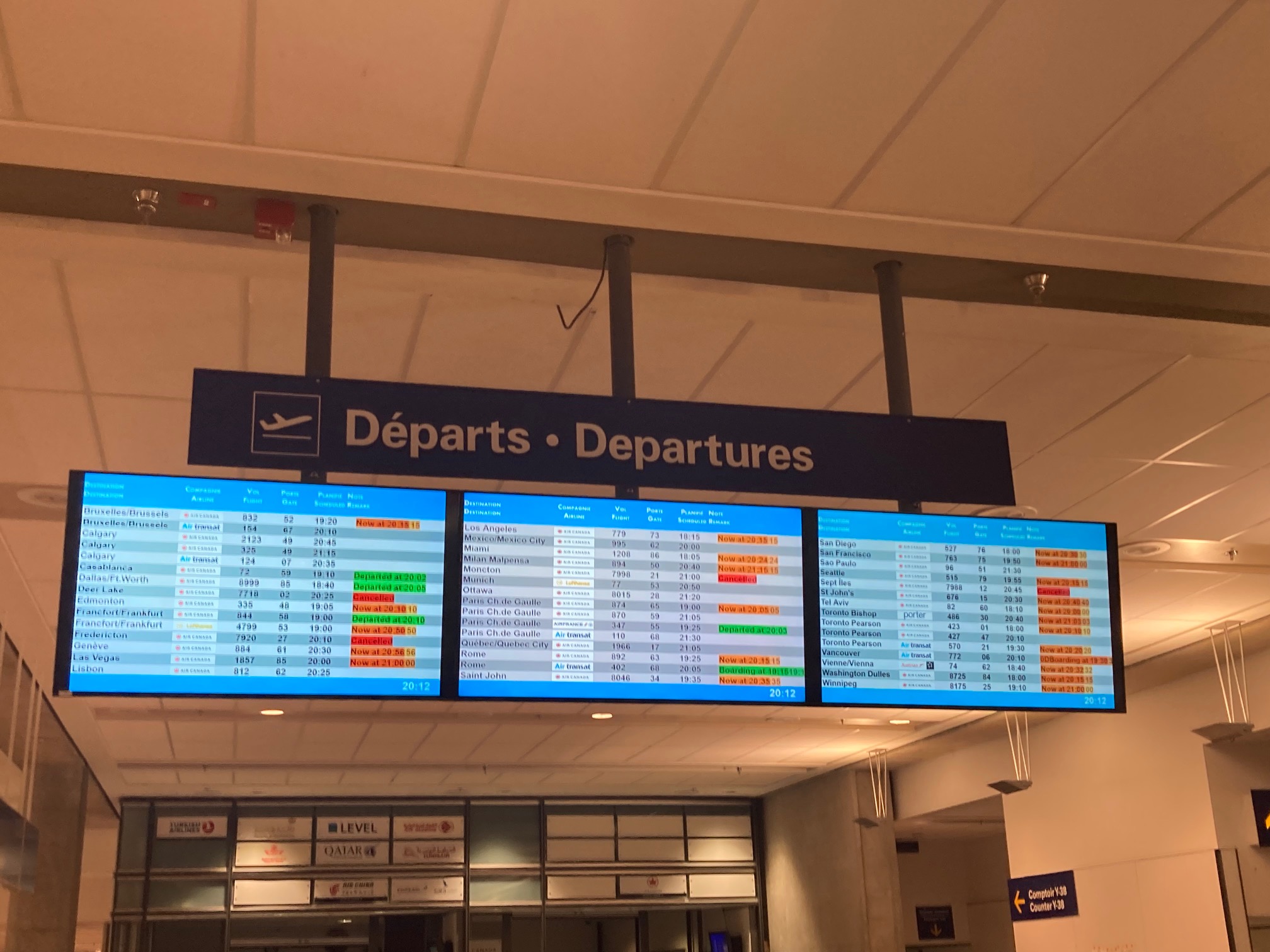
Apart from those issues, travel is back in a big way. It just depends on whether you want to risk sending your blood pressure sky high by dealing with the likes of the incompetents at Air Canada. and the fools running the airports at Heathrow, Toronto Pearson and Montreal Trudeau.

Oh. And paying double or triple for your over-booked flight than you would have paid pre-Covid.

Or being ripped off by avaricious airlines who have multiplied by dozens the number of frequent flyer points you need to get a "free" flight - that's the one you've maybe saved a decade to cash in.

If you do decide to brave the many obstacles and visit the rest of the world then here are some tips learned on my recent odyssey that included a dozen flights over five continents, half a dozen train journeys, four bus trips and six taxi journeys.

1. Make sure you allow more time than you think you could possibly need to check in. With flights over capacity it pays to make sure you have a boarding pass in your hand as soon as possible. Be first in line to avoid the risk of being bumped.

2. Do not trust connecting flights will actually operate. Be at the place from which you are flying internationally a day ahead. If your flight from Hobart, say, links with one to Asia and then Europe do not risk it being delayed or cancelled. There might not be another flight to your destination for two or three days and the airlines are less than helpful right now.

3. Confirm and re-confirm all your bookings on line. Hotels are over-booked as more and more people want to travel. Do not be the one turned away. But be prepared to spend hundreds of dollars a night on average accommodation. 

4. Pack all essentials in your hand luggage, and if at all possible travel with hand luggage only. Imagine being caught without your essential medication - pack prescriptions, too, just in case - and a spare pair of undies, for several days if your baggage goes missing.

5. Make sure you have fully comprehensive travel insurance. If things go wrong you want to be sure you will reimbursed for your ridiculously over-priced airport hotel and some clothes and toiletries to get you through the next few days.

6. Make sure you bring your own entertainment. Bring a book, games on your iPhone, anything to keep you occupied in the airports where you will be spending lots of hours; and in the air, where the airlines have jacked up the costs of in-flight wifi to ludicrous price levels.

7. Book every bus, train and accommodation choice online ahead of schedule. With everyone wanting to travel at the same time you might well find that bus between Venice and Ljubljana that you caught effortlessly a couple of years ago is now completely full for the next few days.

8. If you do have to check in luggage - probably essential if you are travelling for several weeks - then put a tracking device in your suitcase. It might help you locate your bag among the thousands piled up at Heathrow, or Montreal. Also take photos of every piece of baggage to help the airline track down your missing bag.  

9. Consider smaller airlines, which are likely to be more affordable than the big names, who are setting their own prices and getting them, such is the latent demand for travel.  

10. Be patient, be but be firm if your airline or hotel is jerking you around. A full-scale blow-up was the only reason Air Canada changed one of my delayed flights to an earlier one that was "full" - and actually had plenty of empty seats. Use social media pressure if necessary.

Or, perhaps, choose destinations closer to home that do not include transfers (which is where many bags go missing). Thai Airways from Australia to and from Bangkok is easy and relatively painless.

Whatever you do don't take wads of cash with you and expect to change it your destination. Banks are no longer keen, and airport exchange kiosks are an absolute trip-off.  
 
A survey this week showed Aussies are doing away with pre-planning and booking more spur-of-the-moment trips. Big mistake.

Research from Trafalgar, part of the wider The Travel Corporation group, revealed a 1,087% increase in bookings from April to June, compared to January to March this year.

With everyone keen to depart sooner rather than later, being fully prepared is the only way to guard against frustration and anger.

Or maybe just stay at home until the airlines get their acts together.


Tuesday, 1 February 2022

10 top tips: How to hitchhike as safely as possible


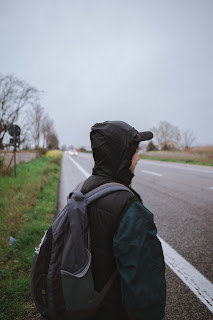
Hitchhiking can be dangerous. Hitchhiking can be fun. 

There are many schools of thought on the wisdom of sticking out your thumb or finger on the side of the road and taking a ride with a complete stranger.

I've hitched for half a century, off and on. I used to do an 1100km round-trip to watch soccer matches when I was a kid. I've only had one bad experience when someone tried to grab my tackle - otherwise nada. 

Nowadays I live somewhere where the state government thinks three buses are day are completely satisfactory, so I hitched a couple of times when my car has been off the road. 

This week, a recent arrival in my region posted on a local Facebook page asking if it was safe to hitch in Tasmania.

The responses ranged from "someone got killed hitching around here" (in the 1980s it turned out), to "it is perfectly safe".

The answer lies somewhere in the middle. 

There are, however, many steps you can take to make sure your hitching experience is as safe as possible. 

For a start, consider where you are hitching. I've hitched in Africa, Australia and Europe but would never hitch in the US (too many lunatics, too many folk with guns). Also make sure hitchhiking is legal. You don't want to be picked up the local cops.

Rural Tasmania is probably a much safer bet.

Here are some key things you can do to make sure you are as safe as possible.

1. Choose somewhere where you can easily be seen, and where drivers can easily pull over to pick you up. 

2. Take a photo of the vehicle and number plate of the person who has stopped for you and quickly post it on your Facebook page (or other social media), or send to a friend via SMS. You can remove it from social media as soon as you have completed your journey. Let the driver know you've texted their licence plate number.

3. Make sure someone you trust knowns where and when you will be hitching so they can call you, or you can call them, to confirm all is well. If you should go missing the police can be quickly alerted.

4. If you choose a spot where people are driving slowly the driver can get a look at you, but more importantly you can get a good look at the driver. Do not be afraid to say "no" if you don't like the look of the driver, or their vehicle. Trust your instincts.

5. Do not accept drinks from open containers, or bottles, and never accept food from a driver. The reasons are obvious. 

6. Try to stay in close proximity to your baggage. If the person who has picked you up demures, then get out of the car. You do not want to be in the front seat if your baggage is in the trunk.

7. If the driver makes you at all nervous, casually throw into the conversation your experience at kickboxing, taekwondo, or karate. That will make any possible assailant think twice.

8. Do not express any extreme views. If you an anti-vaxxer, or violently pro Government, keep your thoughts to yourself. You do not want to do anything to alienate the person giving you a ride. They might hate your views so much that they dump you on the side of a deserted road. 

9. Get dropped - and getting picked up - somewhere in clear sight of other people; a major junction, a service station or a shop is good. Much better than being dropped five miles closer to your destination but in the middle of nowhere.

10. Avoid hitchhiking at night. You are hard to see and a much easier target for anyone with villainous intent.

Hitching can help you meet interest people, save you money and get you from A to B with minimal fuss. If all goes well.   

In summary: Try to hitch with someone else (slower but safer). Dress sensibly. Smile nicely. Be a pleasant companion. Offer to pay some of the petrol costs on a long ride if you can afford it. Don't smoke unless the driver does. Don't flash cash, or wear expensive watches or jewellery.

Good luck!