ALL ACCOR

ALL ACCOR
Book, stay, enjoy. That's ALL.com
Showing posts with label insurance. Show all posts

Monday, 4 May 2026

Mixed messages for would-be flyers


All flight restrictions in UAE airspace have now been lifted, with operations returning to normal, the General Civil Aviation Authority of UAE announced over the weekend.

“Our decision came following a comprehensive assessment of operational and security conditions, in coordination with the relevant authorities”, the aviation authority said in a post on X.
 
So are you ready to book a flight via the UAE with Emirates, Etihad, Qatar or other Middle Eastern airlines?

Not so fast if you are an Australian.

The Australian Government's https://www.smartraveller.gov.au/ website is, as of today, still advising "Do Not Travel" to the volatile region.

Which means your travel insurance will almost certainly be invalid.

Here's what the official advice is:

"The situation in the Middle East remains volatile. There remains a risk of attacks and escalation. If you're in the UAE and want to leave, can secure a flight and it’s safe to travel to the airport, we continue to advise you to leave while commercial flights are available. UAE airspace may open or close at short notice, impacting flights at Abu Dhabi and Dubai international airports.

"Prioritise your safety, monitor developments closely and follow local authorities’ advice. Stay aware of your environment and avoid government, military or energy infrastructure, including oil production facilities. Avoid Israeli and US diplomatic missions and other locations associated with Israeli, Jewish and US interests. Follow local warning systems and, if warned of an imminent attack, move to an enclosed hardened shelter, ideally underground or close to ground level if available. If these are not available, seek an inner room without windows.

"Civilian infrastructure including hotels, roads, bridges, universities, energy infrastructure, including oil production facilities, water infrastructure and airports may continue to be targeted. There are widespread movement restrictions and other travel disruptions in the region. The UAE airspace may open or close at short notice, impacting flights at Dubai and Abu Dhabi airports.

"We raised our level of advice for the UAE to do not travel on 28 February due to the volatile security situation in the region and military strikes. ‘Do not travel’ advice applies to transit and layovers in the UAE. Even if you don’t plan to leave the airport. If you travel to or transit through the UAE, you may be unable to leave. Your safety will be at risk. Your travel insurance may become invalid.

"Due to heightened security concerns, the Australian Embassy in Abu Dhabi and the Australian Consulate-General in Dubai are closed. Online passport applications are open for Australians in the UAE."

Monday, 2 March 2026

What you should do if you are booked to fly internationally


Cancelling a flight because of the volatile situation in the Middle East could be a big mistake, Australians have been warned.

The Australian Travel Industry Association (ATIA) is urging travellers not to cancel travel arrangements due to the Middle East situation without first seeking professional advice.

They are also being urged not to contact their travel agent unless they are travelling in the next 48 hours - to allow passengers who are immediately impacted to be supported.

ATIA says it is closely monitoring the airspace situation across the Middle East, which is having a direct impact on international flight operations and passenger itineraries.

Several countries in the Gulf region have closed or significantly restricted their airspace following an escalation in regional hostilities. Major hubs - including Dubai, Abu Dhabi and Doha - are affected, with cancellations, delays and rerouting already underway across multiple carriers.

“The situation across the Middle East is evolving rapidly and is already disrupting international flight operations for Australians travelling via major hubs including Dubai, Abu Dhabi and Doha,” says ATIA CEO Dean Long.

“Emirates, Etihad Airways and Qatar Airways are the most directly impacted at this stage, but European and other international carriers routing through Gulf airspace are also experiencing delays and rerouting. The impact is broader than many travellers may expect.

“Smartraveller has updated its advice for the UAE and Qatar at www.smarttraveller.gov.au/news-and-updates/middle-east-conflict and travellers should be aware this may affect travel insurance provisions. We strongly encourage Australians to check DFAT’s Middle East conflict page and speak with their insurer if they have concerns.

"Our members are actively supporting impacted clients, managing re-bookings, securing alternative routes and providing up-to-date advice in what is a highly fluid environment.

“Our message to travellers is simple 1) do not cancel arrangements without first seeking professional advice; 2) please unless you are travelling in the next 48 hours and have not been contacted, hold off contacting your travel agent right not to allow them to support those currently caught up in, and who are stranded, delayed and dealing with cancellations. The situation is evolving rapidly, and experienced travel professionals are best placed to provide up-to-date guidance tailored to each traveller’s circumstances.”

Image: Jan Niepel, Scop.io

Saturday, 25 October 2025

Australian travellers gamble on skipping insurance

Just about every time I open a newspaper there is a sob story.

Someone fell out of a raft and suffered head injuries. Or slipped on the pavement and broke a leg. Or suffered a heart attack somewhere remote. Or missed their flight. 

And, invariably, someone has opened a Go Fund Me campaign for these unfortunate folk, who were too stupid - or too cocky - to take out travel insurance.

A new survey has revealed that one in seven Australian travellers (14%) went on their most recent overseas trip without any travel insurance coverage – a trend that is particularly pronounced among younger travellers, with 23% of under-30s gambling on going uninsured.

The survey of 1001 travellers, conducted by Quantum Market Research on behalf of the Insurance Council of Australia (ICA) and the Department of Foreign Affairs and Trade's Smartraveller, found that two-thirds (65%) of those who travelled without insurance gave it some thought before deciding to go without. 

Almost a third of those travellers (31%) deciding to forgo insurance due to travelling to a destination they perceived as safe.

"Travelling anywhere, whether it’s overseas or domestically, is the highlight of many people’s years, but even when travelling to destinations perceived to be safe the unexpected can still happen," said ICA CEO Andrew Hall. 

"Understanding your policy and assessing what kinds of activities you plan on undertaking while you’re travelling is the best way to make sure you’re protected.

"We encourage any travellers to understand their exclusions and assess whether they need additional cover for any risky behaviours they're considering. Check Product Disclosure Statements and speak directly to insurers with any questions."  

Other findings of the survey include: 

Willingness to take risks: A large portion of travellers (45%) were willing to take risks in pursuit of unique or memorable experiences, such as trying unfamiliar foods and visiting challenging environments. 

Medical tourism: Close to half (46%) of travellers had, or would personally consider, travelling overseas for a medical procedure - most commonly dental care (30%). The most common motivation was the lower cost of treatment. 

Alcohol-related risks: While 70% of Australian travellers consumed alcohol while overseas, well under half (43%) understood that travel insurance policies vary significantly in their coverage of those affected by alcohol. 

The current global political environment: Over half (56%) of travellers agreed that the current global political environment has meant that there are countries they had planned to visit but they will now avoid. 

Full survey results can be found on the Smartraveller website.

Image: Kaitlyn Thurlow, Scop.io

Wednesday, 6 August 2025

Scams to beware of when you rent a car, or accommodation


Not all scammers operate on the internet, or by ringing you with a far-fetched story.

Some big corporations, and short-term accommodation hosts, are not above trying to gouge their customers.

Any sane person renting a car knows to take photos of the vehicle - inside and out - when picking up or dropping off.

There have been multiple reports of renters bring accused of damaging a vehicle, or not returning it at all. And then being charged large sums for their "errors".   

It happened to me once in France. Eventually the rental company found the car and apologised. 

Now there are increasing reports of Airbnb hosts trying to scam guests and/or their insurance companies.

Airbnb recently apologised to a woman after an apartment host falsely claimed she had caused thousands of pounds’ worth of damage and used images she says were digitally manipulated to back up his allegations.

The London-based academic was refunded almost £4,300, and an internal review of how the case was dealt with has been launched at the short-term accommodation rental company.

The incident highlighted how cheap and easily available artificial intelligence software is now being used to manipulate images to give false evidence of what has happened in consumer complaints, according to one security expert.

Shortly after the woman checked out, the host told Airbnb that she had caused more than £12,000 worth of damage, and submitted pictures of an apparently cracked coffee table as part of his case.

His allegations included that she had stained a mattress with urine, and damaged a robot vacuum cleaner, a sofa, a microwave, a TV and an air conditioner.

The woman denied any damage had been done to the apartment, The Guardian newspaper reported. She said she left it in good condition and had only two visitors during the seven weeks she stayed.

“My concern is for future customers who may become victims of similar fraudulent claims and do not have the means to push back so much or give into paying out of fear of escalation,” the woman says.

“Given the ease with which such images can now be AI-generated and apparently accepted by Airbnb despite investigations, it should not be so easy for a host to get away with forging evidence in this way.”

Airbnb said the host had been warned for violating its terms and told he would be removed if there was another similar report. 

It said there would be a review into how her case was handled. “We take damage claims seriously - our specialist team reviews all available evidence to reach proportionate outcomes for both parties, and to help ensure a fair approach, decisions can be appealed," it said.  

Serpil Hall, the director of economic crime at the management consultants Baringa, told The Guardian that manipulating images and videos was now “easier than ever”, and software to do so was cheap, widely available and required little skill to use.

In one recent case an insurance company found there had been an increase in false claims on vehicles and home repairs using photos that had been manipulated.

“Recently, many companies have decided images can’t be taken at face value any more [during disputes], and there is a need for forensic tools and fraud intelligence models to validate them.”

So now with car rental companies I video and photo every square inch of a car at pickup and then at drop off.

Maybe we should all do the same when we stay at Airbnb or other rental properties, where hosts have been known to claim renters did not leave the keys, or caused excessive damage.

You need to have evidence of dropping the car off, the parking spot number where you left it etc. Or time-dated images that show you left an apartment in immaculate condition and showing you have left the keys behind when you exit. 

The "missing" keys are reportedly a common scam.

The host claims you lost the keys and you get charged for new locks. Or their insurance company does.

.Also beware of demands for additional fees, deposits, local taxes, or other amounts not mentioned in the listing when you check into a short-term rental property.

Be careful out there folks.

Image: Ivan Naunov, Scop.io


Sunday, 27 October 2024

New tourism tax planned for Thailand


Your visit to Thailand is about to become a little more expensive.

The Thai government says it will roll out a proposed tourist tax next year.

The THB 300 baht (around $13.50) fee will start with in-bound air travellers and will be implemented from mid-2025, the Bangkok Post has reported. .

Tourism and Sports Minister Sarawong Thienthong said the plan still requires cabinet approval.

“We are working out the details and will submit for approval in January next year,” he said.

“It will start with air passengers, the first phase which will be six months to take effect.”

The fee will later be imposed on overland travellers but around 70% of foreign arrivals arrive in Thailand by air.

Sarawong said the system will be set up to enable advance online payments to avoid delays at airports. 

I don't see a charge of $13.50 scaring away Australian visitors, but the plan must be implemented efficiently.

The project was approved by the previous government in February 2023, but it now requires a consensus from the new cabinet as the administration has changed since a general election.

The transaction system has been prepared and will be is powered by Krungthai Bank.

Once the government approves this project, the ministry will start a procurement process to recruit software developers and insurance companies to offer insurance policies for foreign tourists.

Tourists will apparently be covered for 1 million baht ($45,000) in the event of death from an accident, and 500,000 baht in case of injury.

The ministry has said people who frequently cross borders for trade purposes will not be affected as they will be able to use a border pass to be exempt from the levy.

Image: Winsor Dobbin 

Saturday, 13 May 2023

Tourists warned not to be dickheads


There is nothing more Australian than getting tanked up and then hiring a motorbike or quadbike to bomb around Bali or Thailand without a care in the world.

But as the northern hemisphere holiday season approaches, tourists have been warned to avoid hiring motorcycles and quads abroad. Particularly if they do not have adequate insurance.

Holidaymakers have also been warned to think twice before hiring buggies and mopeds abroad after a string of deaths and injuries.

Car rental experts at StressFreeCarRental.com have cautioned tourists looking for fun, warning that many of the vehicles on offer are extremely dangerous.

Vehicles like mopeds are readily available and accessible to tourists abroad, especially in party destinations in Greece and Thailand. But many tourists are unaware of the dangers and ignore road rules when using them.

In Phuket, Thailand, there were over 500 reports of motorbike accidents involving tourists in the first two months of 2023 alone.

The vice-governor of Phuket, Amnuay Pinsuwan, said most cases involved people with no driving licenses, wearing swimsuits and driving at high speeds.

In January, a Ukrainian man, who was not wearing a helmet, was found dead in Bali after his rented motorbike went off a bridge.

A spokesperson for StressFreeCarRental.com said: “Although hiring motorcycles and quads is popular in tourist destinations, the number of tragic accidents involving them proves just how dangerous they are.

“Tourists should read the fine print on their insurance policies and take all the necessary precautions to protect themselves. Many factors can invalidate their insurance, including not wearing a crash helmet or hiring an unregistered vehicle.

“The risk to life is higher when driving on unfamiliar roads, especially in small, open vehicles which offer little protection, so failure to take proper care will inevitably lead to severe and fatal injuries.

“Although the rules may seem more relaxed while abroad, under no circumstances should tourists consider driving under the influence because the vehicles are still dangerous machinery with the power to harm both driver and passers-by.

“Getting a taxi, or hiring a car, is much safer and should be considered where possible.”

Image: Choi Sung Wook, Scop.io 


Wednesday, 23 November 2022

Older travellers being victimised


Older travellers are being penalised by being charged additional hidden costs and restricted choice, new research by British consumer organisation Which? has found.

The costs relate to purchasing holiday essentials including travel insurance and car hire," Travel Mole reports.

Older people have long been charged higher premiums for their travel insurance, with advancing age a recognised risk factor pushing up prices.

Which? also found data from Moneysupermarket.com that shows that since Covid, the amount older travellers are paying has risen disproportionately.

For a single trip policy covering a week in Spain, those aged 25-54 would on average have paid around £7.98 in 2019, while in July this year, they paid an average of £10.65.

Older age groups have borne the brunt of steeper increases, with the amount paid by the 85+ age group rising an absurd 169%.

Those in the 75-84 bracket have seen policies rising on average by 60%.

Which? is concerned that recent price rises for older travellers are disproportionate.

It recently scrutinised 199 travel insurance policies and discovered 190 of these (95%) set a maximum age threshold for new customers.

Car hire is another area in which older travellers are likely to be short-changed.

Many companies bury age restrictions in their terms and conditions documents.

Avis, Budget, Enterprise and Hertz only ask to confirm if they are over 30 when booking online, meaning drivers could be at the desk before discovering prohibitive age restrictions.

To add to the confusion, age restrictions can often vary between locations, even when using the same company.

Fees for older drivers are also often exorbitant.

Which? has also found evidence of older travellers being penalised because of digital exclusion.

Those in older age groups who may lack technological skills will likely end up paying more as a result.

Saga, which offers insurance exclusively to the over 50s, charges as much as 30% less for those who book online.

Airlines including British Airways and easyJet charge customers more to amend a booking by phone.

A similar situation no doubt exists in Australia. 

Guy Hobbs, editor of Which? Travel, said: “If you are an older traveller, it’s important to shop around and compare the rates on offer, as there’s likely to be a great deal of variation between providers.

Image: Nikol Mudrová on Scopio.


Thursday, 21 July 2022

Ten vital tips to help make international air travel less painful


Everyone wants to travel internationally right now.

My advice. Hold your horses and be patient. Maybe wait a month or two.

And if you really have to travel make sure you are super-prepared with every detail checked and re-checked.

And even if you've got everything right, still be prepared for ludicrous lines at ill-prepared airports, for for flights to be delayed or cancelled. 

And for it to take a couple of hours for your baggage to emerge at the other end if it makes it at all.

Certainly be prepared for your baggage to be delayed or lost (for a week if you are flying with Air Canada).

Also be aware it may be impossible to see a doctor overseas because on ongoing Covid demand. Like in Australia, appointments are as rare as hen's teeth. 

Expect trains to be full to the max with nowhere to put your luggage.

And for maskless morons to put your health at risk at every turn.

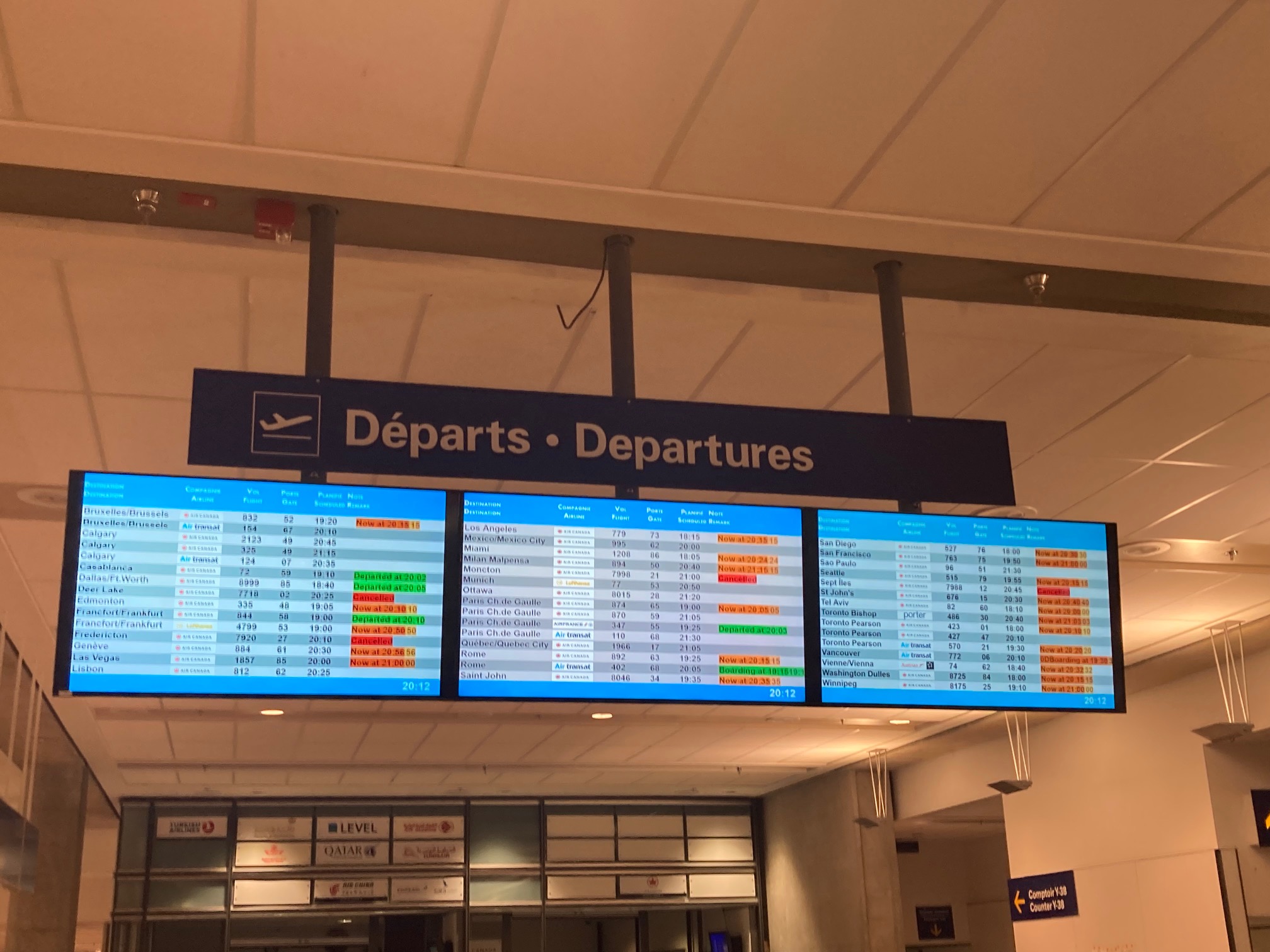
Apart from those issues, travel is back in a big way. It just depends on whether you want to risk sending your blood pressure sky high by dealing with the likes of the incompetents at Air Canada. and the fools running the airports at Heathrow, Toronto Pearson and Montreal Trudeau.

Oh. And paying double or triple for your over-booked flight than you would have paid pre-Covid.

Or being ripped off by avaricious airlines who have multiplied by dozens the number of frequent flyer points you need to get a "free" flight - that's the one you've maybe saved a decade to cash in.

If you do decide to brave the many obstacles and visit the rest of the world then here are some tips learned on my recent odyssey that included a dozen flights over five continents, half a dozen train journeys, four bus trips and six taxi journeys.

1. Make sure you allow more time than you think you could possibly need to check in. With flights over capacity it pays to make sure you have a boarding pass in your hand as soon as possible. Be first in line to avoid the risk of being bumped.

2. Do not trust connecting flights will actually operate. Be at the place from which you are flying internationally a day ahead. If your flight from Hobart, say, links with one to Asia and then Europe do not risk it being delayed or cancelled. There might not be another flight to your destination for two or three days and the airlines are less than helpful right now.

3. Confirm and re-confirm all your bookings on line. Hotels are over-booked as more and more people want to travel. Do not be the one turned away. But be prepared to spend hundreds of dollars a night on average accommodation. 

4. Pack all essentials in your hand luggage, and if at all possible travel with hand luggage only. Imagine being caught without your essential medication - pack prescriptions, too, just in case - and a spare pair of undies, for several days if your baggage goes missing.

5. Make sure you have fully comprehensive travel insurance. If things go wrong you want to be sure you will reimbursed for your ridiculously over-priced airport hotel and some clothes and toiletries to get you through the next few days.

6. Make sure you bring your own entertainment. Bring a book, games on your iPhone, anything to keep you occupied in the airports where you will be spending lots of hours; and in the air, where the airlines have jacked up the costs of in-flight wifi to ludicrous price levels.

7. Book every bus, train and accommodation choice online ahead of schedule. With everyone wanting to travel at the same time you might well find that bus between Venice and Ljubljana that you caught effortlessly a couple of years ago is now completely full for the next few days.

8. If you do have to check in luggage - probably essential if you are travelling for several weeks - then put a tracking device in your suitcase. It might help you locate your bag among the thousands piled up at Heathrow, or Montreal. Also take photos of every piece of baggage to help the airline track down your missing bag.  

9. Consider smaller airlines, which are likely to be more affordable than the big names, who are setting their own prices and getting them, such is the latent demand for travel.  

10. Be patient, be but be firm if your airline or hotel is jerking you around. A full-scale blow-up was the only reason Air Canada changed one of my delayed flights to an earlier one that was "full" - and actually had plenty of empty seats. Use social media pressure if necessary.

Or, perhaps, choose destinations closer to home that do not include transfers (which is where many bags go missing). Thai Airways from Australia to and from Bangkok is easy and relatively painless.

Whatever you do don't take wads of cash with you and expect to change it your destination. Banks are no longer keen, and airport exchange kiosks are an absolute trip-off.  
 
A survey this week showed Aussies are doing away with pre-planning and booking more spur-of-the-moment trips. Big mistake.

Research from Trafalgar, part of the wider The Travel Corporation group, revealed a 1,087% increase in bookings from April to June, compared to January to March this year.

With everyone keen to depart sooner rather than later, being fully prepared is the only way to guard against frustration and anger.

Or maybe just stay at home until the airlines get their acts together.