ALL ACCOR

ALL ACCOR
Book, stay, enjoy. That's ALL.com
Showing posts with label grape varieties. Show all posts

Monday, 7 September 2026

Mapping the best way to explore the Yarra Valley


The Yarra Valley is the birthplace of Victorian wine. 

With a 170-year wine legacy, the region is one of Australia's most popular wine tourism regions. 

Just a one-hour drive from downtown Melbourne, the Yarra Valley offers not only fine cool-climate wines, but also great produce, pubs, breweries and distilleries. 

There are tastes of city sophistication here, but you are very much in the country. 

With over 80 vineyards dotted throughout Healesville, Coldstream, Yarra Glen, Seville and Lilydale, the Yarra Valley is regarded as one of Australia’s premier cool-climate regions, and is renowned for a wide range of wine styles, including chardonnay, pinot noir, cabernet sauvignon, shiraz, and méthode traditionnelle sparkling.

In recent years, other highly acclaimed varieties have joined the party, including nebbiolo, gamay, arneis, sangiovese and savagnin.

The Yarra Valley isn't one destination - it's a dozen little pockets, each with its own character, its own back roads, and its own reasons to linger, the Wine Yarra Valley organisation boasts. 

To make it easier to find your kind of day out, Wine Yarra Valley has grouped the region's cellar doors into a handful of trails. 

You can choose by sub-region, or your favourites. 

Pick one trail, follow the vines, and let the day unfold. 

Saturday, 18 April 2026

Gibson sees an Italian accent as the way forward for the Barossa


Experienced Barossa viticulturist and wine producer Rob Gibson knows the industry needs to change.

For Gibson that means incorporating grapes more suited to increasingly warm regions to the usual varietals in Australia.

Gibson Wines has just released The Prospect, a shiraz montepulciano blend from the 2023 vintage.

It is a deliberate response to a rapidly warming Barossa - and contemporary tastes.

“The future comes every new vintage… challenging our skills and adaptability,” says Gibson.

"Warmer seasons and compressed harvests are no longer outliers. They are the working conditions."

For Gibson, blending has become a practical tool for resilience.

“As a viticulturist we try and predict the unpredictable," he said. "There is no crystal ball for the future. Gut instinct and experience lead the way.

"Montepulciano plays a central role. It holds structure and freshness through heat, bringing lift and savoury tension to shiraz’s depth and familiarity.

"Together, the varieties deliver clarity and balance without excess weight. The blend of shiraz and montepulciano reflects the cooler style of Barossa.

“The Prospect was born from a restless curiosity, seeking continued improvement in what we do and what we produce. 

”This is not experimentation for novelty’s sake. It is refinement. A wine built with the realities of climate in mind and with confidence in where the region is heading."

The wine has an impressive balance between power and elegance; bold fruit and savoury notes. 

The Prospect Shiraz Montepulciano 2023 is available now for $40 through Gibson Wines at https://gibsonwines.com.au/

Wednesday, 18 March 2026

For five weeks the Yarra Valley is the Place for Pinot


Pinot noir? Pinot gris/grigio? Pinot blanc? Pinot meunier?

Whatever your favourite pinot family member, the Yarra Valley is likely to likely to have something of interest.

From March 20 to April 27, Wine Yarra Valley is launching The Place for Pinot - a region-wide pinot celebration, bringing together 16 wineries for a five-week showcase of the wines the cool-climate region is known for.

Visitors are invited to taste their way across the valley, discovering cellar doors, vineyard stories and pinot experiences along the way.

And to guide the journey: a Digital Pinot Passport.

Visitors can check in at participating wineries, build a pinot trail, and unlock an entry into a draw to win a Pinot Prize Pack - a mixed pinot selection from participating wineries.

They are: Oakridge · Helen & Joey Estate · SOUMAH · Squitchy Lane · Punt Road Wines · Pimpernel Vineyards · Medhurst Wines · De Bortoli Wines · TarraWarra Estate · Giant Steps · Boat O'Craigo · Jayden Ong Wines · Wedgetail Estate · Cellar Door at The Farm · Nillumbik Estate · Buttermans Track Wines.


Saturday, 22 June 2024

Hilltops region offers point of difference for wine lovers


I tasted a sensational bottle of nebbiolo last week.

It was the 2021 Ravensworth Hilltops Nebbiolo ($45), made by Bryan Martin, a long-time collaborator at Canberra-region stalwart Clonakilla.

But while Ravensworth is based, like Clonakilla, at Murrumbateman, the fruit for this wine came entirely from the Hilltops region near Young - the cherry capital of Australia.


The wine was very floral with red fruits and delicatessen elements. Lovely length, too.

It was a pity I had to drink it so young. It is a definite cellaring prospect and underlines Martin’s deft touch in the winery.

I first became aware of the quality of Hilltops fruit a decade or more ago thanks to wines labelled Moppity and Freeman Vineyards, which were both impressive and fairly priced.

Top Hilltops producers include Freeman Vineyards, Grove Estate, Moppity Vineyard, Grove Estate, Chalkers Crossing Vineyard and McWilliams Barwang.

My friend and colleague Rick Allen, wine writer for the Newcastle Herald, recently wrote an article about Hilltops wine.

Here are some of his words:

It’s basically an oversized granite rock, about 150 kilometres long and 50 kilometres wide, but to winemakers it’s 24-caratgold.

Because sitting on that rock, which is about two hours north-west of Canberra, is Hilltops, one of the most exciting wine regions anywhere in Australia.

Canny winemakers are queuing up to get their hands on Hilltops fruit, yet strangely enough, the region is still largely unknown to most wine drinkers.

Why is that? Winemaker [and grape grower] Brian Freeman, who has 200 hectares of vines which makes him easily the largest Hilltops producer, puts it down to a shortage of cellar doors.

“Not enough cellar doors means we don’t attract people, and because we don’t attract people no-one is putting up new cellar doors.”

It’s wine’s own Catch-22.

But as a premium grape growing region, it has "got the lot".

There’s hardly a variety that won’t grow there - not just grow but thrive - producing fruit of the highest quality.

At the last Canberra wine show for example, Hilltops wines collected eight trophies plus 15 gold medals.

Freeman says the secret to Hilltops’ success is a combination of soil and climate.

“The soils are deep and well drained,” he explained. “There’s also a layer of decomposed granite about 12 to 15 metres deep that has been formed over the last five million years which indirectly helps regulate the water supply for the vines.

“And we get ideal weather conditions - cool nights in summer and a very dry autumn … which is ideal for grapes to ripen.”

Freeman’s 200 hectares, for example, has no less than 27 varieties growing.

Hilltops has traditionally been known for shiraz and cabernet, but now the Italian varieties like sangiovese, nebbiolo, rondinella and fiano are really impressing”

Canberra winemakers use a lot of Hilltops fruit, but the Hunter Valley is in on the act too.

One of the first Hunter wineries to catch on about the potential of Hilltops was Hungerford Hill.

“We’ve probably been using fruit from there or the best part of 35 years,” winemaker Bryan Currie said.

“There’s not a grape variety I can think of that you can’t grow in Hilltops.

"It’s quite amazing.

"It’s warm enough that your grapes will ripen fully, but cool enough to allow really nice aromatics. The dry autumn means the grapes can have that long hang time … you can pick pretty much from February to June.

“And it allows us to produce wines that we just can’t do in the Hunter.

“Off the top of my head we take pinot grigio, fiano, tempranillo, graciano, malbec, cabernet and sangiovese. We also do a Hilltops shiraz which is very different to Hunter shiraz - more aromatic and spicy.”

Take a note of the Hilltops name … you’ll be seeing a lot more of it.

Tuesday, 7 May 2024

Shades of Bordeaux from Margaret River


Margaret River has often been described as "the Bordeaux of Australia".

The region has a reputation for its cabernets, as well as Bordeaux-style blends.

Much like Bordeaux, Margaret River's Mediterranean climate has strong maritime influences from the confluence of the Indian and Southern Oceans. There are also similarities between gravelly soils an limited vigour.

As in Bordeaux, cabernet franc and petit verdot generally play minor roles as components of a Margaret River blend, but winemaker Michael Kerrigan gives both those varieties a chance to shine in their own right as part of the Hay Shed Hill bock series, wines made from the estate vineyard in Wilyabrup.

The 2022 Hay Shed Hill Block 8 Cabernet Franc and 2022 Hay Shed Hill Block 10 Petit Verdot both retail for $45 is purchased direct online.

"It is a thrill to work with blocks of fruit that express their terroir," says Kerrigan. "These wines represent the best of Hay Shed Hill.

"The blocks themselves have specific characteristics of aspect and slope that make them distinctive"

Both wines are made in tiny quantities and I preferred the cabernet franc with food (a rabbit stew) and the peitit verdot without food. Which is strangely counter intuitive. 

The fragrant cabernet franc is medium-bodied and has lot of length (think varietal intensity and terrific tannin structure), while the petit verdot is released as a varietal only in years with long, mild March and April temperatures, enabling the late-ripening variety to mature. The 2022 has distinctive violet/pepper aromas and brisk acidity. There are dark berry and currant notes to the fore and a rich, supple finish. 

A fascinating exercise to compare the pair.

See www.hayshedhill.com.au


Thursday, 14 September 2023

Why wine lovers should give grenache a fair go


The grenache grape - sometimes called garnacha, or grenache noir - can be found all lover the world of wine, but flourishes in warm, dry conditions.

Every year on the third Friday in September, International Grenache Day aims to create awareness of one of the most widely planted grape varieties.

In Australia, grenache naturally thrives in regions like the Barossa and McLaren Vale, and was once the backbone of the fortified wine industry.

It stars in southern France, in Spain, where the grape is believed to have originated, in Sardinia, and in warmer regions of California.

Often red fruited and best when made with moderate alcohol levels, grenache can be made in a range of styles, as was evident at a recent Hill Smith Family  Estates tasting of several of that producer's grenache wines.


The growing of grenache in Australia dates back to 1832, when it was one of the original varieties brought into the country by industry pioneer James Busby.

It was hugely popular in Australia from the 1920s to the late 1960s, when the bulk of wine production was of the fortified wines that used to dominate the industry.

Now just over 1% of all vines in Australia are grenache, with many having been pulled out in the 1980s.

Many of those that survived are untrellised bush vines (below) and the variety is now enjoying increased popularity and renewed enthusiasm.

Hill Smith Family Estates and Yalumba senior winemaker Sam Wigan says the grenache grape is among the most versatile.and has a log history in South Australia, with plantings in McLaren Vale in the late 1830s and the Barossa in the early 1840s.

"Grenache continues to thrive today, producing vibrant and aromatic wines which are ideal with food," Wigan says.

"Grenache is so nimble and versatile and can even be served chilled on warmer days. These days winemaking can play an even bigger role than where the grapes were grown."

The wines we tasted were:

Yalumba The Tri-Centenary Grenache 2021 $65

Yalumba Vine Vale Grenache 2022 $40

Yalumba Bush Vine Grenache 2021 $28

Running with Bulls Barossa Garnacha 2021 $25

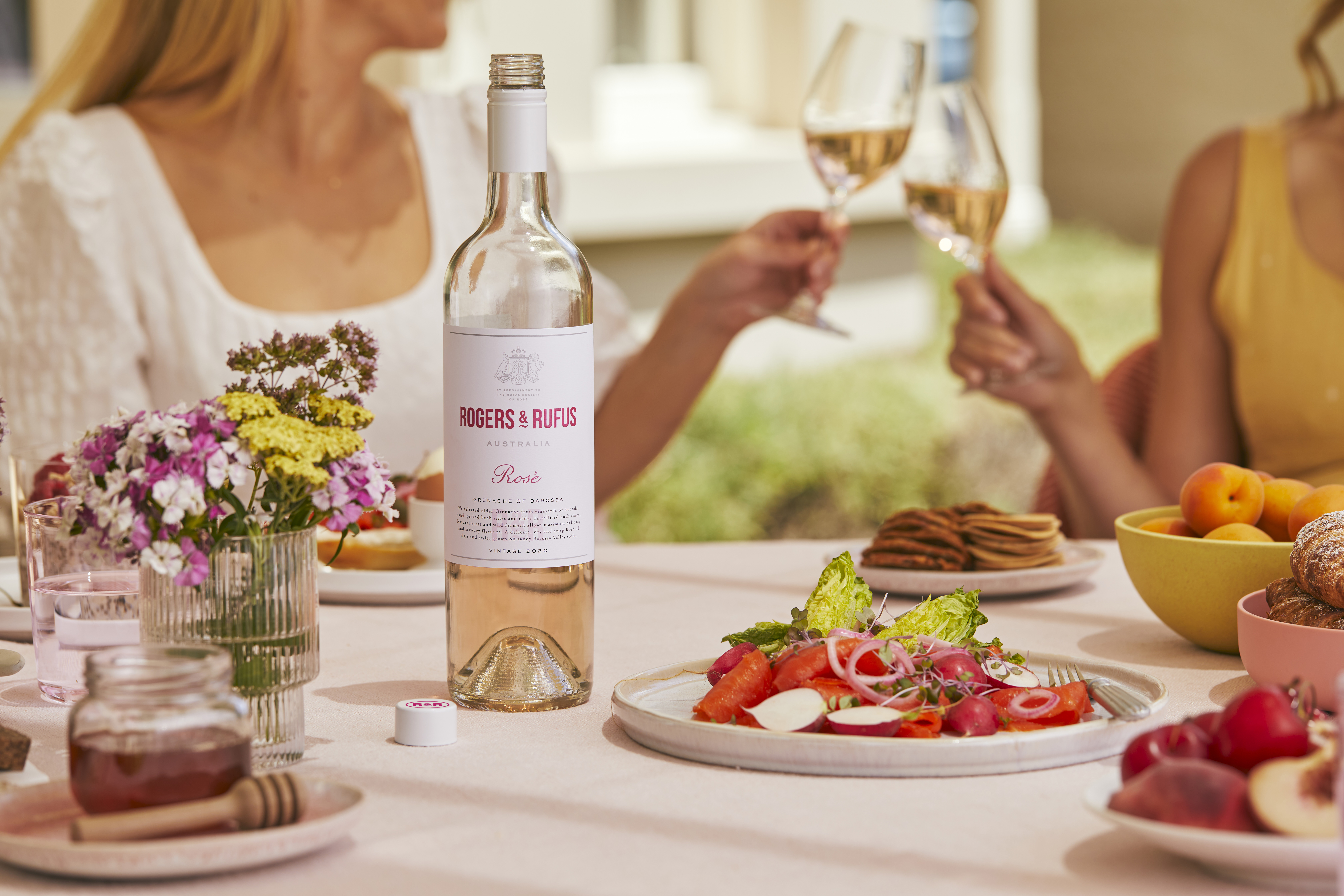
Rogers & Rufus Grenache Rosé 2022 $27


While the appeal of the bigger wines was obvious, my preference was for the pale, dry delicate and fresh appeal of the rosé, and the bright, vibrancy and food friendliness of the Spanish-style Running with Bulls and the lighter-framed Bush Vine example.

The bigger, gruntier Vine Vale wine needs to be matched with red meat dishes to be seen at its best, while the deeper, darker Tri-Centenary was a bold wine that mellowed after being open for 24 hours. Some of the grapes in this wine come from bush vines that are over 130 years old.

For anyone who hasn't tried the variety for a while, buy a bottle of Friday and give grenache a go. 

It remains a relatively affordable treat. 


Saturday, 22 July 2023

Orange vigneron showcases Austrian grape variety


The Orange wine region is pretty cold - and has several vineyards at significant altitudes.

It makes sense, then for an Austrian grape variety like gruner veltliner to thrive.

Orange's Stockman's Ridge has just released two new grüner veltliners grown by owner Jonathan Hambrook and made by local winemaker Will Rikard-Bell.

The label is is championing grüner veltliner with the release of their 2022 Stockman’s Ridge ‘Signature’ Grüner Veltliner and 2022 Stockman’s Ridge ‘Rider’ Grüner Veltliner.

Two excellent wines, but made in contrasting styles.

Grüner veltliner is intrinsically linked to Austria, where it accounts for around 30% of all wine grape plantings.

In Australia plantings are small, albeit increasing, with over 60 winemakers currently making a grüner. The movement has been led by Hahndorf Hill in the Adelaide Hills. 

The Stockman’s Ridge grüner veltliner vines were planted on the north-western slopes of Mount Canobolas at 800 metres elevation in 2012.

With the vineyard maturing, Hambrook is hoping to shine a spotlight on its potential.

“Orange’s long, cool ripening and high sunshine hours is perfect for this variety,” he says.

“It’s an exciting new variety for the region and one that has a great history growing in the colder, high elevation climates.

“After we planted the vines, we had years of drought. As a result, the vines sent their roots deep in search of moisture.

"Over the past few vintages, we have experienced good vintages and the deep-rooted vines are now producing excellent quality and yields. This has allowed us to experiment with different styles.”

The 2022 Stockman’s Ridge ‘Rider’ Grüner Veltliner is fresh and vibrant, crisp and lean on the palate and unoaked to showcase varietal character.

In contrast, the 2022 Stockman’s Ridge ‘Signature’ Grüner Veltliner was harvested riper to create a fuller, more mouth-filling style.

It was matured in seasoned French oak with regular lees stirring for three months to add textural interest. A small component underwent malolocatic fermentation.

“We are gaining valuable experience with this variety and foresee a great future for it," says Hambrook.

"Riesling andcChardonnay are excelling in the region, and it was logical that grüner veltliner would also succeed. Time will be the judge, but all the indicators so far are positive.”

The "Signature" retails for $40 and the "Rider" is $35. See https://stockmansridge.com.au/


Saturday, 25 March 2023

Rathbone speaks out as fight over the name Prosecco continues

The fight over the name Prosecco - and whether it is a region or gape variety - continues to make wine industry waves.

Australian Grape & Wine is urging anyone with an interest in the name Prosecco, or the ongoing rights to use other grape variety terms, to make sure their voice is heard as the Australian Government opens a public objections process in a range of proposed European Union (EU) wine geographical indications (GIs).

“It’s absolutely critical that Australian grape growers and winemakers submit their views to Government through this public objections process” said Lee McLean, chief executive of Australian Grape & Wine.

“Prosecco is a grape variety just like shiraz or chardonnay” said McLean. “We need to let political decision makers in Australia and the EU know that maintaining our ability to use grape variety names is an essential element of rules-based trade and investment in our sector.”

Through the negotiation for the Australia-European Community Agreement on Trade in Wine (Wine Agreement), the EU is seeking protection for 50 new wine GIs - including Prosecco and Picpoul de Pinet - as well as updates to existing GIs.

The public objections process is a way for interested stakeholders to provide submissions of objection to the wine GIs for which the EU is seeking protection for in Australia.

It is the second time the grape variety name Prosecco has been subjected to a public objections process in Australia under the agreement.

The last attempt by the EU to stop Australian producers from using the name Prosecco was quashed by the Registrar of Trademarks in legal proceedings in 2012 and 2013 on the grounds that Prosecco is a grape variety name.

Italian producers say the name of the grape is glera and that Prosecco is a defined region.

“We understand some will be frustrated by the requirement to re-prosecute the arguments they made in 2012-13, particularly given the common-sense outcome delivered by the Registrar of Trademarks at the time” said McLean.

“It is critical, however, that every grower and every winemaker with an interest in Prosecco takes the time to lodge a submission into this process.”

Darren Rathbone, CEO and winemaker at the Rathbone Wine Group, whose labels include Yering Station, Mount Langi Ghiran and Xanadu, is vocal on the issue. 

"It is important to protect the names of the grape varieties that we use in Australia," Rathbone says.

"Prosecco is the name of the grape that the Australian winemakers use to make the wine we call Prosecco. Unfortunately the EU are claiming that Prosecco is a region rather than a grape variety.

"Protection of regional names, such as Margaret River, Yarra Valley or Burgundy (there are obviously thousands of them across the world) need to be defined and protected.

"Grape variety names, such as chardonnay, cabernet sauvignon or prosecco also need to be defined and protected."

Australian Prosecco has grown to over $200 million dollars in value, with regions like Victoria’s King Valley - home to Prosecco producer DalZotto (above) - investing millions in vineyards, production facilities and associated tourism infrastructure. 

The variety is now grown in 20 regions across Australia.

Submissions must be lodged before noon on April 21 via the Department of Agriculture, Fisheries and Forestry’s Have Your Say webpage.

Friday, 16 September 2022

Vermentino and the grapes of wrath


The wine industry in Europe is full of rage right now.

In Italy there is outrage that other countries use the name Prosecco for their sparkling wines. And ongoing moves to prevent it. 

And in France there is anger that they can no longer use the grape name vermentino on their wine labels.

Which is is odd, because - as Jancis Robinson points out - the French have only relatively recently adopted the use of the name vermentino.

Rolle has traditionally been the southern French name for vermentino, Sardinia's flagship white grape variety.

The wine industry is, of course, awash with grape varieties that have different names in different countries. One man's grenache is another man's garnacha, and one woman's pinot noir is another's blauburgunder.

Either way, the producers in the Languedoc are very unhappy, with several speaking out to trade publication Drinks Business this week.

Jacques Bilhac, owner of Domaines d l’Aster in Pézenas, said a lot of producers in the Languedoc grow vermentino and use the name on labels.

“France makes similar volumes of vermentino as they do in Italy, and we have always called it vermentino - we have been promoting it for ages, and the consumer is starting to recognise it,” said producer Jean-Claude Mas.

The Italians apparently based their successful argument to the European Union on the fact that vermentino is part of existing Geographical Indicators (GI) in Italy, both of which are Sardinian: Vermentino di Gallura and Vermentino di Sardegna.

Vermenino is actually called favorita in Piedmont and some other parts of Italy - but that is another story for another day.    


Monday, 25 April 2022

Celebrating the many styles of viognier


It is hard to pronounce and often hard to find.

Viognier (vee-on-yay) is a white wine grape variety that is is the only permitted grape for the French appellation Condrieu in the Rhone Valley. 

It is also found in Australia, where Yalumba has spent 40 years exploring various styles of viognier, as well as small plantings in New Zealand, South Africa and the US. 

The grape is sometimes co-fermented with shiraz (Clonakilla being a headliner of this blend), or with other Rhone whites like marsanne, roussanne and clairette. 

Viognier is a low-acid variety that thrives in warmer climates, producing soft, often lush and interesting white wines. 

It also can be used for making dessert-style sweet wines. Expect to find full-bodied and textural wines with apricot, peach and pear flavours to the fore, sometimes alongside ginger and Asian spice notes. 


With International Viognier Day - a Yalumba initiative - just around the corner on April 29, we tasted a range of wines featuring the grape with Yalumba chief winemaker Louisa Rose and Langmeil's James Lindner.

They were: Yalumba Y Series Viognier 2021 (RRP $15), Yalumba Eden Valley Viognier 2020 ($28), Yalumba Organic Viognier 2021 ($22), Langmeil Three Gardens Viognier Marsanne Roussanne 2021 ($20), Guigal Côtes du Rhône White 2019 ($35), Yalumba The Virgilius Viognier 2019 ($50) and Yalumba FSW 8B Botrytis Viognier 2020 ($30).

A fascinating range of styles and price points.

Tasting several of the wines later with food, we discovered just how food-friendly the variety can be with its "refreshing bitterness" when phenolics are used in a positive way during the winemaking process.

Viognier can be paired with anything from a curry to blue cheese, making it one of the most versatile of wine choices.

"With food these wines really come into their own," says Rose.

"More so than sipping on them without food."

Launched last year, International Viognier Day is for producers and enthusiasts all over the world.

Until the 1970s, the only plantings of the variety were in Condrieu and Côte Rôtie but in 1980 Yalumba planted 1.2 hectares of viognier vines in the Eden Valley.

Rose, now Yalumba’s head of winemaking, first encountered viognier when she began working at Yalumba in 1992, and the grape has been a passion project for her over the past 30 years.

Today, Yalumba exports far more viognier to the US and UK than it sells in Australia - and has planted additional vines in regions ranging from the Riverland to the Limestone Coast.

“Viognier is a low-acid variety, but it gives a refreshing character from the phenolics and the tannins which come out of the skins,” explained Rose.

“Viognier is at home with food and is particularly suited as an aperitif. The richness and spice in the Viognier bring out flavours and textures in food that otherwise you sometimes don’t see.

“After one sip, I am thinking about what I want for dinner. It’s an exciting wine from that point of view.

“We have watched the Yalumba family and friends go through the same journey of discovery  as the wines have made their way to hearts and minds all over the world.”

For details see internationalviognierday.com

Friday, 18 February 2022

A world of confusion when it comes to wine branding


Do you know your shiraz from your syrah; your zinfandel from your primitivo; your malbec from your côt; your rolle from your vermentino, your chenin blanc from your steen?

It sometimes seems as if the wine industry tries its best to confuse consumers with the use of different names for the same grape varieties.

Just because someone enjoys a glass of mataro doesn't mean they will also opt for bottle of mourvedre. They might not even know they are different names for the same grape.

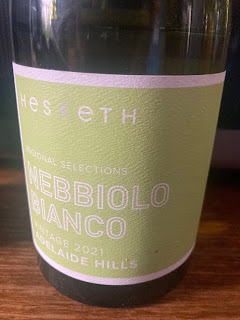
This chain of thought comes about after I enjoyed a very impressive 2021 Nebbiolo Bianco from the Adelaide Hills made by Hesketh Wines. It was delightfully crisp and fresh, and good value for $24.

Not knowing anything about Nebbiolo Bianco I did some research and found it is better known as arneis - Holm Oak in northern Tasmania make a very fine example.

For centuries the arneis grape was used to soften nebbiolo grape harshness in the wines of the Barolo region, and it became known as nebbiolo bianco.  

The Australian wine industry revels in this style of chaos.

Australia, for instance, is the only major wine producer to make shiraz. In France, the US, South Africa and around the globe, the grape is generally known as syrah.

No one knows for certain why the name was changed. But it helped brand Australian offerings as a noteworthy style.

In Australia wines are generally labelled shiraz if they are big, alcoholic and often oaky. Winemakers use "syrah" to indicate their wines are more stylish and subdued. 

But does the consumer understand the distinction, or do Joe Public from Moonee Ponds and Jane Spratt from Bumcrack, Iowa, actually think they are two different varieties.

It is understandable that grape varieties may have different names in different countries. Thus trebbiano in Italy is ugni blanc in southern France. And albarino in Spain can be alvarinho in Portugal.

Thus we have pinot gris in Alsace, pinot grigio in Italy and grauburgunder in German-speaking nations. All the same grape, just made in different styles. 

We have petit syrah, or sometimes durif. 

But in Australia do we really need to use mataro, mourvedre and monastrell for the same grape?

If you really want to be confused and bemused, check out this document:

https://www.oiv.int/public/medias/2273/oiv-liste-publication-2013-complete.pdf

Thursday, 28 January 2021

All change in Bordeaux vineyards

Reacting to climate change, Bordeaux wine producers are now able to use six newly approved grape varieties in their releases.

The Institut National de l’Origine et de la Qualité (INAO) this week officially approved the use of four new red and two new white wine grape varieties in the region.


The announcement by INAO, a division of France’s Ministry of Agriculture, represents the culmination of over a decade of research by wine scientists and growers of Bordeaux to address the impact of climate change.

The four reds are arinarnoa, castets, marselan and Touriga Nacional and two the whites are alvarinho and liliorila. 

In addition to the six new varieties, AOC specifications also allow six benchmark red varieties – cabernet sauvignon, cabernet franc, merlot, malbec, carménère (rarely used) and petit verdot – and up to eight white varieties: semillon, sauvignon blanc, sauvignon gris, muscadelle, colombard, ugni blanc (also known as trebbiano), merlot blanc and mauzac (known in Australia as ondenc).

Over 52 varieties were subjected to intense scrutiny over the past decade, with only six making the final cut. Petit manseng, heavily tipped to be included, missed out. 

Under the revised national guidelines, the six additional Bordeaux grape varietals were named “new varieties of interest for adapting to climate change”.

They are limited to 5% of the planted vineyard area; cannot account for more than 10% of the final blend of any given colour; and as such, per legal regulations for labelling, will not appear on Bordeaux labels.