ALL ACCOR

ALL ACCOR
Book, stay, enjoy. That's ALL.com
Showing posts with label internet. Show all posts

Wednesday, 8 October 2025

How to learn more about the wines of Burgundy - for free


So you would like to know more about the stunning wines of Burgundy?

The web series The Tasting Tips (Les Astuces Dégust in French) is back!

The Bourgogne Wine Board (BIVB) is pursuing its mission to make the world of wine more accessible, with six new episodes in English launching October 8 across social media platforms.

Leading sommelier Maxime Dubois, an official Bourgogne Wine Ambassador, hosts the new season.

Filmed in both French and English, it aims to speak to a curious, connected generation eager to discover Bourgogne wines "in a fresh, engaging way".

The goal is to talk about wine without pretension, naturally, passionately, and with a touch of lightness.

The six episodes are designed to appeal to younger audiences, but hope to offer something for everyone to enjoy and learn along the way.

The series will look at the region’s four signature grape varieties: pinot noir, chardonnay, aligoté, and gamay along with food-and-wine pairings and a guide to making sense of Bourgogne wine labels.

Designed for Instagram and Facebook, The Tasting Tips will also be available on the Bourgogne Wines YouTube channel and LinkedIn account. Later, each episode will be featured on a dedicated page of www.bourgogne-wines.com.

In the meantime, you can revisit the Season 1 on YouTube.


Sunday, 19 February 2023

Why you can safely ignore so many "experts"

Everyone is an expert nowadays.

TV and radio are awash with them. The internet is home to millions of them. And the newspapers are flooded with them.

You only need to have a minimal amount of knowledge about one subject - less even than contestants on TV program Hard Quiz - to proclaim yourself an expert, or be hailed as one.

The other day one of the newspaper travel sections had a selection of holiday choices from "experts". Nearly every single one was singing the praises of a destination that they sell.

The other night, veteran journalist Liz Hayes was surrounded by "experts" on her prime time TV show Under Investigation

The experts debated a decades old murder mystery for an hour - and revealed not one piece of new evidence or intelligence.

All we got was their "expert" thoughts on a crime they clearly knew very little about, but were very keen to waffle about.

Then there is a TV show MAFS - for which I have only seen adverts and snippets before changing the channel. 

But I've seen enough to know that their "expertise" seems to extend to pairing up wildly mismatched couples in a bid to create sensationalist headlines and publicity.

So many experts are just seeking publicity either to feed their own egos, or because they want to sell you something.

In today's Body & Soul supplement in News Ltd papers, three of the experts chosen to talk about "the morning hacks of productive people" were a bloke who has had well publicised mental issues; a woman who most recently hit the headlines after being accused of an affair with with her ex partner, a retired cricketer, and another woman who sells sex aids and potions but does not know the difference between the prostate and being prostrate.

Their "expert" advice was unintentionally hilarious.

The first woman's tips on having a good morning were "spending a moment to ground my thoughts, refer to my crystals, oracle cards and readings from the book The Daily Stoic".

Deep stuff.

The TV type who has "spent many years battling anxiety, depression, and suicidal ideation" has good morning hints including "not carrying any irrational energy'. He exposes himself to daylight and has a double espresso to get his "prefrontal cortex firing.".

Good stuff.

But the best tips come from the sex business saleswoman who assures us that we "must make time for a little morning masturbation".

Of course. 

She insists that we should "start your day with an orgasm (solo or with a partner) to get those feel good chemicals flowing".

That's pretty darn expert. And, of course, the story kindly provides the name of her no doubt lucrative online business.

Thursday, 7 April 2022

Great SIM deals - but logic goes out the window

Discounting is a great form of marketing - but sometimes the special offers just don't make sense. 

Everyone knows that buying in bulk is a key to saving: unless you are doing business with dtac, or Total Access Communication PCL, the leader of tourist SIM cards sales in Thailand.

To welcome tourists back to Thailand, dtac has unveiled two offers: a 15GB Internet package at 299 baht ($12) for 16 days and a 30GB Internet package at 599 baht ($24) for 30 days.

Both deals offer double the validity on what was on offer before, but it actually works out cheaper to buy two 16-day packages than one 30-day package. Which is weird.

Anyway, both deals offer free unlimited chat services on Messenger, LINE, WhatsApp, WeChat and KakaoTalk and unlimited free calls to dtac numbers in Thailand.

Anyone who has been hit by extortionate overseas roaming charges by Australian telecoms will relish these deals. They simply have to make sure their mobile phones are unlocked before they travel.

The deals are dubbed "Welcome back to Thailand" packages.

The dtac Happy Tourist SIM also offers discounts at stores and restaurants with 24-hour service support in five languages.

See www.dtac.co.th/en/prepaid/touristsim.html

Wednesday, 2 March 2022

How to avoid being caught out by travel scams


Fraudsters and scammers are taking advantage of the huge post-pandemic eagerness to travel.

British consumer organisation Which? says it has discovered several new scams aimed at defrauding the unwary.

Tricksters are setting up bogus companies to sell imaginary flights and offering fake refunds to capture bank details and steal money, Which? warns.

It says the pandemic has provided multiple new opportunities for fraudsters to exploit victims.

Scammers are cold-calling travellers and impersonating airlines, travel agents and banks, claiming they need their bank details and personal information to process a refund.

But they are using the information they glean to steal money.

Which? says fraudsters have been taking detailed steps to appear to be the business they are imitating, including spoofing legitimate phone numbers and finding out booking details and exactly how much someone is owed.

Rogue travel companies are selling fake flights and others are promoting some of the most popular stays with scam adverts on social media, offering apparent late or peak-season availability for holidays that appear to be sold out elsewhere, Which? research found.

Customers are asked to click through to a website where they book and pay for a non-existent holiday.

Some unfortunate customers have not realised they have been defrauded until they turn up at the airport or or their accommodation.

The National Health Service in the UK has also been used by cybercriminals.

An email, containing a link to a website that looks like an official NHS platform, invites people to apply for a digital vaccine passport.

Which? says the email is in fact a phishing scam to steal personal information.

As fraudsters move swiftly to exploit new opportunities, Which? has called on online platforms, banks and telecoms companies to do more to ensure their systems aren’t being exploited to target victims.

Added essential travel paperwork which emerged from Covid and Brexit has also been used by unscrupulous companies to con people out of their money.

Which? has seen firms charging travellers as much as $150 (£75) for passenger locator forms, which can be obtained from the government for free.

When Which? carried out searches in November 2021, 19 non-governmental results were returned on the first two pages of Google alone - all charging a fee. Some appeared as an ad or ranked higher than the gov.uk site.

Similarly, some companies are charging fees for the GHIC (Global Health Insurance Card), which is free and was introduced to replace the EHIC after Brexit.

Rory Boland, editor of Which? Travel, said: “Criminals are exploiting the pandemic and the demand for holidays in a wide range of ways, laying new traps to trick unsuspecting travellers out of their money.

“Our advice for consumers is be wary of unsolicited calls and messages, and be cautious about holiday deals from unfamiliar firms.”

Which? recommended that online users should never click on links from unsolicited emails, and should check the ‘from’ address, contact information and copyright dates for signs of inconsistencies. Which applies equally in Australia and other jurisdictions. 

Monday, 10 January 2022

Beware: A scam coming soon from a scumbag near you


There is a new scam in town and it is devilishly simple and hard to combat.

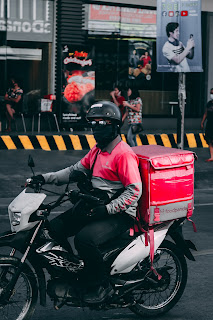
It originates in the US, as so many scams do, and can affect anyone who has ordered goods over the internet, or arranged for home delivery.

You are particularly at risk if your order involves perishable foodstuffs, medicines, RATs, fresh flowers, or even drinks you need to arrive in time for an event.

The scam goes by the name of Rapid Access Fees, or Immediate Delivery Charges.

The deal is that you pay extra to ensure that the parcel you really need arrives on time, rather than a few days down the track.

Many courier companies and postal services, of course, charge express delivery fees up front. You know what you are paying for and it is included in your bill, or paid by the sender. Perfectly legit.

But what if you receive a call out of the blue, offering instant delivery for "an extra fee"? Probably a cash payment, too.

Be immediately suspicious. A scammer has somehow inserted themselves into what are now increasingly complex supply chains, often involving several couriers or contactors, particularly in rural areas.

Other scams in the same ballpark include cybercriminals sending fake parcel delivery notifications to trick you - or threaten to charge you a fee for them holding an undelivered item.

Here's one example. You receive a call from someone claiming to be an Australia Post or courier employee advising a parcel was not delivered but redelivery can be arranged after you make a payment.

The payment amount may vary and the scammer may ask for payment in a number of ways including credit card, or international wire transfer. Or COD.

Australia Post has also warned of fraudulent emails that are circulating advising customers of "on hold" deliveries and prompting them to click on a link to pay a fee to have that parcel delivered.

Once clicked on, the link will lead to a fake Australia Post website which is designed to steal your personal and financial information.

Again. Be very careful.

The legalities of being charged an extra fee will vary according to your residence and local jurisdiction, but it is certainly something to look out for - and alert the police if necessary

Caveat emptor.

Image: Sebastian Japson, Scop.io