ALL ACCOR

ALL ACCOR
Book, stay, enjoy. That's ALL.com

Tuesday, 6 April 2021

Which cities are the most vegetarian-friendly?

London is the most vegetarian-friendly city in the world according to a new rankings list. 

Nestpick's Vegetarian Cities Index puts London at the top of the tree for non-meat eaters, followed by German cities Berlin and Munich. Then came Vienna, Glasgow, Zurich and Palma de Mallorca.


London got a perfect 100 score (100 scores are always dubious in my opinion) thanks to its plethora of vegetarian restaurants, vegetarian festivals, and affordability of fruit, vegetables and plant-based protein. 

The US, with a lot of high-profile vegetarians and vegans, saw Los Angeles come in eighth in the list of 75 global cities, followed by San Francisco in 10th and New York in 12th place. 

Paris was well down in 61st place while the Brazilian city of Sao Paulo came in last.

In Asia, Chiang Mai in Thailand came in at 36th position - and was named cheapest city for veggie dishes - and Bangkok 73rd. Other Asian cities in the list were Singapore (62nd) and Ubud (67th).

On-demand housing platform Nestpick created the ranking as a way to help people discover cities that best cater to vegetarians. 

"While there are undoubtedly countless cities that are incredible for vegetarians around the world, which do not feature in this index due to a lack of available data, we believe that this shortlist offers an excellent springboard for vegetarians looking to move abroad,” said Omer Kucukdere, founder and chief executive at Nestpick.

I say to Mr Kucukdere that he needs to broaden his horizons to places like India. which India has more vegetarians than the rest of the world put together. Around 38% of all Indians are vegetarians. 

Monday, 5 April 2021

Chardonnay shines in Orange terroir

Chardonnay is one of the most popular white wine grapes in the world - and also one of the most versatile. 

The variety originated in the Burgundy region of eastern France but is now grown all over the globe. 

In Australia, it tends to shine in cooler regions like Tasmania, southern Victoria and Orange in the Central West of New South Wales, where it can resemble the mineral-influenced wines of Chablis. 

The Orange region’s Patina Wines has just released its duo of benchmark chardonnays that are well worth a look for lovers of the cool-climate style: the 2019 Patina Chardonnay ($40) and 2018 Patina Reserve Chardonnay ($60).

The Patina vineyard was planted 22 years ago on the eastern foothills of Mount Canobolas and their quality fruit confirms founder Gerald Naef 's belief in the site. 

“It’s not something you can change readily; choosing where to plant your vines is the foundation for your entire wine growing," Naef says. 

“Grapes tend to hold their acid and fruit character better when ripening occurs in cool weather. Fine tuning and narrowing the varieties down to the best for a particular site or even for a few rows is quite precise and can take a bit of trial and error.

“The high elevation (from 600 metres to 1100 metres) in Orange gives us an edge in grape growing as many varieties do well here. Certain varieties, however, such as chardonnay, do particularly well.”

Another benefit of high elevation vineyards is the high difference in day-night temperature. 

“I’ve said previously that I don’t believe there is another region in the world that necessarily produces better chardonnay than Orange - there are just stylistic differences,” Naef said.
 

The Patina cellar door and gardens (above) are now open five days a week post-Covid and picnic hampers are available for purchase. 

Both new release wines are outstanding with the 2019 slightly leaner and classically citrusy/minerally (92/100), while 2018 Reserve is a tad more complex and rich, but still unmistakably classic cool-climate chardonnay with lovely balance (94/100).  

For details see www.patinawines.com.au

Sunday, 4 April 2021

Meet the Japanese castle that many locals believe is divinely protected

There are few countries more fascinating to visit than Japan; with its history, vibrant culture, exciting cuisine and welcoming vibe. 

Japan is certainly high on my list of places to re-visit as soon as the world returns to normal - and I find its small towns, many off the beaten track, particularly fascinating. 


Take Himeji, a smallish city located in the Hyogo Prefecture that is twinned with Adelaide in South Australia. 

Himeji is probably best known for Himeji Castle, which is regarded as the finest surviving example of prototypical wooden Japanese castle architecture, comprising a network of 83 rooms with advanced defensive systems from the feudal period. 


The castle is frequently known as Hakuro-jō or Shirasagi-jō ("White Egret Castle" or "White Heron Castle") because of its brilliant white exterior and supposed resemblance to a bird taking flight.

Himeji Castle dates to 1333, when it was a fort. The fort was dismantled and rebuilt as Himeyama Castle in 1346, and then remodeled into Himeji Castle two centuries later. 


It is the largest and most visited castle in Japan, and it was registered in 1993 as one of the first UNESCO World Heritage sites in the country. 

Himeji was heavily bombed in 1945, at the end of World War II, and although most of the surrounding area was burned to the ground, the castle survived intact. 

In 1995, the city of Himeji was substantially damaged by the Great Hanshin Earthquake but Himeji Castle again survived virtually undamaged. It has also survived several typhoons.

Many Himeji residents believe that the castle is divinely protected. 

From 2010 it underwent restoration work for several years and reopened to the public in 2015. I visited in 2018. Tours in English are available.

The city of Himeji, with a population of just over half a million people, is in the Kansai region of Honshu - between Kyoto and Osaka - and easily reachable via JR Rail (a JR Rail Pass is one of the easiest ways to travel around Japan).


Kokoen garden (above) was opened in 1992 and consists of nine large and small gardens using divides of the ruins of Himeji Castle west mansion, It is often used for filming historical dramas because it looks like you have time traveled to the Edo period. The tea ceremony experience in the tea room is popular.

Also check out  Himeji City Museum of Art and the Harimanokunisosha temple.

Be sure to make time for lunch or dinner at Omotenashi Dining Fukutei, which specialises in regional seafood, including sashimi, charcoal-grilled fish and rice dishes cooked in an earthen pot. Conger eel (anago) is a speciality here. 

Nadagiku Kappa-tei is a local sake brewery runs that serves dishes that pair well with sake.


Saturday, 3 April 2021

Celebrity chef's local flavours shine in Tasmania

Hotel dining can be a mixed blessing. At its best you get to sample local flavours in the same building in which you are sleeping. 

At its worst you get to taste food ordered in bulk by a hotel chain's head office. 

Fortunately, the menu at Grain of the Silos (top) - the signature eatery of Launceston's Peppers Silo Hotel, is curated with care and attention by celebrity chef Massimo Mele (above). 

Mele says he has fallen even more in love with Tasmania and its produce during the Covid-19 lockdown. 

On my recent visit I opted for a simple dinner of grilled king prawns (above) followed by a thick, juicy and crispy pork chop. Mele graciously sends over a few extra flavours about to make it onto the menu for me to try. 

I'd arrived too late for the garfish from Low Head - there were only a dozen portions available and they were quickly snapped up. 

I do, however, get to sample some super-fresh George's Bay clams; padron peppers from Mele's own garden, and stunning charcuterie from Boucherie Tasmania and Fork It Farm (below). 

There's also a little taste of sardines with super-sweet Tasmanian tomatoes.

With some Sinapius 2018 Gruner Veltliner and Holm Oak 2020 Protege Pinot Noir, my simple supper turned into a gourmet treat. 

"The quality of Tasmanian gourmet produce is improving all the time - and it is fabulous to be able to showcase it to both Tasmanians and visitors alike," says Mele. "I'm constantly making new discoveries." 

The open kitchen showcases Cape Grim beef, Bruny Island cheese and other Tasmanian standouts.

Grain occupies a sunny corner of the Silos; four towers originally built side by side on the banks of the Tamar River in the 1960s to house wheat. 

The Silos sat empty for years - despite their stunning setting - until local developer Errol Stewart turned them into a luxury waterfront destination in 2018. 


It is certainly worth combining dinner with an overnight stay. The staff have grasped the meaning of hospitality and you'll be well looked after from reception to the restaurant. 

Dog lovers missing their own pets might want to take Archie, the canine concierge, for a walk.
 

The 10-level hotel features 108 guest rooms with a boutique vibe, including 52 inside the barrels of the former silos, undercover car parking, conference facilities and an integrated lobby and reception space.The restaurant turns café for lighter snacks during the day. 

Amenities on-site include a gym, day spa, child-minding facilities, hairdressing salon, function centre and private dining rooms.


The hotel overlooks the nearby Seaport; Royal Park with its barbecue area, play space, skate park and outdoor exercise equipment, boardwalks and sealed paths; the Tamar River Basin and Cataract Gorge. It is also just a short stroll to the footbridge that links to the city centre. 

Peppers Silo is located at 89-91 Lindsay Street, Invermay, Launceston.

www.peppers.com.au/silowww.grainofthesilos.com.au(03) 6700 0688.

# The writer was a guest of Peppers Silo Hotel 

# Images: Adam Gibson and Winsor Dobbin   


Friday, 2 April 2021

Head off road to get on the right track

Team building exercises are all the rage right now as workers return to offices post-Covid19. 

OzBuggy Tours, an off-road adventure tourism company, has launched a corporate retreat program in Queensland to allow groups of workers to enjoy a team building challenge that is also meant to be fun. 

"Businesses need to ensure that their employees take time to align themselves with their company's key business values and connect with their colleagues after so much time apart, " says the blurb, which is marketing speak 101.

"The boost will help them think critically, work in teams and energise everyone to return to their offices with refreshed goals and attitudes to execute."

The idea itself sounds fun, however. 

OzBuggy Tours corporate retreats see colleagues and employees twisting and turning through the heritage-listed Scenic Rim rainforest on  4x4 buggies, ending their day in a luxurious bush glamping set up.

"OzBuggy Tours corporate retreats can accommodate both small and large teams," says Pip Jewson, founder of OzBuggy Tours. 

"Adventure tours are the ideal escape for corporates to help foster and build new relationships within the team

"Giving employees the opportunity to attend retreats geared toward leadership and adventure also allows for natural leaders to emerge in the group. They get to re-ignite their creative juices after a long year of lockdowns and home office setups." 

Any fully licensed driver from the age of 17 can participate. 

Some of the locations are normally only accessible by experienced drivers with 4x4 setups, but these trips allow access to river crossings, rocky tracks and spectacular waterfalls in a guided tour that will test driving skills to the max. 

More information about corporate retreats here: https://ozbuggy.tours/corporate-bookings

The Hills are Alive: South Australia's local wine revival

IMG_20210314_133856839_HDR
Greenhill Wines Pinot Noir

As a youngster, I used to enjoy riding my pushbike through the Adelaide Hills, past the acres of orchards and market gardens. 

Apples, pears, plums, cherries and strawberries were everywhere through Summertown, Ashton and Lenswood, and we often stopped and scrumped a juicy Pink Lady or two.

That was 40 years ago and the landscape has now been transformed. Gone are the rows of fruit-laden trees, replaced by vineyards chockers with pinot noir, chardonnay and even the Europopular grüner veltliner.

About the time I was ready to leave Adelaide for my own adventure, the Adelaide Hills were embarking on their big wine revival. 

Led by such names as Brian Croser, Stephen George, Tim Knappstein, Stephen and Prue Henschke, Geoff Weaver, Michael Hill Smith and Martin Shaw, the cool-climate characteristics of the region were rediscovered and now produce a most impressive array of wine.

It’s going to take me another 40 years, I reckon, to visit all the cellar doors in my old stomping ground, but I have to start somewhere and the new winery cafe at Greenhill Wines is a great place to begin my reacquaintance if, for no other reason than I must have passed their driveway many hundreds of times on two wheels or four.

After a couple of tries, I did finally catch up with the most affable Dr Paul Henschke of the famous Eden Valley dynasty and who one might more accurately describe as a wine scientistic and academic. Along with his similarly credentialled wife Penny, the couple started Greenhill Wines at Summertown in 2009 and bottled their first vintage two years later.
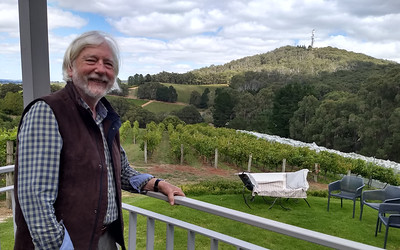
IMG_20210314_133252231_HDR
Dr Paul overlooking his idyllic patch at Summertown (RE)

“I do still teach at the uni occasionally,” Paul says modestly, “but these days I like to focus on producing our own wines.”

“We are presently making three whites, a fresh style grüner veltliner, a barrel-fermented chardonnay, using grapes sourced locally together with a type of  yeast native to the Piccadilly Valley (cryophilic Saccharomyces uvarum for the boffins) and a white, non-sparkling, Pinot-Chardonnay (pinot grigio blended with chardonnay).”

While I may not be a wine judge in the league of Hooke or Halliday, each of these are flawless to my palate. The grüner veltliner is popular throughout Europe, but not so widely grown here, so it was a bit of a surprise. Paul describes it as a “highly textured mineral palate of apple, pear and citrus, and a long, fresh, crisp, dry finish”. For me at least, it’s the type of fragrant, crisp white that can be paired with a wide variety of foods, but perhaps ideally with spicy Asian dishes or cooked seafood. 

What did make my eyes pop was his magnificent Monomeith Vineyard Pinot Noir

“This reminds me of those fabulous pinots from Tasmania,” I remarked meekly. My confidence lifted when Paul agreed. Apparently, it’s the ‘whole bunch fermentation and post-fermentation maceration" that are the secret ingredients. I feign wisdom and nod in agreement. 

Paul and Penny make such small batches that you’re unlikely to find any in the big bottle barns. You’ll need to come and taste them for yourself at the Henschke’s idyllic little establishment overlooking the glorious Piccadilly Valley or sign up for mailings.

Most bottles are under $30, even for these expertly crafted vintages. 

For the full story and details on ordering, visit www.greenhillwines.com.au

More:

For more information on the Adelaide Hills wines, visit www.adelaidehillswine.com.au

For more information on all tourism options for Adelaide Hills, visit www.visitadelaidehills.com.au

Words and images: Roderick Eime