ALL ACCOR

ALL ACCOR
Book, stay, enjoy. That's ALL.com
Showing posts with label exports. Show all posts

Sunday, 28 September 2025

Zampa bowled over by new drinks investment


Celebrity wines are commonplace nowadays, as are celebrity spirits.

Now we have a celebrity after-dinner digestif.

Australian cricket star Adam Zampa has joined Ambra Spirits as an investor/part-owner in its Limoncello-led business, and in backing the South Australian brand’s equity crowd-funding raise on OnMarket.

Zampa, who goes by the Instagram handle @Limoncello.Papi, has long been a fan of the iconic Italian liqueur, saying “I just love limoncello.”

Now his passion is becoming professional as he takes an ownership stake in Australia’s leading premium limoncello brand, made using South Australian lemons and Barossa wine spirit base. 

South Australian-based Ambra has achieved 123% year-on-year revenue growth, and tripled revenue at its Thebarton Distillery Bar & Restaurant to $30,000 per week, it says.

Ambra products are now stocked in more than 1,200 venues nationally. The brand plans export expansion into New Zealand, China, Europe, and the US, and the launch of new products including Pink Limoncello and ready-to-serve spritzes.

"For me limoncello has always meant good times," spinner and 2023 World Cup champion Zampa says. "My wife and I travel to Italy often and aperitivo hour was never missed; we even had little bottles of limoncello as bonbonniere presents for each guest at our wedding.

"I’ve even got a bottle tattooed on my arm two years ago! So this isn’t just a drink to me, it’s part of my story.

“What excites me about Ambra is that it was the first limoncello ever made in Australia 27 years ago, and it’s still held to incredibly high standards today."

Wednesday, 27 August 2025

Why is Australian wine not making an impact in Canada?

Someone at Wine Australia appears to be falling down on the job. 

And someone at the Liquor Control Board of Ontario in Canada is doing their customers a disservice. 

On a recent visit to Kingston and Toronto in Ontario I visited several different restaurants and there was hardly any Australian wine to be found on any of the wine lists. 

And visits to monopoly LCOB stores showed that while mass market brands like Yellow Tail and 19 Crimes are available in abundance there are hardly any upmarket, or boutique, Australian wines on display. 

This is at a time when all US wines and spirits have been removed from the shelves, creating what should be a huge opportunity for Australian producers with a lake of quality red wine to offload. 

New Zealand, is contrast, has its sauvignon blanc well represented on wine lists. Thee are also plenty of choices from Italy, Spain, France, Argentina and Portugal, among others. 

I purchased a decent Wakefield (Taylor's) Promised Land shiraz an LCBO store to share with family. but there were precious few other enticing options from Australia. 

The question has to be asked: Why is Wine Australia not leaping in to fill the gap caused by the absence of US wines? Particularly as Canadians are comfortable with wines sold under screw cap and have a positive relationship with Australians.

Friends living in Toronto tell me promotions of Australian wine in the fourth-biggest city in North America are non-existent. 

And why is the LCBO offering only mass market Australian options to local consumers? Would they not like to try something different? 

Something, somewhere is very wrong.  

Image: Filotero Venturo, Scopio          

Thursday, 30 January 2025

Try time: Welsh whisky producer enjoying boom period


Scotch whisky? Sure. Irish whiskey? Absolutely. Whisky from Japan and Australia? Yep.

Welsh whisky? Well that's a surprise - as is the fact that it is enjoying success in whisky-obsessed Japan.

Penderyn Distillery is a pioneering Welsh whisky producer located in the Brecon Beacons National Park, the Copperworks in Swansea and Llandudno, North Wales, reviving Wales' long-dormant whisky-making tradition.

Founded in 2000 as the Welsh Whisky Company, Penderyn became the first commercial Welsh whisky producer since 1894, launching its first single malt in 2004.

The distillery is apparently known for its innovative Faraday Still distillation process, which produces a pure spirit with 92% alcohol in a single distillation run.

Penderyn is experiencing a surge in popularity among Japanese consumers, with its single malt Welsh whisky emerging as the top Welsh food and beverage product in the country.

Stephen Davies, CEO of Penderyn Distillery, attributes this phenomenon partly to the Japanese love of rugby.

"The Welsh rugby team is highly respected in Japan, and Penderyn has long been associated with Welsh rugby. Our commemorative bottle 'That Try' is just one example of this connection."

In 2024, Penderyn sold 10,000 cases across the Asia Pacific region, with Japan being a key market. This success is part of a broader trend of "unprecedented growth" across Asian markets, particularly in China and Taiwan.

Nicole Liu, Penderyn's brand manager and ambassador for Asia, highlights the unique appeal of their products:

"The Asian market has shown particular enthusiasm for our Dragon series, especially Penderyn Legend," she said. 

"Our distinctive use of Madeira casks sets us apart from the sherry cask-finished whiskies common in the region."

Davies adds: "Japan is an important market for world-class single malt whisky, making it a key target market for Penderyn Single Malt Welsh Whisky," 

The Year of the Dragon in 2024 proved advantageous for Penderyn's 'Welsh dragon', with the distillery's Dragon series seeing a surge in popularity across Asian markets.

The verdict: Penderyn Legend is very pale gold in colour, but impressively aromatic. The palate has creamy fudge notes with sultana and raisin notes. Subtle and sophisticated, and finishes very smooth on the palate.    

See www.penderyn.wales

Penderyn products are available in Australia at outlets including Nick's, Dan Murphy's stores and at www.whiskymarketplace.com.au/ 

Friday, 29 November 2024

Californian wineries to make major push into Australian market


Australian wineries are about to face a new challenge on home turf with a big push from Californian wine producers to boost sales down under

Leading Sydney PR company Agent99 Public Relations was this week appointed by California Wines to raise awareness and deepen the understanding of Californian wines among Australian drinkers.

Expect to see trade and consumer tastings in major Australian cities in the New Year.

The new campaign, supported by Wine Institute’s California Wine Export Program, will highlight the versatility of contemporary Californian wines, and heighten local visibility through a range of trade and consumer events, industry collaborations, and media relations activities.

"We’re excited to wrap up 2024 on such a high note and look forward to an even more dynamic 2025, delivering smart ideas that have true impact, with California Wines and our valued clients," says Agent 99 principal haron Zeev Poole.

Wineries such as Robert Mondavi, Kendall-Jackson, Wente and Ridge will be featured.

“We are so excited to be working with Agent99 to increase the visibility of modern California wines in Australia, especially given their extensive experience in this space," says Hiro Tejima, joint regional director of North Asia & Australasia at California Wines.

"For California, which makes up 95% of all US wine exports, Australia is an incredibly important market.

"We’re expecting locals within the beverage and hospitality sector, and consumers alike to have a strong appetite for this campaign.”

I have tended to find Californian wines have too much alcohol, are too sweet, too buttery, too sweet, and very expensive. But I'm prepared to be proved wrong.


Friday, 15 November 2024

Cocktail in a can innovators shine on global stage


A small Melbourne business that dared to be different found its name up in lights in London this week.

Aussie-owned cocktail in a can company Curatif achieved a world-first three-peat as the best RTD producer at the seriously competitive International Wine & Spirit Competition (IWSC).

The award is even more noteworthy given Curatif was only founded five years ago.

I've tried the cocktails - and they are seriously good.

Matt Sanger (above), managing director and co-founder of Curatif ,was in London to receive the award.

“We were proud as punch with one producer trophy back in 2022, and absolutely stoked to go back-to-back in 2023, but this - to be the first producer in any category in 55 years to win three-in-a-row, is amazing," Sanger said.

"I’m so proud of our team and their relentless pursuit in cocktail making. I’m on top of the world and could not be happier for our team.”

The IWSC is regarded as the world’s leading competition across wine, spirits, and RTD.

It has been in existence since 1969 with judging conducted by a panel of global experts, including master distillers and sommeliers.

“Cocktails are fun," Sanger said. "They’re moments of frivolity and indulgence that tend to evolve and adapt. So as trends ebb and flow, we have the great indulgence of being able to ebb and flow with them. Making new drinks every other day - it’s a tough gig!”

The latest triumph has sparked plans for major expansion.

“It’s time for the rest of the world to enjoy Curatif’s world-class cocktails,” Sanger says. “We’re in discussions with distributors in Japan, Korea, and China at the moment and while we are in London we are meeting with a few very well-known retailers to see how we can elevate the next English
summer.

"A couple of Curatif tins on the Thames sounds like just the thing to me!”

Thursday, 11 July 2024

Seppeltsfield swoops to buy established Barossa vineyard


Seppeltsfield owner Warren Randall has swooped to buy an established Barossa vineyard from struggling Australian Vintage Ltd. 

Seppeltsfield announced today that it had acquired a 230-acre vineyard in Lyndoch was previously part of the original Chateau Yaldara property, developed by Hermann Thumm in 1946.

The move comes as Randall eyes increased sales to the Chinese market. 

Seppeltsfield was established in 1851 and is one of the most iconic wineries in Australia.

The historic property is owned by The Randall Wine Group, established in 1978, and led by executive chairman Warren Randall.

The Randall Wine Group is Australia’s largest private premium vineyard holder with 9230 acres along with an expanding portfolio of luxury wine brands, including Penny’s Hill and Gemtree Organic Wines in McLaren Vale.

The vineyard is planted to mature shiraz, cabernet sauvignon, mataro and grenache and the entire crop with be crushed at Seppeltsfield from 2025.

Since Chinese tariffs were removed from bottled Australian wines on March 28, exports have skyrocketed. 

Seppeltsfield’s strategic purchase of the AVL Lyndoch vineyard is to specifically feed the newly created demand for luxury Australian wine to China, the company said in a statement.

“The AVL Lyndoch vineyard acquisition is a strong addition to our already dominant position in the Barossa Valley landscape,” Randall said.

“China’s demand for luxury Australian wines prior to the tariffs was very strong and the Lyndoch Barossa Valley vineyard acquisition offered Seppeltsfield an opportunity to fortify our supply volumes of luxury wines for a thirsty market.

“Our vineyard holdings in the Barossa Valley now exceed 4,000 acres, growing 10,000 tonnes, producing nearly 10 million bottles of luxury Barossa Valley wine every year.”

Monday, 3 June 2024

Australian wine producers hail "strong" results from Vinexpo Asia


Australian wine producers from 31 different regions attended Vinexpo Asia, the leading trade exhibition for wine and spirits professionals in the region in Hong Kong last week.

Wine Australia led the Australian contingent of 63 wineries as Vinexpo Asia 2024 brought together more than 14,000 trade visitors from 60 countries, who had the opportunity to engage with exhibitors from around the world over three days.

The Australian Wine Pavilion is a firm fixture at the event and offered producers a chance to showcase their brands to the most influential buyers, importers, distributors, producers, sommeliers, and merchants from around the world,

Wine Australia general manager for marketing, Paul Turale, said the activities around the pavilion supported Australian wineries to build connections to help unlock the growing opportunities across markets in Asia.

“In-person connections are so important for our sector and it’s been heartening to see such a strong interest from the trade in the diversity and quality of Australian wine over the three days,” he said.

“There is a real sense of optimism about the opportunities for Australian wine in Asia - it’s a hopeful and exciting time for Australian wine producers.”

Turale said the new Australian Wine national branding was also previewed at Vinexpo.

“The national brand encapsulates the adventure and diversity of Australian winemaking and it was great to see this applied across the pavilion and in supporting regional and wine brand assets at Vinexpo,” he said.

“This is our first time at Vinexpo Asia and it's been a really great experience to try and understand the big complex market that is Asia," said Kim Chalmers of Chalmers Wines in Victoria.

"We've been impressed with our visitors from mainland China who are so excited to have new, different Australian wines back and we've also been excited to learn that there is a thirst for understanding the diversity of Australian wine.”

Paul McArdle from Small Wonder in Tasmania and Wayfinder in Western Australia said: "The numbers and the diversity of cultures and countries at Vinexpo Asia is overwhelming.

"We’ve certainly had a lot of interest out of mainland China but also out of South Korea, Thailand, Malaysia, Singapore and Japan.

"It feels a bit like the old days where there is very good representation and a strong presence of Australian wine and a strong interest in Australian wine. So that all goes well for our export markets. Fingers crossed. We await the orders.”

Thursday, 28 March 2024

Australian wine industry delighted as China lifts crippling tariffs


Wine producers across Australia have welcomed China’s decision to remove crippling import duties from Australian bottled wine. 

Grape growers and winemakers were cheered by today’s final decision from the Chinese Ministry of Commerce to remove import duties on Australian wine products with effect from March 29,  Australian Grape & Wine chief executive Lee McLean said.

“This is a very important decision for the Australian wine industry," McLean said. 

"It reflects the positive outcome of diplomatic efforts by the Albanese government to stabilise relations with China and underscores the importance of collaboration between government and industry.

“We acknowledge and thank Foreign Minister Penny Wong, Trade Minister Don Farrell and Agriculture Minister Murray Watt and their respective departments for their steadfast support of Australian grape growers and winemakers throughout the process. 

"With their renowned reputation for quality and innovation, Australian wines offer Chinese consumers an unparalleled opportunity to explore new flavours and experiences. 

"The presence of Australian wines in China will complement the local wine industry, providing consumers with a broader selection of premium wine options.

“The Australian wine sector has made a long-term commitment to building the market for Australian wine in China, with many wine companies having developed close relationships with importers, buyers and consumers of Australian wine over many years. 

“We are working closely with the Australian Government and Wine Australia to ensure a co-ordinated approach is taken to re-entry and that the sector is well positioned to re-establish trade relationships.

“We look forward to seeing Australian wines back on Chinese dining tables and rejuvenating our relationship with customers and business partners in that market. 

“We will also, however, be maintaining our focus on diversifying our export footprint and growing demand here in Australia as well.”

Producers were excited at the Chinese market re-opening.

“This decision is important and highlights the ongoing strengthening of Australia’s trading relationship with China, for the mutual benefit of both countries,” said Kirsty Balnaves of Balnaves Wines in Coonawarra and president of the South Australian Wine Industry Association.

“Significant trade exists between China and Australia, and the removal of import duties on wine will
result in South Australian wine businesses re-considering the China wine market and allocating wine
to the market.

“This will be based on several important factors, principally, a market risk assessment,
acknowledging the importance of market diversification.”

New South Wales Wine president Mark Bourne commented “China has historically been a valuable export market for NSW wine producers, with strong relationships formed over the years, and the opportunity to do business again comes at a time when the industry is facing several economic headwinds.”

Tariffs of between 107 and 212% were implemented in 2020. This followed multiple diplomatic disputes between Canberra and Beijing over human rights, national security and Covid-19.

The ministry accused Australian winemakers of dumping wine in the Chinese market at cheaper prices, forcing out competition from local vineyards. The move was devastating for many Australian producers.

"When we export our wine it’s good for our winemakers, and it’s good for the people buying it, because Australian wine is the best in the world," said flag-waving and over-excited Australian Prime Minister Anthony Albanese.

"It’s a huge industry that supports jobs and contributes to our national wealth, too."


Sunday, 3 December 2023

Positive signs for Australian wine exports to China


Australian wine could be back on sale in China as early as April next year.

The Chinese government has announced it will review tariffs on Australian wine imports following a long-running dispute over the issue.

The move comes after a number of meetings between leaders of the two countries in recent months.

China’s commerce ministry said in an official statement that it was due to conduct a review into the anti-dumping and anti-subsidy tariffs on Australian wine imports, which China-focused website Vino-Joy.com said could result in sales resuming within a few months.

"The Ministry of Commerce will carry out a review in accordance with the law to fully protect the rights of all stakeholders," Shu Jueting, a commerce ministry spokesperson, told a news conference in Beijing.

"We will adjudicate objectively, fairly and openly based on the claims of each interested party and after examining the evidence."

The latest progress follows the news last month that China and Australia had reached an agreement to settle a World Trade Organisation dispute ahead of the tariff's expiration date in 2026.

A spokesperson for the office of Australian Trade Minister Don Farrell told the Reuters news agency that the latest announcement was “good news for the thousands of Australians who work in the wine industry”.

The Chinese commerce ministry announced i earlier this year that it would be scrapping 80.5% tariffs on Australian barley, which were originally imposed during the height of the two countries dispute in 2020.

China’s trade tariffs on wine came into effect in November, 2020, imposing a charge of 107.1-212.1% on wine exports initially (the rates varied by company). That rose to 116.2-218.4% in March, 2021.

The export sanctions contributed to wiping over 2 billion dollars off the value of Australian wine experts in the year to June 30, 2022, trade site The Drinks Business said.

The duties were originally said to be imposed by Beijing in reaction to the perception that Australia was dumping cheap wines into the People’s Republic. But also came as then Prime Minister Scott Morrison alienated Chinese leaders with a variety of political stances. 


Monday, 15 May 2023

Sparkling Champagne sales figures in Australia


Times are tough, we are told, and consumer spending is down.

Also, Australia now produces some of the best sparkling wines in the world.

But sales of Champagne in Australia continue a remarkable upward trajectory.

Champagne exports to the Australian market reached an unprecedented 10.5 million bottles in 2022 - up by 6% when compared to 2021 and ahead of all previous records.

Australia is currently ranked as the sixth-biggest export market for Champagne in the world – in both volume and value.

The Brut Non-Vintage style remains the most popular category of Champagne in Australia and makes up 88% of all imports.

Analysis shows that all Champagne categories grew in volume when compared to 2021 including rosé and vintage Champagne.

One of the key trends reported by the Champagne Bureau is a growing demand for lower dosage Champagne.

The relaxed style of contemporary Australian dining, with small plates and a selection of tastes, is seen an ideal opportunity for wine-savvy consumers and sommeliers to pair different styles of Champagne with cuisine.

“The Champagne shipments to Australia in 2022 show that we are a dynamic and evolving market for Champagne," says John Noble, director of the Champagne Bureau Australia.

"It has become clear that adventurous Australian consumers are searching for some of the lesser-known and more boutique styles of Champagne that are now becoming available.”


Monday, 8 August 2022

French drinks export boom led by Cognac and Champagne


The world cannot get enough of French wines and spirits with exports up 14% over the first six months of 2022.

Between January and June 2022, France shipped €9 billion of wines and spirits around the world, said Olivier Becht, minister delegate in charge of foreign trade.

The record sales exceeded the pre-Covid crisis level of exports (€7 billion in 2019).

Saying that “wines and spirits are at the heart of national agri-food exports”, Becht reported sales had been boosted by Cognac (€2 billion, +9% in value) and Champagne (€2 billion, +32% in value and +14% in volume).

The leading destination for French wines and spirits remains the United States, accounting for 28% of sector exports (€2.5 billion), with a strong presence of Cognac (40% of shipments) and Champagnes (16%), Vitisphere reported.

Having recently spoken with his US counterpart, Katherine Tai, over trade differences between the two nations, Becht said: “the state of mind has completely changed between the Trump and Biden administrations."

Image: Marco Simola, Scop.io


Monday, 18 July 2022

Positive news for Australian wine exporters


Good news for Australian wine exporters hit by the Chinese tariffs issue.

Austrade has partnered with Wine Australia to develop "a comprehensive digital knowledge hub" to help Australian wine producers grow their wine sales internationally.

The Wine Export Ready Hub aims to bring together information, templates and how-to guides to help wine producers understand export process, find buyers and develop export plans.

Austrade CEO Xavier Simonet said the industry-first free digital hub will fuel Australia’s wine exporters to go further, faster.

“Australia produces some of the world’s most sought-after wines, and the new Wine Export Ready Hub will help our producers get more product to consumers the world-over,” he said.

“This one-stop-shop, developed by Austrade and Wine Australia, will provide clear, comprehensive answers to wine producers’ most pertinent export questions.”

Wine Australia Chief Executive Officer Dr Martin Cole said: “With around 60% of Australia’s wine production exported each year, the profitability of the wine sector is strongly linked with exports.

"Many wine producers are developing strategies to intensify exports and to enter new markets, and we’re delighted to launch the Wine Export Ready Hub in partnership with Austrade to support these activities.”

The Export Ready Hub complements Austrade and Wine Australia’s existing suite of export resources including market insights, market entry programs and regulatory services, as well as virtual platform to showcase Australian wines to international buyers, Australian Wine Connect.

While Australia’s wine producers faced challenging trading conditions in recent years, the values of wine exports grew in 71 destinations in the year to March 2022, according to Wine Australia’s Export Report. Growing markets included Singapore, Hong Kong, Thailand, South Korea, Taiwan and Japan.

Australia produces around 4% cent of the world’s wine and is the fifth-largest wine exporter.

For more information on the Wine Export Ready Hub, see wineaustralia.com/exportready


Tuesday, 24 May 2022

Meet the new [yellow tail]: made in Chile, destined for China

Australia's biggest wine export brand, [yellow tail], has launched a Chilean-made range for the Chinese market to sidestep China’s punishing tariffs on Australian wine, Chinese wine website Vino Joy News reports.

The fruit is understood to have been sourced from one of Chile’s biggest producers, Santa Carolina, and the range will be called [yellow tail] World Series, Vino Joy said.


The move follows the move by another Australian wine giant, Treasury Wine Estates, to bypass tariffs by making Rawson’s Retreat wines in South Africa for the Chinese market.

Penfolds, with previous huge sales in the Chinese market, has revealed plans to launch its Chinese-made Penfolds wines in second half of the year.

The [yellow tail] range for China includes four varietals: cabernet sauvignon, shiraz, merlot and chardonnay.

In an email to Vino Joy News, Libby Nutt, general manager of marketing and export sales, said: “We have a fantastic and loyal consumer base in China, where [yellow tail] wines have been available since 2007.

"We are excited to launch [yellow tail] World Series so we can continue to offer consumers everything they have come to expect from the [yellow tail] brand - great wines full of flavour, from a brand with a fun and vibrant personality.”

[yellow tail] is owned by the Riverina-based Casella family.

The wine will be sold at RMB 53 (US$8) a bottle on China’s leading e-commerce platform JD.com, or RMB 318 (US$48) for a case of six.

Monday, 18 April 2022

There is more to New Zealand wine than sauvignon blanc and pinot noir


Pop into any liquor store in Australia and you'll be confronted by a tsunami of Marlborough sauvignon blanc and a mountain of pinot noir from Central Otago.

And that's largely it.

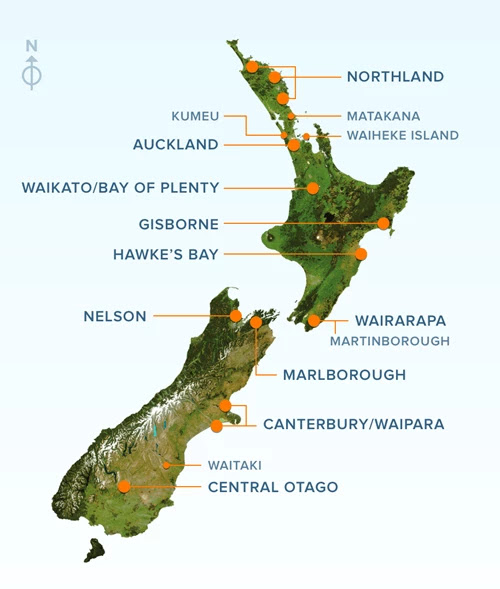
A syrah or a gamay noir from Hawke's Bay? A chardonnay from Martinborough?

Probably not.

Something from Waikato or the Bay of Plenty? Or Waiheke Island?. 

Almost certainly not. 

Which is a pity - because there is a lot more to New Zealand wine than the most obvious.

New Zealand's wine regions extend 1,100km from subtropical Northland down to Central Otago, home to some of the world’s most southerly vineyards.

The people from New Zealand's Made With Care project sent me a few wines to try recently and there were some outstanding examples among them, including a delightfully textural chardonnay from Palliser Estate in Martinborough that I will be looking to go out and buy, a vibrant gamay noir from Te Mata Estate and a very shiny syrah from Smith & Sheth, next door in Hawke's Bay.
 
New Zealand Trade & Enterprise is behind the 2022 Made with Care campaign in Australia.

It is part of a global initiative designed to raise awareness of New Zealand's produce; shining a light on "thoughtfully created and ethically manufactured" food and beverages.

NZTE’s Australia Pacific regional director Glen Murphy says New Zealand recognises that good food and wine does not just centre on taste.

“We have a responsibility to ethically create and sustainably produce food and beverages in a way that nurtures and protects the world around us," he says. 

"New Zealand is beloved for its lush, green pastures, fertile soil, and cool, clear waters. It is an environment that fosters outstanding, great-tasting, nutritious food and drink, from a place you can trust.” 

My care parcel also included very well-made, but more mainstream, wines from Invivo, Summerhouse and Greystone Wines, all confirming that it is well worth expanding your Kiwi wine horizons from the familiar brands and varietals.

Wednesday, 16 February 2022

French toast a record year for wine and spirit sales

French wine and spirits exports hit a new record high in value in 2021, the Federation of French Wine and Spirits Exporters (FEVS) said. 

Sales were boosted by the lifting of US tariffs and by the start of an economic recovery after the pandemic 

Overseas sales of wine and spirits - France’s second-biggest export after the aerospace sector - reached 15.5 billion in 2021, up 28% on 2020 and 11% above 2019, FEVS reported. 

“The growth in value is almost three times the rate of growth in volume, showing the increasing added value of wine and spirits exports,” FEVS President Cesar Giron said.

Wine shipments to the US, France’s largest export market in value, jumped 34% last year to 4.1 billion, Reuters reported. 

The bad news is that French wine exports this year and next could be hurt by lower volumes after spring frosts hit vineyards, Giron said.

The Beaujolais region harvested only half of its average volume while Bordeaux fell by a quarter. 

Image: Emanuele Lattarulo, Scop.io

Wednesday, 17 November 2021

Australia wine woes in China provide a lift for South Africa


So Australia remains at trade loggerheads with China. 

Wine tariffs have demolished Australian wine exports. 

But the dispute is proving brilliant news for South African winemakers. 
     
China’s tariffs on Australian wine have South African exporters raising a glass to their new Chinese buyers as Chinese drinkers try bottles from an unfamiliar destination. 

Whether it is in the wine sections of China’s Walmarts or Carrefours, in the exclusive wine dealerships of China’s first-tier cities, or on the wine pages of e-commerce giants Jingdong and Tmall, South African winemakers have never had it so good, Business Day reported. 

And the Chileans are also pretty happy. 

Recent figures from umbrella body Wines of South Africa show Cape wines gaining ground in the Chinese market after tariffs of up to 212% were imposed on Australian wines. 

Sales were up 18.3% year-on-year in quarter one of 2021 GDP growth. 

Australia’s Chinese market share fell from more than 40% in 2020 to 5% in 2021. France benefitted, along with Chile, Italy and Spain. 

Growth has been concentrated in sales volume, with South Africa's total wine sales volume to China growing by nearly 4-million units from 8-million to 11.8-million between 2019 and 2021. 

The Chinese have an apparently insatiable appetite for quality red wine. Having lost so much market share the question now is how Australian exporters will regain their foothold if and when trade relations are normalised?   

Image: Stellenbosch vineyards in South Africa 

Thursday, 29 April 2021

Australian wine exports remain resilient

Image: Dea Andrea/Scop.io

Australian wine exports remained resilient over the 12 months to March 2021 despite the negative impact of high Chinese tariffs.

Exports declined by 4% in value to $2.77 billion in the 12 months compared with the previous year, stats in Wine Australia’s latest Export Report released today.

Export volume declined by 1% to 724 million litres (80 million 9-litre case equivalents) while the average price per litre for wine exports declined by 3%.

Wine Australia chief executive Officer Andreas Clark said the decline in exports was due principally to a steep decline in exports to mainland China as well as the cumulative effects of three consecutive lower vintages in Australia, leading to less volume available to export.

"Notwithstanding the impact of China’s tariffs, we were still looking at a potential downturn in exports over this period simply due to the supply situation," Clark said.

He said exports to China for the December 2020 to March 2021 period were just $12 million compared to $325 million in the comparable period a year ago.

"As the tariffs apply to product in bottles under two litres, the decline in exports to China was mainly in bottled exports," he said.

Clark said on a more positive note there had been significant growth in exports to Europe (including the UK), which was up 23% to $710 million, the highest value in a decade.

‘There was also growth to North America, up 5% to $628 million, and Oceania, up 7% to $112 million.’

The top five markets by value were: China, UK, US, Canada, Hong Kong.

Saturday, 27 March 2021

Chinese bastardry forces Australian wine producers to pivot

The announcement that China will apply duties of up to 218.4% on most Australian wine exporters has left the wine industry needing to pivot quickly. 

Australian Grape & Wine said today that it is now focusing its attention on driving growth in developing markets. 

China’s Ministry of Commerce of Commerce (MOFCOM) yesterday released its final determinations on investigations into allegations of dumping of Australian wines in China and trade distorting subsidies (countervailing duties), applying duties on imports of all bottled, still wines from Australia.

“While it is disappointing, the industry is not surprised by today’s decision,” said Tony Battaglene, CEO of Australian Grape & Wine. 

“We continue to reject the allegations levelled against Australian Grape & Wine members and have approached both investigations as collaboratively and transparently as possible.”

Battaglene said the industry had been preparing for this outcome.  

“Our focus now is two-fold. Firstly, we’re working with industry and the Australian Government to assess options available to us within the Chinese system, and internationally," he said. 

"And secondly, we’re focusing on growing demand for Australian wine in other markets across Asia, Europe, US, and the UK.

“We have worked closely with the Australian Government throughout this process and I want to thank Ministers for the work they have done in what has been a very challenging period for everyone.”

“The Australian Government’s $72.7 million investment to help agribusinesses expand their export markets is a great first step to getting on with the job of finding new markets for Australian wine. 

"It’s going to take collaboration, hard work and commitment, but if we work together we’re confident that we can drive growth in market access and sales in a range of markets in the coming years.”

# Australian Grape and Wine Inc is the national association of grape and wine producers. 


Wednesday, 3 February 2021

China Syndrome starts to strangle Australian wine exports


Australian wine exports slowed in the 12 months to December 2020, decreasing by 1% in value to $2.89 billion, as increased Chinese tariffs started to affect the industry. 

Wine Australia’s latest Export Report released today showed a 0.5% increase in volume to 747 million litres (83 million 9-litre case equivalents) and a 1% decline in average price to $3.87 per litre free on board (FOB).

Wine Australia Chief Executive Officer Andreas Clark said that despite the Covid-19 pandemic, exports hit a record year-on-year value of $3.1 billion in the 12 months ended October 2020, before recording a steep decline in the final two months of the calendar year. 

The previous year-on-year high point had been $3 billion reached in 2007.

Clark said that there had been a sharp increase in exports from August to October, primarily to mainland China and the United Kingdom (UK), while the decline in November and December was predominantly in exports to China.

He said that, unsurprisingly, exports to mainland China were immediately down following the imposition of the temporary tariffs in November. 

The sharp decline in export volumes and value in the final two months of the year saw the overall value for 2020 decline by 14% to $1.01 billion and volume drop by 29% to 96 million litres (10.7 million 9-litre case equivalents).

It was expected that exports to China would remain low in coming months affecting total export numbers during 2021.

Clark said the decline in exports to China had been offset by significant growth in exports to Europe, up 22% to $704 million – the highest value in a decade. 

There was also growth in North America, up 4% to $628 million, and Oceania, up 11% to $115 million.

"Wine businesses are resilient and are already adapting to these changed market conditions, increasing their engagement in markets other than China, particularly the UK, USA, Canada and the domestic market," he said.


Friday, 29 January 2021

Covid-19 fails to quench Australia's thirst for Champagne


While many Australians were locked indoors with restaurants closed and events cancelled, they still drank more Champagne than before in 2020.

Overall, there was an 18% drop in Champagne sales volumes globally in 2020, but Australia defied the trend with imports up by 14% overall.

Shipments of Champagne in 2020 totalled 245 million bottles with the global health crisis the major reason for the slump.

"The closure of main centres for consumption and sales, along with the cancellation of many events, put the business under pressure and called for rapid adaptability, in a climate of considerable uncertainty, to ward off the consequences of the health and economic crisis," the Comité Champagne announced this week.

Already in retreat before the crisis, the French market continued to fall (-20%).

Champagne’s three leading export markets also recorded serious drops in 2020: 20% in the United States; 20% in the UK and 28% in Japan.

Australia's gain of 14% seems extraordinary against such figures.

“Faced with an unprecedented crisis, the organisation of our sector has proved its resilience," the Comité said in a statement. "Together, the Champagne winegrowers and houses took last year wise decisions about yields."


The Champenoise maintain a positive outlook.

“Despite the crisis, Champagne remains dear to the hearts of consumers who feel the need to keep something exceptional in their everyday lives, to choose quality products when so many other pleasures are unavailable due to the health crisis,” added Jean-Marie Barillère, co-president of the Comité Champagne and president of the Union des Maisons de Champagne.

“It is the strength and power of our appellation to be the champion of prestige and above all quality among our consumers.”