ALL ACCOR

ALL ACCOR
Book, stay, enjoy. That's ALL.com
Showing posts with label Schengen zone. Show all posts

Saturday, 14 March 2026

Why visitors to Europe may need to be patient from April


Travelers heading to Europe from next month could face longer airport queues as the EU rolls out its new Entry/Exit System (EES) across Schengen airports.

The change comes into place on April 10 and replaces passport stamps with biometric registration for non-EU travellers, including Britons, Americans, Canadians and Australians.

While designed to modernise border controls, the early weeks of implementation could mean longer processing times at major hubs, particularly during peak Easter and spring break travel.

“While the scheme is designed to modernise border controls and tighten security, the early days of the rollout could bring delays, especially at busy hubs such as Paris (Charles de Gaulle, above), Rome, Barcelona and Amsterdam,” says Vykintas Maknickas, CEO at eSIM provider Saily.

From April 10, passport stamps will gradually disappear, first-time travellers under the new system will be required to register biometric data, airports may introduce new self-service kiosks and border checks could take longer during the transition period.

April marks the start of Europe’s high season for city breaks and long weekends. With more people travelling for Easter escapes and sunshine getaways, any added processing time at border control could quickly build up.

“Whenever a new airport system launches, there’s a natural adjustment period," Maknickas says.

"Spring is one of the busiest times for short haul travel into Europe.

"Travellers should allow extra time at arrival and be prepared for slightly slower border checks, particularly if it’s their first visit under the new system. When procedures change, small delays can create stress, especially in unfamiliar airports.”

Maknickas suggests allowing extra time for arrival, especially for tight connections, following airport signage carefully, as some terminals may introduce separate EES lanes and ensuring mobile connectivity on arrival to access boarding passes, transfer tickets and live travel updates.

Monday, 22 January 2024

Travel to Romania and Bulgaria about to be less of a hassle


Want to venture behind what used to be called the Iron Curtain?

Intra European travel will become less of a hassle from March 31 when Bulgaria and Romania join the Schengen zone, which allows free movement between member states for 400 million citizens.

The two countries have been members of the European Union (EU) since 2007 but as they were not part of the border-free area, travellers were still required to show passports upon entry.

In 2024, border controls for the two countries will be simplified, Euronews reports.

The two interior ministries announced in December that some border checks will be lifted.

Travellers arriving by air or sea from other Schengen zone countries will no longer have to show passports upon arrival. This means passengers on flights, cruises and ferries will not be subject to checks.

If you are driving or arriving by train or bus into Romania or Bulgaria, however, you will still need to carry ID as rules governing land borders have not yet been confirmed.

The most recent country to join the Schengen zone was Croatia in 2022.

Every year, 1.25 billion trips take place within this area and 3.5 million people cross the borders of its member countries every day.

Not counting Romania and Bulgaria, the zone comprises 27 states. Twenty-three belong to the EU and four are associated states of the European Free Trade Association: Norway, Iceland, Switzerland and Liechtenstein.

The Schengen zone was created in 1995 following the signing of the Schengen Agreement 10 years earlier between five member states of the European Economic Community: Germany, Belgium, France, Luxembourg and the Netherlands.

Several other agreements followed until the 2007 enlargement, integrating nine additional countries into the free movement area.

Travellers without EU citizenship are advised that stays in Bulgaria and Romania will now count towards time spent in the Schengen zone, which cannot be longer than 90 days in 180 days.


Thursday, 5 January 2023

Farewell to the kuna


It has been a momentous week for Croatia.

The Balkan nation is the newest member of the border-free Schengen zone and has replaced the Croatia kuna with the euro.

Croatia became an EU member in 2013 and is the 27th member of the Schengen zone, which aids freedom of movement for travellers within Europe..

EC President Ursula von der Leyen called it a "historic" moment.

Croatia has "‘achieved its strategic, state and political goals," Prime Minister Andrej Plenkovic said, adding "it means a lot for Croatia as a tourist country".

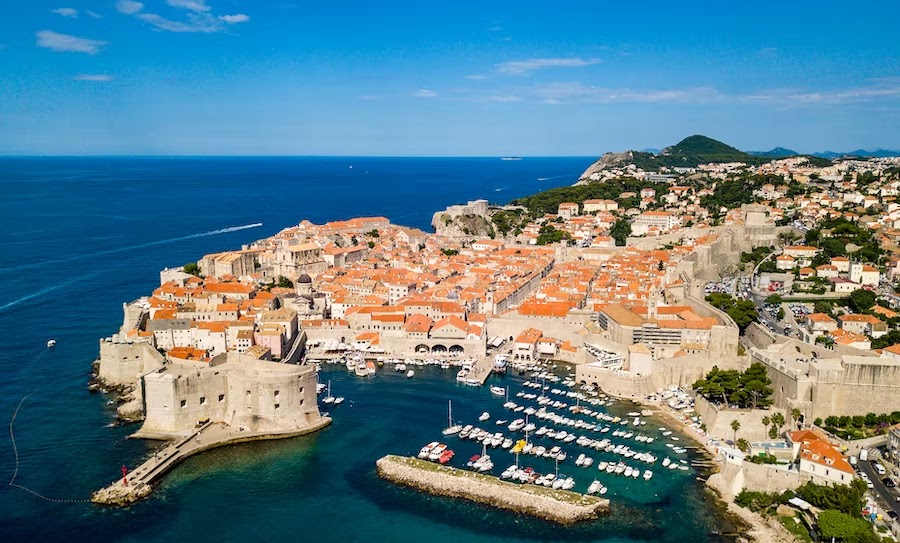
Cities like Dubrovnik (above) are major tourism drawcards.   

By joining the Schengen zone, Croatia joins 26 other EU and EEA countries that have officially abolished all passport and all other types of border control at their mutual borders.