ALL ACCOR

ALL ACCOR
Book, stay, enjoy. That's ALL.com
Showing posts with label Amsterdam. Show all posts

Tuesday, 4 November 2025

How to travel asleep on Europe’s first night bus with lie-flat seats


Buses with lie-flat beds are emerging as an enticing travel option in Europe.

Zurich, Basle, Luxembourg, Brussels and Amsterdam are in line to become among the first cities to see the arrival of a new era of overnight coach travel, news hub Travel Mole reports.

Swiss company Twiliner has announced that its first luxury night bus route will officially launch on November 14.

Twiliner’s mission is to make long-distance bus travel as comfortable - and nearly as sustainable - as rail journeys, while offering a greener alternative to short-haul flights.

The company says its service “closes the comfort gap in long-distance travel,” bringing airline business-class style to its buses.

Each double-decker bus will carry just 21 passengers (18 on the upper deck and three on the lower level).

This is compared to up to 80 seats for a normal cheap-and-cheerful coach service.

Seats (above) looking like those found in business class cabins in commercial aircraft. At the push of a button, they fully recline into flat beds.

Travellers can expect pillows, blankets, privacy screens, reading lights, USB ports, wifi and personal storage compartments.

Downstairs, passengers will find bathroom and changing facilities and a snack bar stocked with light refreshments.

Each guest will be allowed to bring one large suitcase (up to 23kg) and a small carry-on, with options to book extra space for bikes or sports equipment.

Sustainability is a major part of Twiliner’s identity. The buses will run on HVO diesel, a renewable fuel made from recycled fats and vegetable oils.

The company says the system cuts carbon emissions by up to 85% compared to flying and is on par with train travel in terms of sustainability.

The trips will, however, not be cheap: one-way fares start around €155 (about $AU270) to €250 depending on distance and season. But you will save on the cost of a hotel room overnight. 

The network will debut with one route: Zurich–Basle-Luxembourg-Brussels-Rotterdam-Amsterdam.

By the end of 2025, a second route between Zurich and Barcelona will be launched: Zurich–Berne-Girona-Barcelona.

Initially operating several times per week in December, Twiliner expects to offer daily departures by mid-2026.

Additional routes are already planned for 2026 with the aim of a total of 30 European destinations within the next three years. These would include cities such as Copenhagen, London, Paris, Berlin, Milan, Munich and Vienna.

“This is about redefining how people move across Europe at night,” said Twiliner CEO Samuel Keller. “You can rest, work, or simply sleep your way from one city to another - comfortably and sustainably.”

Wednesday, 22 October 2025

Famous beer business goes a little flat

Times are tough in the Heineken beer kingdom.

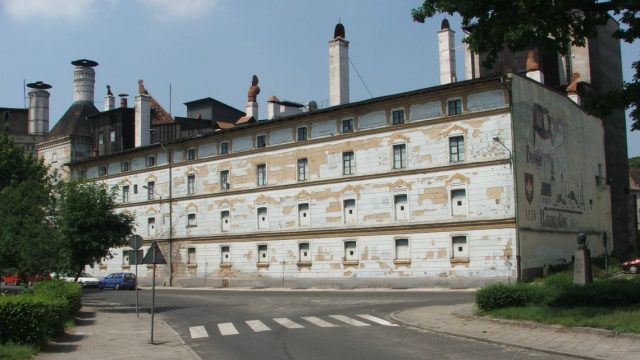
Żywiec Group, a subsidiary of Heineken, plans to close its Namysłów Brewery in Poland next year. 

It is a historic site where production was first recorded as early as 1321.


Żywiec has owned the brewery (above) since 2018 after buying it from Chicago Poland Investment Group.

Żywiec says the decision is down to “a declining beer market and rising costs and taxes”.

As if that isn’t disturbing enough, Heineken has also revealed it has plans to “reshape” its Amsterdam head office as part of a new strategy that will “impact approximately 400 roles” with its workforce either facing “relocation” or their “roles ceasing to exist”.

The decision, which is part of the Dutch beer giant’s new EverGreen 2030 strategy, will be starting in 2026 and will be in addition to 200 roles of the digital and technology department already being phased out since October 2024, trade publication drinks business reports.

The changes will, Heineken says, assist in “reducing complexity and speeding up decision-making” as well as help the beer business to “operate with greater impact, empower its teams, and position itself to capture growth opportunities more decisively”.

The reshaping of its global head office is part of a series of initiatives designed to create “a more agile, simplified, and connected organisation, ready to focus on opportunities for growth and innovation”.

Sounds ominous. 

The business has also highlighted it is “scaling the rollout of its digital backbone (DBB), a multi-year programme transforming how Heineken operates across more than 70 markets. By integrating over 40 digital platforms, DBB will simplify processes, unlock the power of data, and enable faster innovation”.  

The brewer says “this will strengthen Heineken’s ability to respond quickly and efficiently to consumer trends and market shifts”.

Heineken chairman of the executive board and CEO Dolf van den Brink said: “The world around us is changing fast. Geopolitical and economic pressures are real, but so are the opportunities created by technology and evolving consumer trends. To stay ahead, we must accelerate our digital transformation and sharpen our focus on winning in the market.

“We recognise the impact these changes can have on our people and are committed to supporting them with care and respect throughout this transition. With a stronger, simplified, more agile organisation, we are well positioned to unlock new growth opportunities and innovation.”

In Poland, Namysłów mayor Jacek Fior said the town’s identity had been closely-identified with the brewery for centuries and highlighted how it was the second-oldest continually-existing enterprise in Poland, behind the Wieliczka salt mine.

Żywiec said each of the brewery’s 100 employees will receive full severance packages and additional support agreed with trade unions.

Friday, 11 July 2025

Taxing times: Amsterdam hits tourists the hardest


If you think your hotel room in Amsterdam is a little expensive, you can blame the local taxes. 

The biggest city in the Netherlands has claimed the top spot as the European city with the highest tourist tax, new rankings compiled by Holidu.pt, the Portuguese branch of the holiday rental technology company Holidu. 

The ranking is based on data from Euromonitor’s “Top 100 City Destinations.”

As of now, Amsterdam charges tourists an average of €18.45 per night, applying a 12.5% tax on the total value of accommodations. 

The measure is part of the city’s strategy to tackle over-tourism, support public infrastructure, and ensure that tourism contributes to Amsterdam’s economy.

Second place is shared by four Greek destinations -Athens, Heraklion, Rhodes and Thessaloniki - which apply an average daily tax of €8.17. 

Dubbed a “climate resilience tax”, it is designed to fund infrastructure upgrades and sustainable tourism. Rates vary by accommodation type and are lower during the off-season (November to March).

Berlin ranks sixth, following a recent tax increase. Since January 1, the German capital imposes a 7.5% levy on the net cost of accommodation, averaging €7.38 per night. Notably, the tax now also applies to business travellers, marking a departure from previous exemptions common in German cities.

Italy is also included  in the top 10, with Milan leading among Italian cities. The city raised its maximum tourist tax to €7 per person, per night, for guests in 4- and 5-star hotels. The average rate now stands at €6.44. 

Rome and Florence share eighth position, with an average rate of €6.18. In Rome, tourists pay €10 per night in 5-star hotels, €7.50 in 4-star, and as little as €4 in 1-star accommodations. Florence applies similar rates, with 5-star hotels at €8, 4-star at €7, and 1-star at €3.50.

Interestingly, some of Europe’s most popular tourist cities do not top the list. 

Barcelona, Paris, and Nice rank 11th and equa 12th. 

While Barcelona charges an average of €5.81 tourist tax, Nice and Paris stand at €5.65 per night. 

Thursday, 19 December 2024

This is what it smells like when pigs fly


Passengers on board a KLM flight from the Netherlands to Mexico City had an unpleasant experience this week when the plane had to be diverted due to the stench caused by pigs being transported in the cargo hold.

The Boeing 787 Dreamliner flying from Amsterdam was forced to divert to Bermuda after 100 live pigs created such a stench that it affected the “oxygen environment” in the cockpit.

The pilots of KLM Royal Dutch Airlines flight KL685 were forced to contact air traffic control around six hours into the transatlantic flight with an unusual request to make an unscheduled stop in Bermuda due to what the Captain described as “obnoxious cargo.”

Passengers onboard the 12-hour flight were apparently unable to cope with the porcine farts.

The flight had 259 passengers and crew onboard with 100 live pigs stashed in the hold.

A spokesperson for Skyport, the firm that runs Bermuda’s LF Wade International Airport, told media the diversion was caused by “the distinctive aroma of 100 pigs travelling in the cargo hold.”

A KLM spokesperson said the flight was diverted as "a standard precaution".

Once the plane landed on the island, passengers and crew were processed through immigration and sent to local hotels, where they stayed for 26 hours as a result of the diversion.

In the meantime, the pigs were transferred to a holding area and the plane was cleaned.

A government inspected the animals and the piggy cargo was cleared to fly once again.

The flight reportedly landed in Mexico City a full 26 hours behind schedule.

Tuesday, 2 July 2024

Dear tourists: Please go away we don't want you here


First Venice took action against over-sized cruise ships, now Amsterdam is cracking down.

The Dutch city plans to start cutting the number of ships that can stop at its main port terminal over the coming years, its municipal government has said.

Starting from 2026, the number of sea cruise vessels that can stop at the Passengers Terminal Amsterdam will be set at 100 per annum, down from 190 today.

Within a decade, cruise ships will not be allowed to stop at the main terminal, and by 2035 the main terminal for cruise stops will be outside the city, travel news portal Skift reports.

All cruise ships will be required to use shore power by 2027.

This means ships will have to get their electrical power from the shore while docked at the port, cutting the use of onboard diesel engines - a contributor to carbon emissions.

“By limiting sea cruises, requiring shore power, and aiming for the cruise terminal to move from its current location in 2035, the council is responsibly implementing the proposal to stop sea cruises,” said Hester van Buren, an alderman for the municipal government.

Both Venice and Amsterdam have concerns about over-tourism and its impact on the environment.

In Venice, the government has limited the number of cruise ships at its industrial port and is building a smaller terminal outside the city centre.

The cruise cap is the latest policy by Amsterdam to combat over-tourism.

In April, the city banned the construction of new hotels. And earlier this year, it launched a new campaign to discourage nuisance party tourists from visiting the city’s red light district.

Meanwhile, the mayor of Barcelona, Mayor Jaume Collboni, revealed this month that his city plans to ban short-term vacation rentals by 2028.

That plan is in response to rising tourist numbers and ever-increasing rents for locals with a large portion of housing stock having been turned into accommodation for visitors.

Sunday, 23 July 2023

Amsterdam to say "no" to cruise ships


Amsterdam is set to ban cruise ships from its waters and close its cruise terminal.

The largest city in the Netherlands has taken the move cut pollution and overcrowding in the city, Travel Mole reports.

The city has annually welcomed more than 100 cruise ships a year.

“Cruise ships in the centre don’t fit in with Amsterdam’s task of cutting the number of tourists,” said Ilana Rooderkerk of the D66 party, which controls the city along with the Labour party and environmentalists.

The city has been pushing measures to crack down on too much tourism and nuisance behaviour, including smoking cannabis in public.

This has involves cleaning up the red light district and shunning stag and hen's parties.

As yet, there has been no timeline given for the cruise terminal closure.

The ban will not lead to the end of shore excursions to Amsterdam.

Cruise lines also offer trips to Amsterdam when docking at Ijmuiden and Rotterdam.

Amsterdam attracts up to 20 million annual visitors.

Rooderkerk recently compared cruise tourists to a "plague of locusts" descending all at once on the city. 

Saturday, 10 June 2023

Brexit "blessings" continue with Eurostar blow


Planning to catch a Eurostar train between London and Amsterdam next summer?

Sorry, the bad news is that you might have to fly instead.

It was announced this week that Eurostar’s Amsterdam service could be facing a suspension of up to 11 months due to renovations to be undertaken at Amsterdam’s main railway station (above).

The work at the station will limit space, meaning a lack of facilities to complete post-Brexit passport checks for Eurostar Amsterdam travellers. Yet another Brexit bonus.

The work will last from June 2024 to May 2025, Travel Mole reports.

The Dutch Ministry of Infrastructure says it could complete the renovation work within seven months. But the best estimate is 11 months.

The work will eventually shift the Eurostar terminal to a lower level beneath the main rail station.

Eurostar Amsterdam trains run four times daily.

“We calculate it means 21 extra flights between Schiphol and London and that is crying shame,” Eurostar said in a statement.

Eurostar CEO Gwendoline Cazenave is in the Netherlands this week for talks with government officials.

Unless a solution can be found, the suspension would see the Eurostar network reduced from a pre-Brexit total of 13 year-round stations to just four: London, Lille, Paris and Brussels.


Sunday, 12 February 2023

Amsterdam wants to scare away dope smoking tourists


The last time I visited Amsterdam there was fellow running around the streets menacing people with a machete.

He was clearly high on a substance a little stronger than cannabis.

But the good people of Amsterdam council are now apparently worried about marijuana tourism.

They are to launch a "stay away" campaign in the northern spring targeting tourists travelling to the capital for drugs, alcohol and sex purposes.

Which are, of course, three of Amsterdam's major tourism drawcards, whether the good local burghers like it or not.

The city's mayor is hoping to curb crime by banning smoking marijuana outdoors from mid-May.

Good luck with that.

Apparently, residents in the city centre have complained that tourist-fuelled nightlife noise has made the city unbearable.

The Dutch capital has long been known for its liberal attitude to drug use and sex work but will ban the smoking of cannabis on the streets of its red-light district, city authorities.

The ban, which will come into effect in mid-May, is seeking to tackle crime and anti-social behavior to improve the quality of life for the area's residents.

Amsterdam is a popular tourist hotspot and its marijuana cafes as well as its brothels and strip clubs draw in millions of visitors every year.

The real problem is not a marijuana smoking - it is an overabundance of tourists in cities that are relatively small.

Venice suffers from similar problems, as does Prague - neither of which are dens of drug smoking mania. Rome, too, and Dubrovnik.

What has happened in these cities - and many others - is that they have promoted themselves to tourists, and then discovered they lack the necessary infrastructure for the masses.

"Residents of the old town suffer a lot from mass tourism and alcohol and drug abuse in the streets," Amsterdam city fathers and mothers said in a statement.

"Tourists also attract street dealers, who in turn cause crime and insecurity," it added.

But therein lies a problem. 

Tourists are highly unlikely to flock to Amsterdam for the local cuisine, so when businesses start losing money my bet is that dope smokers will be welcomed back with open arms.

Saturday, 22 May 2021

Asian hotel group ups the ante in Europe


There is a huge difference between Asian hospitality and European hospitality but Asian-based Anantara Hotels, Resorts & Spas is upping the ante with a range of new branded hotels in Europe.

Anantara will open its first luxury property in the Netherlands later this year: Anantara Grand Hotel Krasnapolsky Amsterdam.

Located in Dam Square in the centre of Amsterdam, the existing property will be re-branded from the NH Collection Grand Hotel Krasnapolsky.

The hotel will receive a soft refurbishment, including some of the guest rooms and suites, the garden, and will have a new spa and gym.

The 402-key Anantara Grand Hotel Krasnapolsky will include a two-bedroom presidential suite and a royal suite, overlooking the Royal Palace of Amsterdam.

The building itself dates back to 1866.

Dillip Rajakarier, Group CEO Minor International, parent company of Anantara, said, "This historic hotel will be a fantastic addition to the Anantara portfolio when it joins later this year after enhancements to the property and represents an exciting milestone for the brand as the first in northern Europe."

Anantara Hotels, Resorts & Spas will continue its strategic expansion in Europe with the re-brand of two well-known hotels in Italy and Hungary: Anantara Palazzo Naiadi Rome and Anantara New York Palace Budapest.

Its European portfolio currently consists of Anantara Vilamoura Algarve Resort on the southern coast of Portugal and Anantara Villa Padierna Palace in Marbella, Spain, as well as the Marker Hotel in Dublin, Ireland.

The Thai-based group is probably best known to Australians for properties including the Anantara Riverside in Bangkok and the Layan Resort in Phuket. 

Monday, 19 April 2021

The luxury hotel that became a burger joint


The Waldorf Astoria is a luxury hotel and spa in Amsterdam where rooms start from $700 a night.

It has a two-star Michelin restaurant, a prestige canal-side location and is set in six 17th- and 18th-century palaces.

To keep some staff busy during Covid-19, the Waldorf Astoria Amsterdam hit on the idea of offering deluxe burgers for delivery, Reuters reported.

The chefs had to come up with something unique, said the hotel's manager Roberto Payer.

"The way we do it, the way we prepare it, the way we serve it, the way it comes home is very different to any other burger," he said.


For 19.50 euros ($23) plus an Uber Eats delivery fee, the Waldorf Signature burger comes with a 240-gram Holstein-Fresian meat patty and is served with English Duke of Berkshire bacon on a French brioche bun with aged Dutch cheese and homemade relish.

Uber Eats reviewers have awarded it 4.8 stars out of 5.

Crafting the perfect burger took serious research, said executive chef Sidney Schutte, who during normal times runs the two-Michelin-star Spectrum restaurant, which does not serve burgers.

"It had to be 'the best burger that you can buy here in Amsterdam'.... it needs to be perfect," he said.

Dutch plans to ease some Covid-19 measures have been pushed back until April 28 at the earliest, so the burger remains on sale for now.