

Żywiec Group, a subsidiary of Heineken, plans to close its Namysłów Brewery in Poland next year.
It is a historic site where production was first recorded as early as 1321.
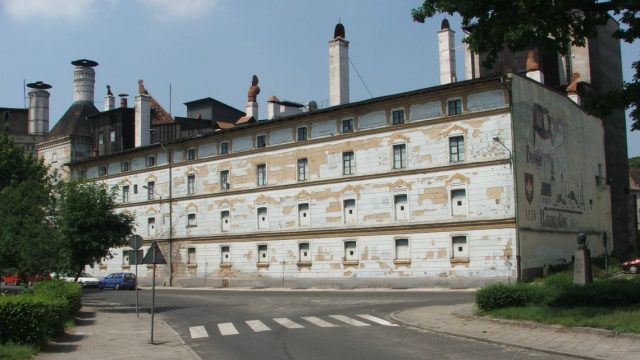
Żywiec has owned the brewery (above) since 2018 after buying it from Chicago Poland Investment Group.
Żywiec says the decision is down to “a declining beer market and rising costs and taxes”.
As if that isn’t disturbing enough, Heineken has also revealed it has plans to “reshape” its Amsterdam head office as part of a new strategy that will “impact approximately 400 roles” with its workforce either facing “relocation” or their “roles ceasing to exist”.
The decision, which is part of the Dutch beer giant’s new EverGreen 2030 strategy, will be starting in 2026 and will be in addition to 200 roles of the digital and technology department already being phased out since October 2024, trade publication drinks business reports.
The changes will, Heineken says, assist in “reducing complexity and speeding up decision-making” as well as help the beer business to “operate with greater impact, empower its teams, and position itself to capture growth opportunities more decisively”.
The reshaping of its global head office is part of a series of initiatives designed to create “a more agile, simplified, and connected organisation, ready to focus on opportunities for growth and innovation”.
Sounds ominous.
The business has also highlighted it is “scaling the rollout of its digital backbone (DBB), a multi-year programme transforming how Heineken operates across more than 70 markets. By integrating over 40 digital platforms, DBB will simplify processes, unlock the power of data, and enable faster innovation”.
The brewer says “this will strengthen Heineken’s ability to respond quickly and efficiently to consumer trends and market shifts”.
Heineken chairman of the executive board and CEO Dolf van den Brink said: “The world around us is changing fast. Geopolitical and economic pressures are real, but so are the opportunities created by technology and evolving consumer trends. To stay ahead, we must accelerate our digital transformation and sharpen our focus on winning in the market.
“We recognise the impact these changes can have on our people and are committed to supporting them with care and respect throughout this transition. With a stronger, simplified, more agile organisation, we are well positioned to unlock new growth opportunities and innovation.”
In Poland, Namysłów mayor Jacek Fior said the town’s identity had been closely-identified with the brewery for centuries and highlighted how it was the second-oldest continually-existing enterprise in Poland, behind the Wieliczka salt mine.
Żywiec said each of the brewery’s 100 employees will receive full severance packages and additional support agreed with trade unions.
Żywiec has owned the brewery (above) since 2018 after buying it from Chicago Poland Investment Group.
Żywiec says the decision is down to “a declining beer market and rising costs and taxes”.
As if that isn’t disturbing enough, Heineken has also revealed it has plans to “reshape” its Amsterdam head office as part of a new strategy that will “impact approximately 400 roles” with its workforce either facing “relocation” or their “roles ceasing to exist”.
The decision, which is part of the Dutch beer giant’s new EverGreen 2030 strategy, will be starting in 2026 and will be in addition to 200 roles of the digital and technology department already being phased out since October 2024, trade publication drinks business reports.
The changes will, Heineken says, assist in “reducing complexity and speeding up decision-making” as well as help the beer business to “operate with greater impact, empower its teams, and position itself to capture growth opportunities more decisively”.
The reshaping of its global head office is part of a series of initiatives designed to create “a more agile, simplified, and connected organisation, ready to focus on opportunities for growth and innovation”.
Sounds ominous.
The business has also highlighted it is “scaling the rollout of its digital backbone (DBB), a multi-year programme transforming how Heineken operates across more than 70 markets. By integrating over 40 digital platforms, DBB will simplify processes, unlock the power of data, and enable faster innovation”.
The brewer says “this will strengthen Heineken’s ability to respond quickly and efficiently to consumer trends and market shifts”.
Heineken chairman of the executive board and CEO Dolf van den Brink said: “The world around us is changing fast. Geopolitical and economic pressures are real, but so are the opportunities created by technology and evolving consumer trends. To stay ahead, we must accelerate our digital transformation and sharpen our focus on winning in the market.
“We recognise the impact these changes can have on our people and are committed to supporting them with care and respect throughout this transition. With a stronger, simplified, more agile organisation, we are well positioned to unlock new growth opportunities and innovation.”
In Poland, Namysłów mayor Jacek Fior said the town’s identity had been closely-identified with the brewery for centuries and highlighted how it was the second-oldest continually-existing enterprise in Poland, behind the Wieliczka salt mine.
Żywiec said each of the brewery’s 100 employees will receive full severance packages and additional support agreed with trade unions.

No comments:
Post a Comment