


I tasted a sensational bottle of nebbiolo last week.
It was the 2021 Ravensworth Hilltops Nebbiolo ($45), made by Bryan Martin, a long-time collaborator at Canberra-region stalwart Clonakilla.
But while Ravensworth is based, like Clonakilla, at Murrumbateman, the fruit for this wine came entirely from the Hilltops region near Young - the cherry capital of Australia.
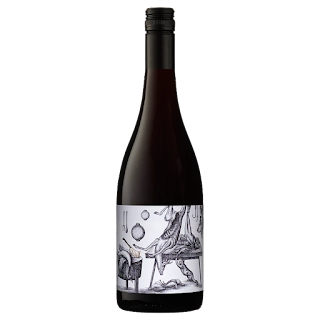
The wine was very floral with red fruits and delicatessen elements. Lovely length, too.
It was a pity I had to drink it so young. It is a definite cellaring prospect and underlines Martin’s deft touch in the winery.
I first became aware of the quality of Hilltops fruit a decade or more ago thanks to wines labelled Moppity and Freeman Vineyards, which were both impressive and fairly priced.
Top Hilltops producers include Freeman Vineyards, Grove Estate, Moppity Vineyard, Grove Estate, Chalkers Crossing Vineyard and McWilliams Barwang.
My friend and colleague Rick Allen, wine writer for the Newcastle Herald, recently wrote an article about Hilltops wine.
Here are some of his words:
It’s basically an oversized granite rock, about 150 kilometres long and 50 kilometres wide, but to winemakers it’s 24-caratgold.
Because sitting on that rock, which is about two hours north-west of Canberra, is Hilltops, one of the most exciting wine regions anywhere in Australia.
Canny winemakers are queuing up to get their hands on Hilltops fruit, yet strangely enough, the region is still largely unknown to most wine drinkers.
Why is that? Winemaker [and grape grower] Brian Freeman, who has 200 hectares of vines which makes him easily the largest Hilltops producer, puts it down to a shortage of cellar doors.
“Not enough cellar doors means we don’t attract people, and because we don’t attract people no-one is putting up new cellar doors.”
It’s wine’s own Catch-22.
But as a premium grape growing region, it has "got the lot".
There’s hardly a variety that won’t grow there - not just grow but thrive - producing fruit of the highest quality.
At the last Canberra wine show for example, Hilltops wines collected eight trophies plus 15 gold medals.
Freeman says the secret to Hilltops’ success is a combination of soil and climate.
“The soils are deep and well drained,” he explained. “There’s also a layer of decomposed granite about 12 to 15 metres deep that has been formed over the last five million years which indirectly helps regulate the water supply for the vines.
“And we get ideal weather conditions - cool nights in summer and a very dry autumn … which is ideal for grapes to ripen.”
Freeman’s 200 hectares, for example, has no less than 27 varieties growing.
Hilltops has traditionally been known for shiraz and cabernet, but now the Italian varieties like sangiovese, nebbiolo, rondinella and fiano are really impressing”
Canberra winemakers use a lot of Hilltops fruit, but the Hunter Valley is in on the act too.
One of the first Hunter wineries to catch on about the potential of Hilltops was Hungerford Hill.
“We’ve probably been using fruit from there or the best part of 35 years,” winemaker Bryan Currie said.
“There’s not a grape variety I can think of that you can’t grow in Hilltops.
"It’s quite amazing.
"It’s warm enough that your grapes will ripen fully, but cool enough to allow really nice aromatics. The dry autumn means the grapes can have that long hang time … you can pick pretty much from February to June.
“And it allows us to produce wines that we just can’t do in the Hunter.
“Off the top of my head we take pinot grigio, fiano, tempranillo, graciano, malbec, cabernet and sangiovese. We also do a Hilltops shiraz which is very different to Hunter shiraz - more aromatic and spicy.”
Take a note of the Hilltops name … you’ll be seeing a lot more of it.

