ALL ACCOR

ALL ACCOR
Book, stay, enjoy. That's ALL.com
Showing posts with label overtourism. Show all posts

Saturday, 4 July 2026

Amsterdam tells tourists: Pay up, or on your bike


Amsterdam is a small city with narrow thoroughfares and limited resources. 

Now the Dutch city is cracking down further on overtourism. 

Amsterdam authorities are planning to introduce new tourism measures which will make the city one of the toughest in Europe in managing tourism amid a growing hostility towards tourists, news hub Travel Mole reports.
 
Among the changes is a gradual increase in its tourist tax to 20% by the end of the decade, as city leaders seek to curb overtourism and improve the quality of life for residents.

The Dutch citg already charges one of the highest visitor taxes in Europe. Overnight visitors currently pay a tourist tax equivalent to 12% of their accommodation cost, while day visitors arriving by cruise ship pay a separate fee fixed at €15 per day.

Under proposals unveiled by the city’s new coalition government, the overnight tourist tax would rise to 16% next year before increasing by one percentage point annually until it reaches 20% in 2030.

City officials say the higher levy is designed to ensure visitors contribute more fairly to the costs associated with maintaining one of Europe’s most-visited destinations.

Amsterdam welcomed 9.5 millions guests last year. That makes tourism one of the city’s most important economic drivers but local authorities say the growing number of visitors has also placed mounting pressure on public spaces, municipal services, neighborhoods, and infrastructure.

According to the coalition agreement, tourism remains vital to the city’s economy, but the associated costs of managing large visitor numbers have become increasingly significant.

The proposed tax increase forms part of a much broader tourism management strategy designed to create what city leaders describe as a more balanced visitor economy.

Another proposal would see increases to Amsterdam’s entertainment levy, which currently applies to activities such as canal boat tours, canoe rentals, and other recreational services operating on the city’s famous waterways.

Sunday, 18 January 2026

Get inside: Florence rings in the changes for diners


Florence is a major drawcard for tourists in Tuscany, a beautiful and historic city that is best enjoyed off peak.

Over the summer season it can unbearably crowded.    

But now the Italian city is moving to limit one of its key drawcards - wining and dining al fresco in the old quarter.

Florence wants to restrict outdoor dining across large parts of its historic centre, hoping to rein in the impacts of mass tourism and restore public spaces to residents, travel news hub Travel Mole reports.

Under new regulations approved by the municipality in coordination with Italy’s cultural heritage authorities at the end of last year, outdoor dining structures will be banned on around 50 streets within the UNESCO-listed historic core. See https://www.visitflorence.com/

The affected areas are mainly narrow, high-traffic streets where tables, chairs, umbrellas and barriers have increasingly clogged pedestrian routes and obscured views of historic buildings.

In addition to the outright ban, stricter limitations will apply to more than 70 other locations, where restaurants may still be allowed outdoor seating but with tighter controls on size, layout and the use of coverings or fixed structures.

The goal, city officials say, is not to eliminate outdoor dining entirely but to restore balance in areas that have become overwhelmed.

The measures are scheduled to take effect in early 2026, although the city has not yet announced a precise start date.

A transition period has been built in to allow businesses time to adapt. Existing permits for outdoor dining structures must be reviewed or renewed under the new rules by mid-March 2026, effectively setting a practical deadline for compliance.

Florence’s city hall says the decision responds to long-standing complaints from residents who argue that some streets have turned into “open-air dining corridors,” making daily life difficult and eroding the character of the historic centre.

Officials also point to the need to safeguard Florence’s architectural heritage and ensure unobstructed views of iconic landmarks.

The ban will not apply uniformly across the city. Wider streets and larger piazzas, as well as areas outside the historic core, are expected to retain some form of outdoor dining.

Heritage advocates and resident groups have welcomed the move as overdue, while many restaurant owners warn it could hurt revenues, particularly during peak tourist seasons when outdoor tables are most profitable.

Image: Karon Morono, Scop.io


Tuesday, 7 October 2025

Kyoto imposes massive tourism tax on visitors


The Japanese city of Kyoto, struggling to deal with overwhelming crowds of tourists, this week unveiled plans for a whopping increased accommodation tax. 

Taxes will rise to up to 10,000 yen (about $100) per person, per night - starting from March 1, city officials announced.

The new rate, a tenfold jump from the current 1,000 yen/$10 maximum, is designed to fund infrastructure improvements and initiatives aimed at easing congestion across the city’s popular districts, news hub Travel Mole reported. .

Under the new tiered system, the 10,000-yen levy will apply to hotel stays costing 100,000 yen or more per night. Kyoto will then have the highest lodging tax in Japan, the Ministry of Internal Affairs and Communications said.

City officials say the measure comes after years of frustration over constant tourist crowds; from packed city buses to throngs of visitors overwhelming historic sites and narrow streets.


In its application to the ministry earlier this year, Kyoto argued that “tourists must also share the cost of measures against overtourism.” The increase marks the first adjustment since the tax was introduced in 2018.

Students and teachers on school trips will remain exempt from the taxes.

Following the increase, Kyoto expects its annual lodging tax revenue to nearly double from 5.9 billion yen this fiscal year to 12.6 billion yen next year, based on city projections. 

The change comes amid a surge in luxury hotel development. Tokyo-based Imperial Hotel Ltd. is set to open Imperial Hotel, Kyoto, in March 2026 in the city’s Higashiyama Ward. 

The property will incorporate the façade of Yasaka Hall, a registered cultural property in Kyoto’s Gion district; regarded as the heart of geisha culture. Room rates are expected to start at 164,500 yen per night.

Images: Winsor Dobbin

Friday, 22 November 2024

Don't go there; go here: Japan's new tourism campaign


It is well known that Japan's major tourist destinations are overflowing with visitors.

In cities like Kyoto, locals have expressed frustration at the flood of foreigners.

Now Japan Airlines (JAL) and Hoshino Resorts have launched the "All-time Favourite v Hidden Gems" campaign to try to mitigate against overtourism and contribute to regional revitalisation.

In some cases it may be too late. On a recent visit to Kanazawa I saw several signs at restaurants saying that non-Japanese speakers were not welcome.

The two companies aim to attract visitors to regions outside of Japan's major metropolitan areas by promoting the charm of lesser-known destinations where many untapped tourism resources lie.

The annual Accommodation Travel Statistical Survey by the Japan Tourism Agency showed the total number of foreign guest room nights in 2023 reached approximately 117.75 million nationwide, surpassing the pre-pandemic level of 2019.

Five prefectures: Tokyo, Osaka, Kyoto, Hokkaido, and Fukuoka accounted for 73% of the total share, with only a small number of inbound tourists travelling to more rural areas.

JAL and Hoshino Resorts have introduced extensive content on a dedicated campaign website, covering themes such as cherry blossoms, festivals, autumn leaves, snow and nature/activities.

It highlights the “All-time Favourite” destinations, that are loved by visitors and “hidden gems” that are yet to be further explored.

Nagato City in Yamaguchi Prefecture is a “Hidden Gem” where visitors can enjoy strolling along the cherry blossom-lined paths beside the Otozure River. This historical hot spring town is where feudal lords of the Edo period would visit for therapeutic baths.

The companies have also launched both domestic and international Instagram posting campaigns to encourage the sharing of lesser-known yet captivating aspects of Japan's rural regions - places that people want to share with the world or have visited and enjoyed.

Additionally, a package deal combining JAL flights and accommodations at select Hoshino Resorts properties is available for inbound tourists travelling from December 11, 2024, with the end date to be determined.

Here's a link to my recent story on less touristy Hida Takayama.

Wednesday, 11 September 2024

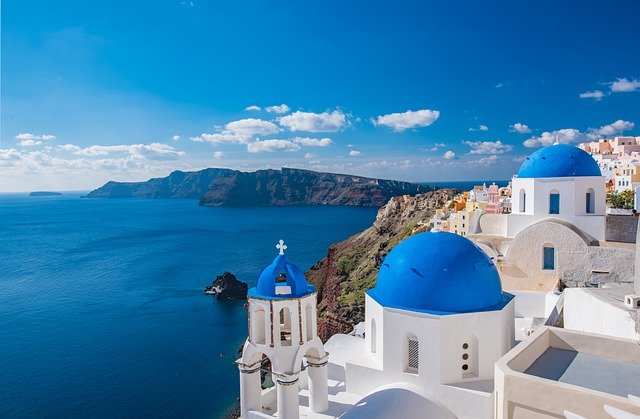
Enough! Greece moves to limit cruise ships

The Greek island used to welcome the arrival of big-spending tourists from cruise ships.

But now they are saying "enough". 


Destinations like Mykonos and Santorini say they are struggling to cope when up to five cruise ships at one time descend on infrastructure that is not capable of catering to the masses. 

Travel Mole reports that Greek Prime Minister Kyriakos Mitsotakis has confirmed the imposition of a €20 fee on cruise ship visitors to Santorini and Mykonos during high-season summer months.

The two islands are at the heart of Greece’s fight against overtourism, often almost doubling their population during busy days when multiple cruise ships call.

“Greece does not have a structural overtourism problem but some of its destinations have a significant issue during certain weeks or months of the year, which we need to deal with,” the PM said during a press conference.

“Cruise shipping has burdened Santorini and Mykonos and this is why we are proceeding with interventions,” he said.

“The cruise industry has put a strain on Santorini and Mykonos.”

A portion of the cruise passenger tax will be used to improve infrastructure on the islands, he said.

Mitsotakis also said ‘bold’ cruise ship limits are being looked at for the two islands.

“It is important to observe sustainability rules in everything that is built from now on,” he told reporters. “To put the brakes on islands where we believe that the situation has reached a point where the infrastructure limits are actually being tested.”

Greek tourism minister Olga Kefalogianni recently called for cruise ship quotas, and Santorini officials have proposed a daily limit of 8,000 cruise passengers per day from next year.

“It’s impossible for an island such as Santorini to have five cruise ships arriving at the same time,” she said.

Sunday, 17 September 2023

Venice to impose tourism charge on visitors


And so it begins.

Venice is set to charge €5 ($8.30) for day trippers entering the city in its latest move to combat the ever-increasing problem of overtourism.

Initially to be introduced as a trail period during peak days, day visitors over the age of 14 will have to pay the tourist fee by booking in advance from next season.

“Venice is among the most visited European cities and suffers the most from excess tourism,” said Simone Venturini, the city council member for tourism.

The city measures just a few square miles but attracts around 13 million visitors annually.

The aim is to get visitors to come on off-peak days, Venturini said. Good luck with that. 

UNESCO has suggested putting the Italian city of Venice on the list of World Heritage sites at risk. 

Venice has been struggling with the negative impacts of mass tourism for years, Travel Mole reports.

City officials have already taken measures to keep large cruise ships away from the city's canals.