ALL ACCOR

ALL ACCOR
Book, stay, enjoy. That's ALL.com
Showing posts with label imports. Show all posts

Thursday, 13 November 2025

Plunging US wine sales to Canada create opportunities for others


Sales of US wines in Canada have plunged, opening a huge opportunity for exporters from Australia and New Zealand. 

American wine sales in Canada have plummeted after Canada began barring the sale of US alcohol in response to President Donald Trump’s tariffs, US news outlet Newsweek reported. 

It said that in a recent report, the Sacramento-based Wine Institute found that US wine exports to its neighbour were down 91% between March and July 2025 compared to the same period last year. 

The advocacy group, which represents wineries and related businesses across California, also estimated that US producers have lost out on roughly $161 million in export value to Canada since March.

Very little US wine is exported to Australia - where our product is generally more affordable and more palatable - but Australian/NZ producers could fill the gap on Canadian shelves. 

Canada accounts for a significant portion of the United States' wine exports - 36 % in 2024 - and ongoing trade policy tensions have left producers concerned that they could lose out on this key market, fears shared by US distillers. 

The Wine Institute said in its report: “There has been no comparable, immediate drop in wine sales of this magnitude in recent history.”

In March, the Canadian government imposed retaliatory tariffs on US imports in response to the duties Trump had placed on the country. Several Canadian provinces, including populous Ontario and Quebec, also decided to remove US alcohol from government-run liquor stores. This included LCBO stores (top image). 

Prime Minister Mark Carney announced that he would be dropping the retaliatory tariffs in August, but many provinces have kept their bans in place.

The effects of these bans have been compounded by a wider boycott of US goods in response to the trade standoff, as well as Trump’s repeated references to Canada as America’s “51st state,” which have also been credited with a drop in Canadians travelling to the US.

The US International Trade Commission says wine exports fell 73% year over year in March, from $34.5 million to $9.2 million. These losses worsened in the following months, resulting in an overall decline of 96% for the second quarter.

This mirrors the struggles of America’s distillers, with second-quarter spirit exports to Canada plunging by 85% percent year-over-year. 

The Wine Institute said in its report: “Restoring access isn’t just about trade, it’s about protecting family livelihoods, supporting economies and renewing a relationship that has benefited both nations for generations. Wine Institute stands ready with a plan to help US wineries rebuild those relationships and return to Canadian shelves as quickly as possible.”

The Wine Institute says that should the bans remain in place and exports continue to sink, “the US will cede its share of the market to the EU, Australia and New Zealand.” 

So opportunity knocks. 

Sunday, 31 August 2025

Loire reds offer a different taste of France


Australians drink a lot of Champagne. Wines from Burgundy and Bordeaux are popular with aficionados, while the Rhone also has its fans and wines from the Languedoc sell well through major chains.

The Loire Valley, however, is often overlooked. 

The Loire wine region stretches across western France from the Muscadet vineyards near the city of Nantes on the Atlantic coast to the Sancerre and Pouilly Fumé vines that lay just south-east of the city of Orleans in central France.

Among the leading wine producing regions are Anjou, Saumur, Bourgueil, Chinin and Vouvray with grape varieties ranging from whites made from chenin blanc, sauvignon blanc and melon de Bourgogne to reds crafted from cabernet franc, pinot noir and gamay.

These are generally stylish, lighter-bodied and layered wines that are very food friendly.

With Crémant-style production throughout the Loire, it is the second-largest sparkling wine producer in France.

The Loire has a long history of winemaking dating all the way back to the 1st century.

The region is currently promoting its wares in Australia, with a focus on reds showcasing cabernet franc, pinot noir, and gamay).

The Val de Loire PGI spans 14 departments with 30 grape varieties with 50% of all cabernet franc in France grown in the Loire.

Pinot noir and gamay are often enjoyed lightly chilled. They are found largely in Touraine and Saumur.

There is a focus on sustainability in the region with 85% of vineyard areas either organic or certified under environmental programs.

Among the red Loire offerings available in Australia are: 

• ‘Les Rouillères’, Saint Nicolas de Bourgueil, Cabernet Franc, Frédéric
Mabileau $37.10
• ‘Confidences’, Chinon, Cabernet Franc, Famille Bougrier $19.99
• ‘Les Terres Rouges’, Saumur-Champigny, 2021, Arnaud Lambert $44.99
• ‘La Chapelle’, Anjou, Cabernet Franc, Château de Fesles $52
• 'Cote 50', Bourgueil, Cabernet Franc, Yannick Amirault $39.99
• Touraine, Gamay, Thierry Delaunay $21.99  

For more details see https://www.vinsdeloire.fr/en

Sunday, 22 October 2023

Do you really know where your seafood comes from?


An innovative hand-held scanner could change the way Australians buy their seafood.

Warming waters due to climate change, pollution, overfishing and fraud in the seafood supply chain means that knowing where our seafood comes from is more important than ever.

Australia has the third-largest fishing zone in the world, covering over 8 million square kilometres, , but it is estimated that over 60% of seafood eaten in Australia is imported from overseas. 

Researchers at UNSW Sydney are part of an ongoing collaborative project, led by ANSTO, that is developing novel ways to determine exactly where seafood has been sourced, and whether it has been farmed or was wild caught.

“The seafood supply chain, especially with seafood imported from across the globe, is quite long," says Associate Professor Jes Sammut, from the School of BEES.

"And there are various people at different points in the supply chain that handle a seafood product. In that process, there is the risk of what we call ‘food fraud’.”

A common type of food fraud is mislabeling. “For example, a product may say that it’s a barramundi fillet from Australia, when it’s really a barramundi fillet from overseas. Mislabeling can also happen at the retail end, so a cheaper product can be labelled as more expensive based on its origin and production method,” says Sammut.

Looking for solutions to these ongoing challenges, ANSTO scientists, led by Dr Debashish Mazumder and a research team at UNSW have developed protocols and mathematical models for a hand-held device that is able to determine the origin of seafood by providing a unique profile of its elements.

“The idea is to use the hand-held device at any point in the supply chain, providing details that can lead to a more sustainable and ethical seafood trade,” says Sammut.

This ongoing research is part of a huge collaborative effort between ANSTO, UNSW, Sydney Fish Market, Macquarie University and the National Measurement Institute.

“This device is really about empowering the consumer, empowering the retailer and also empowering the wholesalers to know more about the produce they’re buying and selling.”

In a recent study published in Food Control, the team used the hand-held X-ray device to locate the site of origin of black tiger prawns from across Australia, with over 80% accuracy.

“This paper brings us a step closer to seeing the scanner device being used on the fish-market floor, to determine in real time, where seafood has come from, and how it was produced,” says Sammut.

Image: Marco Brivo, Scop.io  


Saturday, 16 September 2023

Celebrating 70 years of an importer who helped give Australia an Italian accent


At a time when Italian restaurants owned by culinary "superstars" open and close over a period of just a couple of years, it is nice to pay tribute to a Melbourne institution that is this year celebrating 70 years run by the same family. 

Enoteca Sileno is a Melbourne business that has helped shape the food and wine culture of Australia, with founder Gino Di Santo a pioneer of introducing authentic, regional flavours of Italy to Australians. 

The business is still run by the third generation of the family in 2023. 

At the Enoteca Sileno store in Carlton, the Portelli family is extending its retail hours and hosting a swag of events every Saturday in the lead-up to Christmas. 

Visitors can see a wheel of Parmigiano Reggiano being cut in the traditional way, or sample some panettone in the lead-up to Christmas. 

The Enoteca Sileno story began in the town of Termoli in the region of Molise, Italy. where Luigi ‘Gino’ Di Santo was a young man who wanted to prove he could make it on his own post World War II. 

After arriving in Australia at Bonegilla Migrant Reception Center outside Wodonga in north-east Victoria, he saw a gap in the market for imported Italian food and beverage products in Melbourne.

He returned to Italy to secure the rights for La Cimbali espresso machines, and in 1954 he installed the first machine in Cafè Lexington on Exhibition Street. 

Enoteca Sileno’s role as an importer of Italian foods began with Plasmon, Italy’s most famous brand of baby food, which was in much demand by the young migrant Italian mothers.

In the following years Gino would introduce Australian cafes and restaurants to Italian mineral water, gelati-making machines, La Minerva cheese graters and coffee grinders for delicatessens and cafés, along with preserved vegetables such as artichokes and sun-dried tomatoes, balsamic vinegars and Italian liqueurs such as Amaro Ramazzotti and Amaretto di Saronno.

But Gino also play an important role as an ambassador for Australian products in Italy. He exhibited at Italian international food fairs, giving Italians their first taste of Carlton Draught and Swan Lager beers, as well as Australian tinned fruit. 

He was also responsible for what was possibly the earliest exhibit of Indigenous Australian artefacts in Italy, with a display that included bark paintings, wood carvings, and tools.


In 1982, Gino opened the Enoteca Sileno retail store in Carlton, selling direct to the public rather than to restaurants and cafès. 

After relocating to Lygon Street in 2004, Enoteca Sileno is now under the guardianship of Gino’s daughter Rosemary Portelli-  a former teacher and sommelier - and her husband John Portelli, along with their son Daniel. 

Gino died in 2010, but today, the company portfolio extends across thousands of products from classic biscotti, polenta from the Italian Alps and dozens of condiments, sauces and spreads, as well as Italian craft beers and liquors. 

“Times change, and we want to go with it - but we’ve got the classics everyone Italian knows and loves, and the funny thing is some of the products we’ve had from Gino’s early days are still our biggest sellers," says Rosemary Portelli. 

Tuesday, 12 September 2023

A taste of Italy that won't break the bank


Well-made Italian wines that are age worthy, but ready to drink now?

If that is your desire, then the wines under the Astrale label - imported into Australia by Single Vineyard Sellers - are well worth a look.

Unlike many Italian producers, Astrale does not have a pedigree dating back centuries.

The business was founded in 2011 as a negociant-style operation, making wines using fruit from several different regions.

Winemaker Peppe Randazzo (below) is originally from Avola in Sicily and has 20+ years of experience. 

He and his team travelled across different Italian wine regions to meet with local grape growers, sourcing fruit from the best vintages, while maintaining a Tuscan focus from a base in Castellina in Chianti.


Currently available in Australia are three red wines where I found it difficult to find a definitive favourite.

The 2022 Astrale Chianti DOCG is a smooth, food-friendly wine with classic sangiovese red fruit characters to the fore, and a steal at $20.

The unusual NV Astrale Rosso ($40) - a blend of primitivo, sangiovese, montepulciano and Nero d’Avola across several regions - is more savoury and herbal but has plenty of depth and freshness and would pair well with dishes like rabbit ragu.

Probably the pick, though, is the 2019 Astrale Chianti Riserva ($40), with its layers of darker sangiovese fruit flavours, earthiness, well-integrated oak and soft tannins. Lovely stuff. 

The appeal of Randazzo's wines to an Australia audience should not be as surprise. His CV includes vintage stints at Leasingham and Chalk Hill, as well as at Nobilo in New Zealand 


Friday, 10 December 2021

Italian accent becomes more pronounced

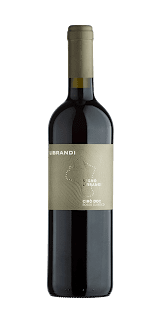
The Calabria family are going back to their Italian roots with the release of a collection of new-release imported wines from Italian producers Canti and Librandi.

The wines are being released through the Calabria family's new distribution arm Vintners & Co Merchants.

The new entity was formed as part of the Calabria Family Wine Group to showcase the family’s unique distribution partnerships. 

Andrew Calabria, sales and marketing director for Calabria Family Wines, said the steady surge in alternative varieties produced locally has contributed to a strong interest from both retail customers and consumers for more imports. 

“From nero d’Avola, nebbiolo, to fiano and arneis, Australians are becoming accustomed to the Mediterranean-style and particularly, Italian-made wines," Calabria said. 

"These changing tastes are also reflected in the mammoth growth of the prosecco category over recent years as consumers look beyond just Champagne for their sparkling-based celebrations.” 

Behind France and New Zealand, Italy is the third-largest wine importer into Australia. 

Calabria hopes the Canti brand will become a key player in the Australian prosecco category based on its international success. 

Canti was founded in 2001 by Gianni Martini, the renowned second-generation wine entrepreneur of the Fratelli Martini Secondo Luigi spa. 

In 2016, Canti was the best-selling prosecco brand in the world, selling around 12 million bottles. In 2017 it increased its sales to 20 million bottles and remains one of the world’s best selling proseccos.

Canti also has a prosecco bar at world-renowned Harrods in London.

Librandi, meanwhile, is a winery based in Cirò, in the eastern corner of the Calabria region of Southern Italy.

Although founded in the 1950s, the family has been working with wines for centuries and four generations of winemakers lie behind brothers and founders Antonio and Nicodemo Librandi. 

The wines will be available from select wine retailers nationally and Canti Prosecco’s are available online at www.calabriawines.com.au

My samples just arrived - so I will report back