ALL ACCOR

ALL ACCOR
Book, stay, enjoy. That's ALL.com
Showing posts with label flavours. Show all posts

Sunday, 12 July 2026

Anantara celebrates 25 years with culinary experiences


The Anantara Hotels & Resorts group is marking 25 years with a selection of signature culinary experiences. 

The options range from Sri Lanka’s spice trails to the rice fields of Vietnam. 

The feasts will celebrate the quarter of a century since the brand was founded in Thailand as the experiential luxury brand of Minor Hotels

Across three Asian destinations – Sri Lanka, Thailand and Vietnam – the brand responds to what the Minor Hotels Travel Trends Report 2026 confirms: food is the primary gateway to culture for most travellers.

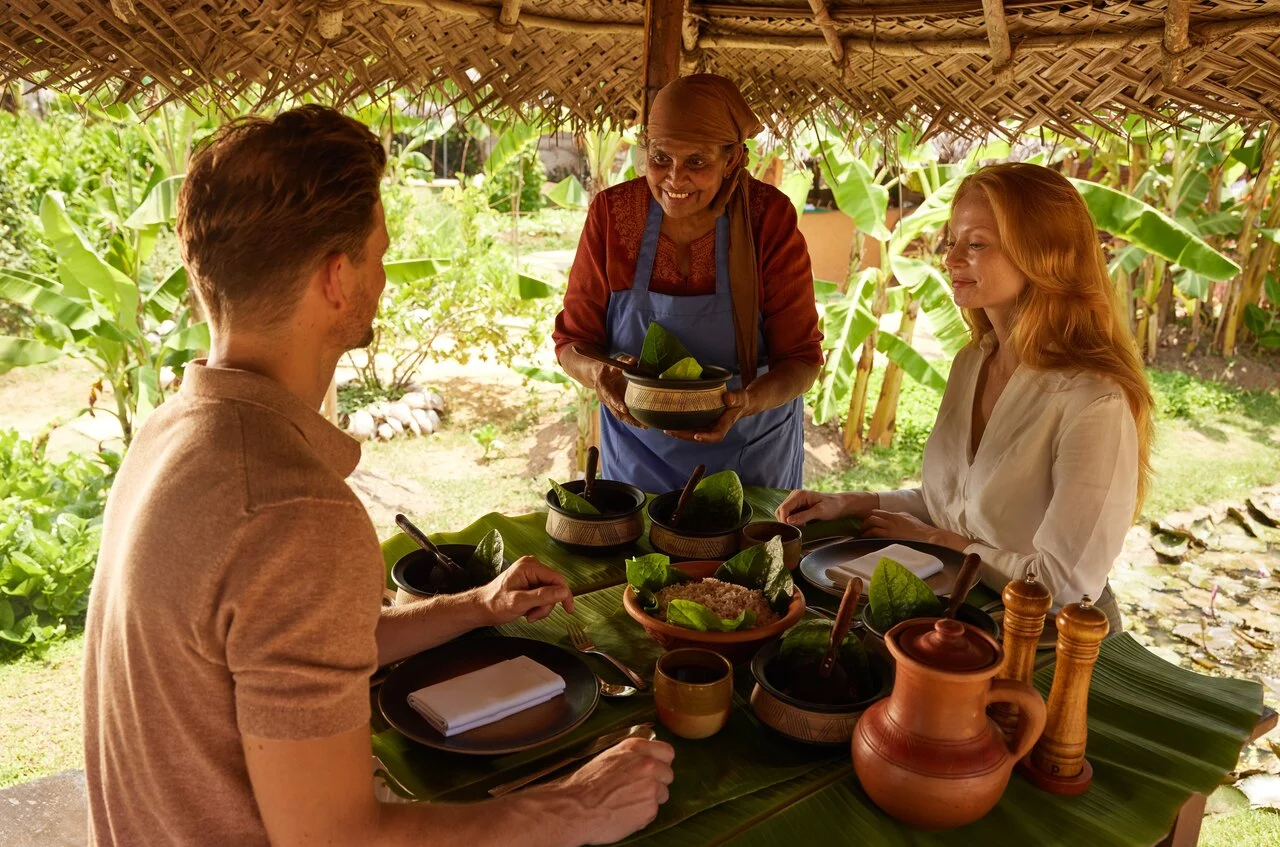
At Anantara Peace Haven Tangalle Resort on the south coast of Sri Lanka, Mama’s Kitchen explores local culinary secrets and village cooking culture with the resort’s local mama. 

Guests participate in the preparation, hand-grinding spices and stewing slow-cooked curries, in the kamatha kitchen situated in the resort’s paddy field, learning the role each ingredient plays and the stories that accompany them.

At sister property Anantara Kalutara Resort, guests partner with the resort’s culinary team for the '25 Spices Table', an exploration of 25 indigenous herbs and spices, each used in the preparation of traditional local curries and each with an intriguing history. 

At Anantara Siam Bangkok Hotel, executive chef Punn Akkawin teaches guests how to create Thai dishes full of colour and flavour. The experience begins with a morning market visit to select the fresh produce and aromatics that will define the meal. Guests return to The Spice Market, a Bangkok institution with more than 40 years of history in the Thai capital, to prepare three dishes under the chef’s guidance to enjoy for lunch.

In Vietnam, rice is central to culture. Anantara Quy Nhon Villas takes guests into the countryside to meet the families who keep centuries-old traditions alive. 

The first stop is a family where rice paper making is still practised by hand. Here, guests can learn each delicate step of the process, demonstrated and shared. This continues with a visit to a second family for a tasting of traditional rice wine. The experience closes back at the resort, where guests create their own rice wine cocktails while overlooking the ocean.

The route between Quy Nhon and Hoi An is an experience in its own right. The Vietage by Anantara train connects the two destinations in style, with locally sourced provisions on board, such as strawberries from Đà Lạt, regional teas and locally produced gins that reflect the landscape en route.

At Anantara Hoi An Resort, the Taste of Hoi An street food experience carries the narrative forward through the dishes that define the town.

Anantara’s signature anniversary experiences, including those featured above, are available across the brand’s portfolio throughout 2026. Each is specific to its destination. 

Explore the full collection at anantara.com/en/25th-anniversary-experiences

Monday, 25 May 2026

How cooking can help feed social cohesion


Food innovator Gilava Pour shares a guest post on how food can help change attitudes.

The term “social cohesion” has been everywhere lately. It’s in the news, in opinion pieces, and across government conversations. Everyone agrees it matters, but no one seems to agree on what it actually looks like.

Most of the discussion sits at a high level. Policy, national identity, frameworks. But it feels like we’re overcomplicating something that actually happens in much simpler ways.

I run a food brand called Exotic Bazaar. We make Middle Eastern meal bases for people who want something different for dinner but don’t know where to start.

And what we’re seeing is straightforward.

A lot of our customers have never cooked Middle Eastern food before. For some of them, their only exposure to the region has been through the news. 

Now they’re cooking dishes from that same region at home. They’re eating it with their families, talking about it, and saving it as something they’ll cook again.

Not because they’re trying to learn about a culture. Not because they’re trying to be open minded. Just because it tasted good.

But that’s exactly where something shifts.

Because that’s not how we usually think about changing perceptions. We assume it happens through conversation, education, or big moments. From what I’m seeing, it’s much smaller than that. It’s repetition. It’s familiarity. It’s doing something enough times that it stops feeling foreign.

You don’t need to convince someone to be interested in a culture if they already enjoy it in their own life. That’s a very different starting point.

There’s a lot of talk right now about division, mistrust, and people feeling disconnected. Some of that is real. But at the same time, there are small, quiet moments happening every day that don’t get talked about.

Someone trying a dish they’ve never had before. A family adding it into their regular meals. A conversation that starts with “this is actually really good.”

That’s it.

Nothing dramatic, but it adds up.

I didn’t start Exotic Bazaar to play a role in social cohesion. I just wanted to make the food I grew up with easier for people to cook. But it’s made me realise that this is where a lot of real connection actually starts.

Not at a national level. At a personal one.

We can keep having big conversations about what kind of country we want to be. But it’s worth paying attention to what’s already happening in people’s homes.

Because that’s where unfamiliar cultures stop being “other” and start becoming part of everyday life.

* Gilava Pour spent over 15 years of working as an IT professional in the finance sector before founding Ballarat-based Exotic Bazaar to share Persian and Middle Eastern food culture. See https://www.exoticbazaar.com.au/

Monday, 15 December 2025

UNESCO recognition for Italian cuisine


The food of Italy has been granted a cultural heritage listing by UNESCO.

Although dishes like pizza were already listed, UNESCO has now recognised the wider traditions of Italian cooking and the way they are practised and passed down.

The United Nations agency specialising in education, sciences, and culture described Italian cuisine as a “means of connecting with family and the community, whether at home, in schools, or through festivals, ceremonies and social gatherings”.

“For us Italians, cuisine is not just food or a collection of recipes. It is so much more: it is culture, tradition, work, wealth,” said Italian Prime Minister Giorgia Meloni, who had championed the bid. 

The decision also saw Egypt’s koshary (a combination of macaroni, rice and beans flavoured with tomatoes, onions and garlic) added to the list, alongside other food-related traditions already recognised globally, including washoku (culinary balance) in Japan, Malaysia’s breakfast culture and the French gastronomic meal.

So everyone gets a prize, basically.

Leading chef Michelangelo Mammoliti told La Repubblica newspaper that the news gave him “a great sense of pride”, both as an Italian and as a chef.

Mammoliti heads La Rei Natura in Piedmont, the only new three-star restaurant in the 2026 Michelin Guide for Italy. He added: “Italy is one of the nations where regional cuisine has a very big impact on culture and traditions.”

Italy’s food and wine sector hopes the recognition will further strengthen tourism, which already brings 80 million international visitors to the country each year.

Other new additions to the list included Iceland’s natural swimming pool culture, the practice of Cuban Son music and dance, and Albania’s art of playing, singing and making the lahuta, a musical instrument.

Image: Ivan Naunov, Scop.io 

Friday, 14 February 2025

A fusion of flavours is a Sydney feast for the senses


Nikkei cuisine is a fusion of Peruvian and Japanese flavours.

It is served in an elevated form at Callao, one of the standout restaurants in the Streets of Barangaroo gourmet precinct on the Sydney waterfront.

Opened just over a year ago, the flavours on offer at the 104-seat eatery have clearly hit the target.

There is a hip young crowd on hand: both the customers and the very efficient servers.

And the quality of the food, with the two distinctive cuisines delivering intriguing combinations, is matched by a drinks list peppered with cocktails, Japanese whiskies, and some astutely chosen wines (think names like O’Leary Walker, Bream Creek, Giant Steps and Moss Wood by the glass).


Japanese Peruvian cuisine is a global trend right now and Nikkei is the word used to describe immigrants of Japanese origin - of which there are many in Peru.

Nikkei food is characterized by its use of the wide variety of ingredients available to Peru, including aji amarillo, an emulsion of the South American chilli pepper.

The Callao menu blends traditional techniques with vibrant ingredients - every dish on the Chef's Selections tasting menu ($119 per person) offered myriad flavours, but with a real sense of cohesive style.

You are taken out of your comfort zone - but remain very comfortable.

Mainstays include fresh seafood like tiradito, marinated in zesty Peruvian sauces, and Baby octopus with tomato, green olives, saffron potatoes, chickpeas and chili oil.
 
After some warm edamame beans with smoked salt, our starters were a stunning scampi tartare with crispy rice, truffle mayo, avocado puree, pickled jalapeno and Siberian caviar - a very upmarket fish finger (above) - and a delightfully tangy salmon ceviche with aji amarllo, leche de tigre (a zesty Peruvian marinade made with lime juice, fish, and spices), toasted corn and sweet potato puree (below).


Then came Skull Island tiger prawns with aji panca (red pepper) bisque, sea urchin mayo and tabiko (flying fish roe) mayo (below); and Wagyu tri-tip with smoked date teriyaki, aji amarillo mayo and togarishi spices. Both extremely moreish. 


Main course is a chuck tail flap steak with with yuzu koshu butter, shitake jus and house mustard, served with with hasselback potato, quezo fresca, aji amarillo and dried sisho (below).


The final touch is "cheesecake" with toasted corn, finger lime, milk skin and avocado ice cream,


Tradition with a few twists and turns. Delightful flavours; great service, sensible portions. Highly recommended.  

For those wondering, Callao is a Peruvian seaside city and region on the Pacific Ocean in the Lima metropolitan area.
 
Callao is open for lunch and dinner Monday-Saturday and is at 100 Barangaroo Avenue, Barangaroo, Sydney. callao.com.au.

Images: Anna Kucera, Winsor Dobbin

# The writer was hosted by Callao

Monday, 18 September 2023

Meet the drink vending machine that offers more choice - and helps the environment


Ever wished you could craft your own drink - and help save the planet from single-use plastic bottles?

Meet Refilled, a Sydney-based start-up that hopes to eventually end the sale of beverages sold in single-use plastic bottles in vending machines.

Starting at sites including Google HQ Sydney, UTS and the University of Sydney, its Refillers are plastic-free vending machine that can be used by anyone with a reusable bottle.

The company hopes to install 100 units around Australia by 2024, aiming to capitalise on the trend of reusable bottles and by giving people more flavour variety and nutritional options than just plain water on tap.

The Refillers are described as "a cross between a fridge and a giant soda stream" and offer chilled still and sparkling drinks in a range of flavours with the ability to add optional boosters such as caffeine, vitamins, and nootropics.

The founders say over 891 billion single-use plastic bottles are produced worldwide every year and fewer than 20% are ever recycled, which makes vending machines a major source of plastic pollution.

A single Refiller can stock 10x more beverages than a typical vending machine so it can also reduce waste and delivery emissions.


Refilled is tracking the number of bottles is has saved in real time, and has created reusable bottles with QR codes that can be scanned at the Refiller and used to pay for drinks – no card, phone or cash required.

To date, Refilled has raised $600k through angel investors and Melt Ventures, an impact VC Fund. It is seeking an additional $1.5 million in its next funding round.

“Refilled is transforming the ordinary, everyday act of drinking water into climate action," says co-founder and CEO Ryan Nelson.

"Most people have good intentions and want to do good for the planet, but not everyone can afford to buy an electric vehicle or install solar panels.

"Armed with just a reusable bottle and a couple of bucks, our Refillers offer an affordable, achievable way to eliminate plastic pollution. If we can replace even a fraction of drinks vending machines, which are an outrageous source of plastic waste, we will stop millions of plastic bottles going to landfill.”

For more info see https://www.refilled.com.au/