Thursday, 18 June 2026
Travel advisory pleases Australian travel agents
Does a subtle change to a government advisory make you more, or less, likely to travel?
The Australian Government this week lowered its travel advice for Bahrain, Israel, Kuwait, Qatar and the United Arab Emirates from Level 4 "Do Not Travel" to Level 3 "Reconsider your need to travel."
The Australian Travel Industry Association, the umbrella body for licensed travel agents, is calling the subtle switch a win for Australian travellers.
The change matters most for Australians travelling through Middle Eastern hubs to reach Europe, the United Kingdom, India, and Africa.
More than 150,000 Australians have transited through the region in the past six weeks alone.
Throughout this period, ATIA says it has worked with the Australian Government, DFAT, the Department of Foreign Affairs and Trade, to ensure travel advice reflects both the risks on the ground and the practical realities facing Australian travellers.
ATIA says the Level 4 advisory "created real complications and confusion for travellers with brief airside transits, especially around insurance cover". The downgrade removes that.
Level 3 remains a high threshold and the Government’s advice is that non-essential travel should be avoided. Prudent when Israel continues to attack and provoke other nations in the Middle East.
DFAT continues to advise "Do Not Travel" to Iran, Iraq, Lebanon, Palestine, Syria and Yemen. Some areas within Israel also remain "Do Not Travel."
ATIA recommends speaking with an ATIA-accredited travel agent or tour operator before booking.
"This is a sensible and welcome adjustment, and one ATIA has been seeking for some time," says ATIA CEO Dean Long/
"For many Australians, these hubs are the connecting points that get them to the UK, Europe, India and Africa. In seeking a travel advisory level commensurate with the reality of travel as a transiting passenger, ATIA was looking to ensure transiting passengers had all the benefits of travel insurance while on the ground.
“Additionally, with 150,000 Australians having safely travelled through those hubs, we wanted to ensure consumer confidence in Smartraveller’s advice remains optimum - travellers were telling our members that the “do not travel” advice for passing through just didn’t seem to hit the right balance.”
Wednesday, 11 March 2026
Leading travel agent urges clients not to panic

One of Australia's leading travel agents has urged clients not to panic over the crisis sparked by Donald Trump in the Middle East.
"As parts of the world experience temporary travel disruptions, we wanted to keep you informed and reassure you that we will continue to support you," Mary Rossi Travel told clients in a newsletter.
"While the situation continues to evolve, we are closely monitoring developments across the Middle East and staying up to date through airlines, government authorities, and our partners on the ground.
"We are also working directly with our airline partners to understand their policies around rescheduling and cancellations, ensuring we can provide the most accurate and timely guidance.
"In the short term, access to Europe is currently more limited as some travellers are choosing to reroute via Asia; however, availability beyond the next few weeks is expected to stabilise.
"Encouragingly, the majority of destinations worldwide continue to operate as normal, and many of our clients are currently travelling and enjoying their holidays without disruption.
"While some airlines - including Emirates, Etihad and Qatar Airways - are currently operating with reduced services, we remain optimistic that regular schedules will resume in the near future."
So there you go.
Monday, 2 March 2026
What you should do if you are booked to fly internationally
Cancelling a flight because of the volatile situation in the Middle East could be a big mistake, Australians have been warned.
The Australian Travel Industry Association (ATIA) is urging travellers not to cancel travel arrangements due to the Middle East situation without first seeking professional advice.
They are also being urged not to contact their travel agent unless they are travelling in the next 48 hours - to allow passengers who are immediately impacted to be supported.
ATIA says it is closely monitoring the airspace situation across the Middle East, which is having a direct impact on international flight operations and passenger itineraries.
Several countries in the Gulf region have closed or significantly restricted their airspace following an escalation in regional hostilities. Major hubs - including Dubai, Abu Dhabi and Doha - are affected, with cancellations, delays and rerouting already underway across multiple carriers.
“The situation across the Middle East is evolving rapidly and is already disrupting international flight operations for Australians travelling via major hubs including Dubai, Abu Dhabi and Doha,” says ATIA CEO Dean Long.
“Emirates, Etihad Airways and Qatar Airways are the most directly impacted at this stage, but European and other international carriers routing through Gulf airspace are also experiencing delays and rerouting. The impact is broader than many travellers may expect.
“Smartraveller has updated its advice for the UAE and Qatar at www.smarttraveller.gov.au/news-and-updates/middle-east-conflict and travellers should be aware this may affect travel insurance provisions. We strongly encourage Australians to check DFAT’s Middle East conflict page and speak with their insurer if they have concerns.
"Our members are actively supporting impacted clients, managing re-bookings, securing alternative routes and providing up-to-date advice in what is a highly fluid environment.
“Our message to travellers is simple 1) do not cancel arrangements without first seeking professional advice; 2) please unless you are travelling in the next 48 hours and have not been contacted, hold off contacting your travel agent right not to allow them to support those currently caught up in, and who are stranded, delayed and dealing with cancellations. The situation is evolving rapidly, and experienced travel professionals are best placed to provide up-to-date guidance tailored to each traveller’s circumstances.”
Monday, 23 June 2025
Travel agents offer crucial advice to flyers
Do you have a flight booked to Europe via the Middle East?
Airspace closures over Iran, Israel and Russia have significantly narrowed flight corridors into Europe, with delays and route diversions common particularly for passengers transiting through Middle Eastern hubs such as Doha, Abu Dhabi and Dubai.
Airlines have well-established systems in place to navigate such restrictions, and have been operating under constrained conditions since the start of the Ukraine conflict. Travellers should expect some delays, but not panic.
ATIA says travellers will be contacted by their accredited travel agent or airline of delays and cancellations.
Avoid cancelling flights independently. When an airline cancels your flights you are entitiled to a full refund.
It says the evolving situation "reinforces the importance of booking through an ATIA accredited travel business as accredited agents and businesses are best placed to manage disruptions, rebook flights and ensure clients receive their full entitlements under Australian Consumer Law.
“Australians flying to Europe via the Middle East should be prepared for some delays, but it's important to know that global airlines have systems in place to manage these disruptions," says ATIA CEO Dean Long.
“The closure of airspace is not new. Airlines have been rerouting around Russia and Ukraine for more than two years, and are now adjusting again. The airlines that fly to Australia have world leading safety protocols and route management.
“Travellers shouldn’t panic or cancel unnecessarily. The one thing we learned through Covid is don’t cancel as it reduces the number of rights you have. Let the airline make that decision. This approach ensures your rights are protected and you get the support you need.”
Wednesday, 7 May 2025
Why travel agents still have a role to play
In our high-tech world, a lot of travellers opt out of using travel agents and choose to make all their arrangements themselves.
Today, however, is Global Travel Advisor Day, and no matter how confected that may sound, there are a lot of registered travel agents emphasising that they still have a key role to play.
"From rising scams to border complications and delayed refunds, today’s travel landscape is filled with challenges many Australians don’t see coming until it’s too late," says Andrew Gillard, managing director of Darebin Travel in Victoria.
"Travel advisors are trained to manage these risks, ensuring every trip is properly planned, protected, and supported when things go wrong."
It surprises me that in 2024, more than 70% of international flights and over 90% of corporate travel in Australia wase booked through accredited agents that are members of ATIA, the Australian Travel Industry Association.
And ATIA CEO Dean Long is bullish about the future.
“We are in the golden age of travel professionals, as more Australians, many of whom were burnt by Covid-era travel experiences, turn to expert advisors for complex travel needs and crisis support,” he says.
“Global Travel Advisors Day is an opportunity to recognise the incredible work accredited travel professionals do every day, creating unforgettable travel experiences and providing trusted support when it matters most.
"In today’s more complex and fast-moving travel environment, expert advice has never been more valuable. Our members are delivering tailored journeys, practical solutions and peace of mind to millions of Australians each year.”
Max Najar, director and manager of Axis Travel in Glenunga, South Australia, weighs in: "In today’s ever-changing and complex travel climate, the value of a trusted travel advisor has never been clearer.
"We’re seeing clients turned away at borders for applying for incorrect visas, not having proper documentation or itineraries - things that we always provide.
"A visa doesn’t guarantee entry, so the stakes are high. More travel insurers also do not compensate for losses incurred. A professional travel advisor uses their toolkit of expertise and experience to ensure that you’re properly prepared and protected, so your holiday or business travel is as stress-free as possible at the immigration counter.’’
Image: Sen Kui Lim, Scop.io
Monday, 24 March 2025
"Without us, your are on your own": travel agents issue a reminder
It is easy nowadays to book yourself directly with airlines and hotels.
Using a travel agent may seem a little old fashioned - and sometimes more expensive. Until the excrement hits the fan.Then a travel agent may have the clout to rescue your trip.
With thousands of Australians impacted by the closure of one of the world’s most important airports, London Heathrow, and flight cancellations due to the ash cloud in Indonesia, Australian travel agents took the opportunity to remind potential customers what it is they do: solving problems, rebooking flights, and getting stranded travellers home.
The fire and subsequent power outage at Heathrow created significant travel chaos: disrupting flights worldwide and leaving Australian travellers scrambling for solutions.
"When travel plans fall apart, accredited travel agents are the difference between a quick resolution and being stuck in limbo," the Australian Travel Industry Association (ATIA), which represents travel agents, operators, wholesalers and ITOs, said in a statement.
In times of crisis, travel agents negotiate with airlines and suppliers on behalf of their clients, ensuring fair outcomes, ATIA says.
"The reality is clear: travellers who book through accredited agents and travel businesses have a trusted advocate when the unexpected happens.
ATIA CEO Dean Long says: “The scale of disruption caused by Heathrow’s shutdown and the Indonesian ash cloud demonstrates just how critical Australia’s travel agents and businesses are when things go wrong.
“When the unexpected happens, choosing an ATIA accredited travel business means having the support you need to get back on track - because without a travel agent, you really are on your own.”
See www.atia.travel
Image: Aleksei Popov, Scop.io
Saturday, 15 January 2022
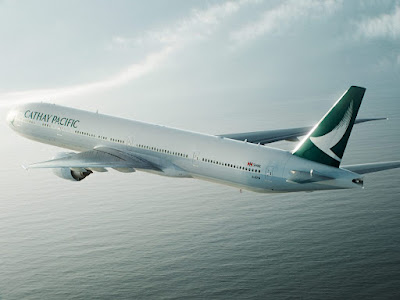
Cathay blow to struggling travel agents
Remember they do not charge customers for whom they book a flight or a package holiday.
It is all about commission, which is paid to an agent by an airline, hotel, cruise line, tour organiser or travel group for each booking.
This is why travel agents will often try to direct you in a specific direction when it comes to your business or holiday choices. The possibility for conflicts is huge.
Don't expect you agent to be wanting to book you onto a Cathay Pacific flight any time soon - particularly if there is a viable alternative.
Cathay commission payments to agents in Australia and New Zealand will move from 5% to just 1% - the same payout as rivals Qantas and Emirates - effective from July.
This means that if your agent books you a single return flight on Cathay for $1800, it will make just $18 in commission.
Cathay Pacific says it is committed to working closely with its “key travel partners to ensure a successful transition to a new way of working” - which is corporate-speak for "get stuffed".
Qantas and Emirates have more routes and higher visibility - and bring agents more business than Cathay, which might be digging itself a deep hole.
Cathay has described the move as “a fresh approach to trade partner engagement” as the Hong Kong carrier makes “tough but necessary decisions to see ourselves through the pandemic”.
“Our commitment to Australia and NZ remains steadfast, and we will continue to invest in this region as we work through the pandemic,” the airline said in a statement.
Flights from Australia to Hong Kong are currently banned as authorities battle to contain Covid-19.