Monday, 10 August 2026
Australian travel industry boss slams organisation reponsible for air traffic control
Airservices Australia is an Australian Government-owned corporation, responsible for providing services to the aviation industry and it has overseen two recent near misses at Sydney Airport.
“Airservices Australia is the last major part of Australia’s aviation sector still struggling to recover from Covid," ATIA CEO Dean Long (right) said in a media statement.
"Airlines, airports and the broader travel industry have rebuilt their workforces and operations, but Airservices continues to be a major choke point for Australian aviation.
“Staff shortages and processes that are not match-fit for today are causing significant disruption for airlines, airports, travel businesses and, ultimately, Australian travellers. Five years after Covid, this simply cannot continue.
“There needs to be far greater transparency from Airservices about what is driving these ongoing problems and, most importantly, a clear plan to fix them.
“Whether the answer is more staff, better training or improved processes, Airservices needs to lift its performance urgently and get the system operating at the level Australians and international visitors deserve.”
ATIA is the peak body representing Australia’s $70.6 billion travel industry. It represents the majority of Australian travel agents, corporate agents, tour operators, wholesalers, and ITOs.
Monday, 20 April 2026
Fish death numbers a blow to the image of Tasmania's farmed salmon industry
Think you are eating clean and green when you buy Tasmanian farmed salmon, or order it in a restaurant?
You are actually supporting foreign-owned companies whose business model involves multiple large-scale fish deaths.
Data released by Tasmania's Environmental Protection Agency today shows reveals over 9,000 tonnes of salmon mortalities in first three months of 2026, amounting to around 12% of annual production, Peter George, Independent MP for Franklin, reported in a media statement.
"Mortalities in salmon pens in Tasmania have reached astonishing levels, revealing mass deaths and disease are now just “business as usual” for the multinational industry," George said.
"This is a deeply disturbing outcome and clear evidence the industry is unsustainable as Tasmanian waters warm rapidly and disease becomes endemic."
George reported figures for 2025 suggest an even worse outcome, with at least 4 million (21,133 tonnes) died in the 12 months, peaking at around 1.2 million (6,300 tonnes) alone in February of that year.
"By dumping thousands of kilos of the now-banned antibiotic, florfenicol, in diseased pens, the industry may have reduced the number of mortalities in the first months of this year – but those numbers remain totally unacceptable," George said.
"The industry has been spared even worse outcomes because waters have been cooler than expected so far this year.
"However, meteorologists predict super heating of waters next spring and summer which will inevitably result on far more disease and many, many more deaths.
"This is an industry facing crisis levels of mortalities in which untold numbers of fish will continue to suffer and die, regional jobs will grow more insecure, and Tasmania’s reputation as a clean, green haven will continue to slide."
Rosalie Woodruff MP, leader of the Tasmanian Greens, slammed the state Liberal Government for poor oversight of the industry, which is accused of environmental vandalism and is dominated by Brazilian-owned Huon Aquaculture and Canadian-owned Tassal.
Image: Bob Brown Foundation
Wednesday, 12 November 2025
Wine industry stupidity a very bad look
The wine industry in Australia is under severe pressure.
There is an excess supply of fruit; young people are turning away from wine and the anti-alcohol lobby gets louder and louder.
It certainly doesn't help when young industry leaders make complete fools of themselves - and attract national negative attention.
The Coonawarra Vignerons have apologised after posting social media images of members wearing T-shirts reading "drink more, die younger".
The guilty folk were members of the the "Next Crop" leadership program and included some high-profile names.
The Next Crop courses included "cultural awareness, authentic leadership, strategic thinking, wellbeing for leaders, environmental, social and governance responsibilities, persuasive storytelling and collaborative impact". But not common sense.
The social media post, later deleted, attracted negative comments questioning the slogan's appropriateness, before the photo was edited to obscure the "die younger" part of the shirts.
A very bad look.
After being sent questions from the ABC, Coonawarra Vignerons said it "sincerely apologised" for the post.
"Their attire, featuring irresponsible messaging around alcohol, was not endorsed by Coonawarra and does not reflect the values or professionalism of our members or the association, nor the responsible approach to alcohol consumption that our industry proudly upholds," the statement to the ABC said.
"We take this matter seriously and are investigating the circumstances surrounding the photograph and the lapse in judgement by those involved.
"Coonawarra Vignerons remains committed to fostering wellbeing, cultural awareness and social responsibility across our community and industry."
The T-shirt slogan attracted criticism from Substance Misuse Limestone Coast, while Finlaysons law firm partner Will Taylor - who is also a former winemaker and travels around the country working with the industry on social responsibilities – said the wine industry needed to take the issue seriously.
Image: Facebook
Wednesday, 26 March 2025
Wine industry body slams Federal Budget

Australian Grape & Wine has expressed deep disappointment at the Albanese Government’s failure to deliver meaningful support to the grape and wine sector in the 2025-26 Federal Budget, describing it as a second major missed opportunity in as many years.
“This Budget is another blow for growers and winemakers across Australia,” said chief executive Lee McLean.
Australian Grape & Wine acknowledged the Government’s pre-budget announcement to increase the Wine Equalisation Tax (WET) producer rebate cap to $400,000 from July 1, 2026, describing it as a welcome measure for some small and medium-sized producers.
“We welcome the increase to the WET rebate cap - it will assist some producers with much-needed tax relief in the years ahead,” said McLean. “But tax relief alone doesn’t address the structural crisis gripping our industry, largely driven by the lingering impacts of trade impediments our producers did not initiate, or deserve.”
The Budget includes $6.8 million for international agricultural engagement and market access, which may benefit some wine exporters. But Australian Grape & Wine warned that this falls well short of the coordinated, sector-specific investment required to diversify markets and rebuild export momentum.
“This isn’t the bold action our sector has been calling for - it’s a modest allocation spread across all of agriculture,” McLean said.
“The re-opening of the China market is a welcome development, but it’s not a silver bullet. The oversupply of red wine alone sits at more than 330 million litres. Businesses are selling water rights to put food on the table or pay power bills. They're laying off staff, and many growers haven’t drawn a wage in years. The impact on regional economies is profound - and the need for support has never been more urgent.”
Australian Grape & Wine remains committed to fighting for growers, winemakers, and the future of wine communities across the country.
“We’re not giving up,” said McLean. “Our industry contributes $45.5 billion to the economy yet has once again been left to wither on the vine. It’s time for the Government to step up and show it values the people, regions, and industry that have contributed so much to this country. Before it’s too late.”
Saturday, 18 January 2025
Airline a global laughing stock after perhaps the most stupid advert ever

Pakistan International Airlines (PIA) has become a global laughing stock after posting a grossly insensitive advert - and declining to take it down.
The airline is under investigation, the country’s prime minister said, after showed an image a plane flying in the direction of the Eiffel Tower.
The image was posted by the airline on social media on January 9 to announce that it would be resuming flights to and from Paris this month.
The advert clearly shows a plane heading towards the iconic French monument with the slogan, “Paris, we’re coming today.”
The colours of the French flag are shown in the background. At the bottom of the photo, it reads: “Resuming flights between Islamabad and Paris from January 10, 2025.”
The image is eerily reminiscent of the 9/11 attacks that took place in the United States in 2001 when terrorists hijacked a total of four commercial planes, two of which were flown into New York City’s Twin Towers.
The country’s Prime Minister Shehbaz Sharif has ordered an inquiry into the ad, Pakistan news channel Geo News reported.
"Unfortunately, this was blown out of proportion with connotation and perceptions that were not intended," PIA spokesperson Abdullah Khan told the AFP news agency. "It might have triggered some negative emotion, for which we truly apologise."
But the advert was still posted on X, formerly known as Twitter, as of Saturday morning (AEST).
Many social media commentators noted the ad's resemblance to the 9/11 attacks.
Thursday, 6 June 2024
Airline boss slams "outdated" Heathrow
.jpg)
The head of one of the world's leading airlines has unloaded on London's Heathrow Airport, saying it is not fit for purpose.
Emirates Airlines chief Sir Tim Clarke described Britain's busiest airport as a “Second World War” era facility, industry portal Travel Mole reports.
Heathrow opened just after the end of the war in 1946 and Clark says Terminal 3, where Emirates is based, is looking outdated and showing its age.
It "looks like a utilitarian structure, post-Second World War" he said at the International Air Transport Association’s (IATA’s) annual meeting in Dubai.
He said any new owner of Heathrow must be prepared to invest.
Heathrow is "seriously lagging behind" airports in the Middle East and Asia for customer service innovations, he added.
“New airports are built employing the latest tech to streamline their processes, whether it be security, check in, immigration or whatever.
“I’m hoping that the new owners will get that but airports worldwide are not famous for spending money.”
Tuesday, 14 May 2024
Wine industry group slams Australian Budget
A peak Australian wine industry body has slammed the 2024 Federal Budget delivered today.
Australian Grape & Wine condemned "the lack of assistance for grape growers and winemakers" in the Albanese Government’s Budget.
"This Budget provides no relief for the serious challenges facing growers and winemakers in regional communities across much of Australia," said CEO Lee McLean.
McLean criticised the omission of the industry's "modest" pre-budget requests, including a $30 million sustainability package, $36 million for export assistance, and $20 million for domestic wine tourism.
"We made it crystal clear - many in regional wine communities across Australia are on their knees and need urgent government action to stop a bad situation from becoming a catastrophe," McLean said.
“While China’s decision to lift import duties is positive, it will simply not resolve the issues facing growers and winemakers.
"It's a damning indictment of just how dire the situation is when the refund on an empty wine bottle is worth more than what many of our growers receive for the grapes that fill it.”
Sunday, 5 May 2024
Thais get spicy with aggressive and critical tourists
Thailand is generally seen as a laid-back tourism destination but Thais officials are starting to crack down on bad behaviour and, more controversially, criticism.
On the holiday island of Phuket, the governor and senior police officials will hold a meeting with the consuls of a dozen countries to discuss measures to tackle the rise in crime perpetrated by foreign tourists and expats, Travel Mole reports.
This follows the arrest of a British tourist for the alleged assault of a taxi driver that followed an argument over the taxi fare.
The taxi driver made a police complaint and the tourist, named only as Graham by police, was tracked down on the Phi Phi islands and brought back to Phuket.
He is accused of slapping the driver and grabbing him by the throat. He could potentially face jail time and be deported.
More concerning is the growing trend towards acting against anyone criticising Thailand, particularly online.
Regular readers will remember that las year an American blogger was jailed and forced to apologise for online criticism of a Thai hotel.
And now Tourist Police have warned a British tourist identified as Mr. Thomas, against posting videos criticising the country on social media, citing the potential harm to the nation's image and security, Asean Now reported.
The deputy inspector of Mae Hong Son Tourist Police, Lt. Col. Suwit Boonyaphen, said that Mr. Thomas's videos were critical of Thai public and private agencies.
Mr. Thomas was tracked down at his residence in Pai district where police urged him to understand the potential consequences of his actions. He was ordered to delete all his videos hosted on YouTube and other social media platforms and was taken to the police station to be interviewed.
He was warned that if he continues posting "potentially harmful material about Thailand" online, he could face prosecution under Thai law.
Mr Thomas has now apologized on YouTube.
Our Thai correspondent says visitors should be reminded that defamation is a criminal act in Thailand, and the truth or fair criticism are not absolute defences. So visitors should be very, very careful.
Tuesday, 6 February 2024
Are sommeliers on the nose with wine drinkers?
A good sommelier is a gift from the heavens.
A warm welcome, an insider wine tip. Good somms can turn a good evening into a great night.
But it seems that the current generation of somms are not resonating with restaurants guests as their predecessors did.
Earlier this week, I posted a tongue-in-cheek piece about whether AI bots could replace flesh-and-blood wine operatives.
To my surprise, my social media feeds got a lot of anti-somm feedback. Particularly in Australia.
"How how will it [AI] maintain the wankerisms and condescending manner?" asked one wine industry insider.
From a very well travelled international journalist: "I suppose as long as the AI version doesn't look down at you and shake his or her head disdainfully, I'm OK with it!"
And more, this time from another wine industry pro.
"...try and sell you some jarringly dry, over-phenolic, cloudy, fruitless muck just because they're obsessed with natural wines and like to pretend several thousand years of winemaking evolution hasn't happened."
Ouch.
I, too, have been the victim of somms trying to convince me to drink "orange" wines despite my stated aversion to them.
Some for some looking in the mirror, maybe, for some somms.
You are there to help the customer find a drink he or she will enjoy, not to act as an Alice Feiring-style evangelist for undrinkable drinks.
Image: Maksim Chernyshev, Scop.io.
Saturday, 14 October 2023
"Greedy" Disney under fire as it hoists ticket prices

How much would you expect to pay for a ticket at Disneyland in California?
If you pick the wrong day to visit Anaheim then you could now pay up to $194 (that's around $308 in Australian dollars).
Walt Disney Co this week announced it was raising some theme-park ticket prices for Disneyland by up to 8.9%, with the price per ticket on busy days such as holidays increasing to $194.
There is, however, some good news: there was no price increase for a single-day, one-park ticket on what Disneyland calls its Tier 0 days (which are days with traditionally lowest attendances).
That price remains at $104 - which is still $165 in Australian pesos, making the minimum cost for a family of four well over $600.
Not surprisingly, the price increases - 12 months after a previous price hike - provoked criticism of the Happiest Place of the Earth being dubbed The Greediest Place on Earth.
Robert Niles, editor and founder of website Theme Park Insider, told the Washington Post that some park-goers may be incensed.
“Some Disneyland fans and visitors will decide this latest increase is the last straw for them, and frankly, I think that Disney is planning on that,” he said.
“The parks are filled in California, and Disney needs some way to thin the crowd without leaving fans frustrated with an inability to book scarce reservation slots.”
Friday, 3 February 2023
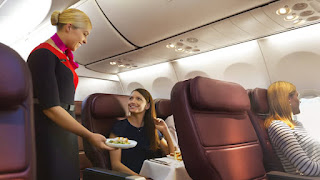
CEO defends Qantas in the face of criticism

Qantas has come under fire for its Covid and post-Covid performance, and has recently attracted criticism for a number of in-flight turnbacks.
CEO Alan Joyce, however, has leapt to the defence of both the airline and its embattled staff, while admitting that Qantas did make a lot of mistakes.
"People are always keen to tell you how they think the airline is doing," Joyce said in a press release. "Whatever their feedback is, I always see it first and foremost as a reflection of the strong connection Australia has with the national carrier.
"To be honest, we know that connection has been tested at times.
"Six months ago, a lot of people felt we’d let them down and the figures showed why. Almost half our flights were late, our rate of misplaced bags had more than doubled and we were cancelling up to 7% of our schedule.
"Perception wise, it didn’t help that this came after some controversial restructuring decisions to make sure we survived Covid. And it didn’t matter that airlines around the world had the same problems as travel restarted. If your flight to the Gold Coast just got cancelled, it doesn’t make you feel any better if the delays are worse in Amsterdam.
"Knowing that we were routinely letting customers down was hugely disappointing for everyone at Qantas. It’s the exact opposite of our culture.
"Last August, we apologised and promised to fix it. And almost every week after that, things improved.
"It’s a huge credit to our people that the data now shows Qantas is back to its best.
"We’ve been the most on-time of the major domestic airlines for five months in a row. Our service levels - bags, cancellations, catering and the call centre - are back to what customers expect from us. And we’re working to make it better.
"As this turnaround was happening, people were talking to me less about flight delays and more about higher fares.
"The two are related. In order to make our operations more reliable, we had to reduce our flying to give us more buffer. We have more aircraft and crew on standby to step-in to deal with the supply chain and sick leave issues that remain. Less supply and lots of demand meant fares went up.
"Higher fares also reflect inflation in general and higher fuel prices in particular, which are up 65% in the past six months compared with pre-Covid. Naturally, that flows through to how much you pay for a flight.
"There’s not much we can do about the cost of things like fuel but the fact our operations have stabilised means we can steadily put capacity back in. Domestically, we’re almost back to 100% of pre-Covid flying levels. Internationally, we’ll be at around 80% by the middle of the year and we’ve recently seen most of our competitors announce a major ramp up in their capacity, so you can expect to see fares trend down, keeping in mind we’re all paying more for most things at the moment.
"More recently, the conversation has been about Qantas air returns.
"These have received a huge amount of attention because we had several in quick succession, but despite the hype, they are actually a symptom of strong safety systems.
"Our pilots always err on the side of caution because that’s what we train them to do. If an onboard system isn’t working the way it should, they will often decide to land rather than pressing on to the destination. I congratulate them for doing that and encourage them to keep doing it. And despite the obvious inconvenience, I think most of our customers do, too.
"Globally, the industry sees well over 10,000 air returns a year. Looking at our data, there’s no change from our average rate of turn backs before and after Covid, which for Qantas is around 60 a year or 1 per 2,000 flights. Our regional arm QantasLink has more, at over 200 a year, because they have more flights and it makes more sense to return to a major city than fly on to a remote town that doesn’t have the same level of technical support.
"If you’re flying on an aircraft that has an issue, it’s not because it’s not well looked after. It’s because they are incredibly complex pieces of equipment with many layers of redundancy."

