ALL ACCOR

ALL ACCOR
Book, stay, enjoy. That's ALL.com
Showing posts with label infrastructure. Show all posts

Friday, 19 June 2026

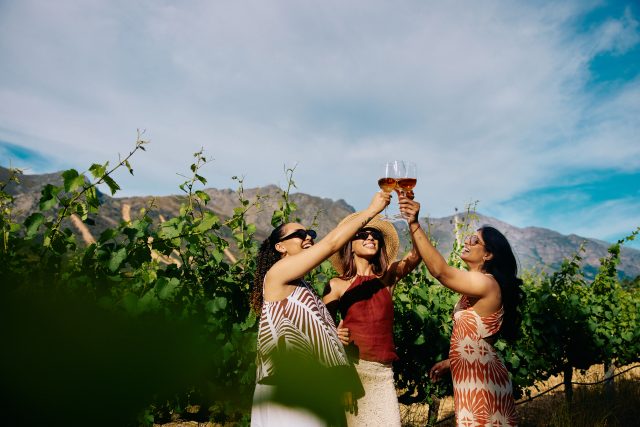
Wine tourism to continue to boom


Wine tourism is booming even as producers find it hard to sell their wines.

The sector is projected to hit US$138.4 billion by 2033, industry media hub the drinks business reports.

Wine tastings are a major driver of global tourism as travellers increasingly shun sightseeing for authentic experiences.

New data from Persistence Market Research (https://www.persistencemarketresearch.com) shows how vineyard tourism is rapidly developing from a niche pastime to key force in the global tourism sector.

The global tourism market is expected to surge at a compound annual growth rate of 13% between 2026 and 2033, thanks to the shift towards experiential travel.

Europe still draws the biggest crowds - accounting for nearly two out of five global transactions in the wine tourism sector.

Classic regions, including Bordeaux, Tuscany and Rioja, have enhanced the visitor experience through improved transport networks or hospitality infrastructure.

Rail connectivity, cycling routes and winery accommodation all boost dwell time.

Asia-Pacific emerged as the fastest-growing wine tourism region. The region made up 32% of market share in 2025, and is forecasted to blossom by 15.2% per year until 2033.

Persistent Market Research puts this down to rising middle-class demand and expanding wine tourism infrastructure. 

Ningxia in China is swiftly becoming a go-to destination for wine tourists, bolstered by state backing and increased local appetite.

In North America, wine tourism is also expected to grow in the coming years at a predicted rate of 12.8% between 2026 and 2033. Here, appetite for immersive travel experience fuels demand, with wineries using technology to capitalise on this increased interest with virtual tastings, bespoke routes and booking apps.

Friday, 18 July 2025

Illegal miners threaten infrastructure chaos


Roads and bridges in and around South Africa's largest city are in serious danger of collapsing, a leading newspaper reported this week.

Illegal miners trying to access remnants left in long-abandoned former gold mines are the cause of potential infrastructure collapses in Johannesburg, The Citizen newspaper reported

The illegal underground miners, known as zama zamas, are causing damage to hghways and other roads around Gauteng province that are in imminent danger of collapse, the newspaper said.

The Witwatersrand reef system beneath Johannesburg and neighbouring towns including Benoni, Brakpan and Springs is a sedimentary gold deposit formed millions of years ago by rivers and lakes.

Over the decades, legitimate mining carved out vast underground networks supported by rock pillars deliberately left intact to stabilise the ground.

But when those mines were abandoned, much of the gold remained. For zama zamas, deposits left behind are their target.

To add to the instability, dolomite rock beneath much of Johannesburg and Ekurhuleni (formerly the East Rand) is inherently unstable.

The newspaper says Johannesburg is literally built on a hollow honeycomb. Research by the University of Johannesburg found flooded mine voids increase hydrostatic pressure on dolomitic rock.

A study by the University of Pretoria documented over 3,000 cases of subsidence and sinkholes across Gauteng, showing a clear link between disturbed dolomitic land and ground collapse.

Places like Springs and Brakpan are seeing bridges slowly erode and roads collapsing.

Security operative Marius van der Merwe told the paper: “Roads are literally falling away. The unused part of Eloff Street extension in central Johannesburg has collapsed twice because there’s nothing holding it up any more.

“It’s not even a sinkhole in the traditional sense; it’s a tunnel right beneath the road surface that’s been hollowed out. And it’s happening in multiple places at the same time.”

The Citizen said that inside the zama zama tunnels there is evidence of mining equipment, the bare basics, old filthy shoes and overalls, half-eaten meals.

Some zama zamas sleep underground every now and then, others stay for months.

The illegal miners risk their lives by primarily repurposing old and unused mine shafts and tunnels by blasting away support structures left behind by legitimate miners, which held up the roofs of the mines.

They also collect surface rocks and mine whatever else they can find that contains or may contain a smidgen of gold.

This happens at Putfontein, outside Benoni, on Snake Road between Benoni and Brakpan, and a host of other sites.

Crushed rocks are washed using any available water source and the runoff, often containing poisonous chemicals like mercury and cyanide, flows back into the groundwater system, eventually into rivers and dams.

In Putfontein, an entire community has spring up catering to zama zamas.

There is often violence between rival groups of miners. The Benoni City Times last month reported shooting incidents between different gangs. There have been multiple deaths across different mine sites.

Image: Sunday World  


Wednesday, 20 November 2024

New Zealand considers imposing charges to enter national parks


Entry to New Zealand's myriad national parks has always been free for both locals and tourists.

But that may be about to change. 
 
New Zealand is considering charging fees for entry into its national parks for the first time, news portal Travel Mole reports.

The Department of Conservation has proposed fees to help fund conservation measures and infrastructure improvements.

It has put forward fees of NZ$20 (US$12) for New Zealanders and NZ$30 (US$18) for international visitors. Discrimination like that might prove controversial. 

Tourist fees to the parks would bring in about US $43 million annually, government projections show.

Conservation Minister Tama Potaka said there is an urgent need for more sustainable management of national parks.

“New Zealand’s ecosystems are declining and nearly 4,000 native species are either at risk or threatened with extinction,” he said.

“This highlights the fine balance between tourism and the fragility of the environment.”

New Zealand’s national parks welcome about 2.6 million visitors each year.

Potaka cited other major tourism countries which levy fees for national park access.

The proposal has had a mixed reaction with some organisations saying it should remain free for New Zealanders.

A period of public consultation has opened seeking views on the idea of charging entry fees for destinations like Milford Sound, Tongariro Alpine Crossing and Mount Cook.

The government is seeking feedback on the matter until February 2025.

Image: Milford Sound National Park  

Tuesday, 11 July 2023

Expect delays as Melbourne Airport starts baggage upgrade


Another reason for Australian flyers to travel with hand luggage only when possible.

Work has just started on a new state-of-the art baggage processing system at Melbourne Airport.

The new $500 million system will deliver on federal requirements for upgrades and replace the current system of conveyer belts in the international terminal.

Melbourne Airport Chief Executive Officer Lorie Argus said the new system would help reduce the number of lost and mishandled bags.

“Once the new system is operational, we will be able to track every bag at every moment of the journey from check-in to the aircraft,” she said.

“Bags will be stored in a central holding area before being automatically sent to their flight so we will be able to accept them for check-in much earlier."

That, of course presumes that airlines will open their check-in counters earlier.

Which, of course, would cost more money. So I don't think so.

In the meantime, delays can be expected. 

"Our team will work hard to minimise disruption, but this will be a challenging project because our baggage system is effectively the terminal arteries, so it is a bit like doing open heart surgery while running a marathon," said Argus.

The project is due for completion in 2027 and is part of a larger program of works to boost overall passenger capacity.